RETAIL & WHOLESALE INSURANCE

Retail and wholesale insurance for inventory, customers, products, and property.

Storefronts, distributors, and e-commerce sellers differ in inventory values, premises exposure, sourcing, delivery, and product responsibility. BLIS reviews the sales model, products, locations, contracts, vehicles, and loss history before preparing the account.

Guided intake

One question to start

Send the basics on your store or warehouse and a licensed advisor reviews the coverage that fits.

Start your quote

Get Started

Request a Retail & Wholesale insurance quote

Complete the required contact fields and a few business details. A licensed BLIS representative will review the request.

1 / 2About you

How to reach you about your request.

We use this only to follow up.

Licensed in CA, NV, AZ, TX, and FL.

We only use this information to review your insurance request. BLIS is licensed in California, Nevada, Arizona, Texas, Florida. CA License 0M74955.

Submitting this form does not bind coverage and does not promise a specific quote, price, or coverage outcome. BLIS reviews submitted details and may follow up for information needed to evaluate the account.

Sector overview

Know what your sector actually calls for

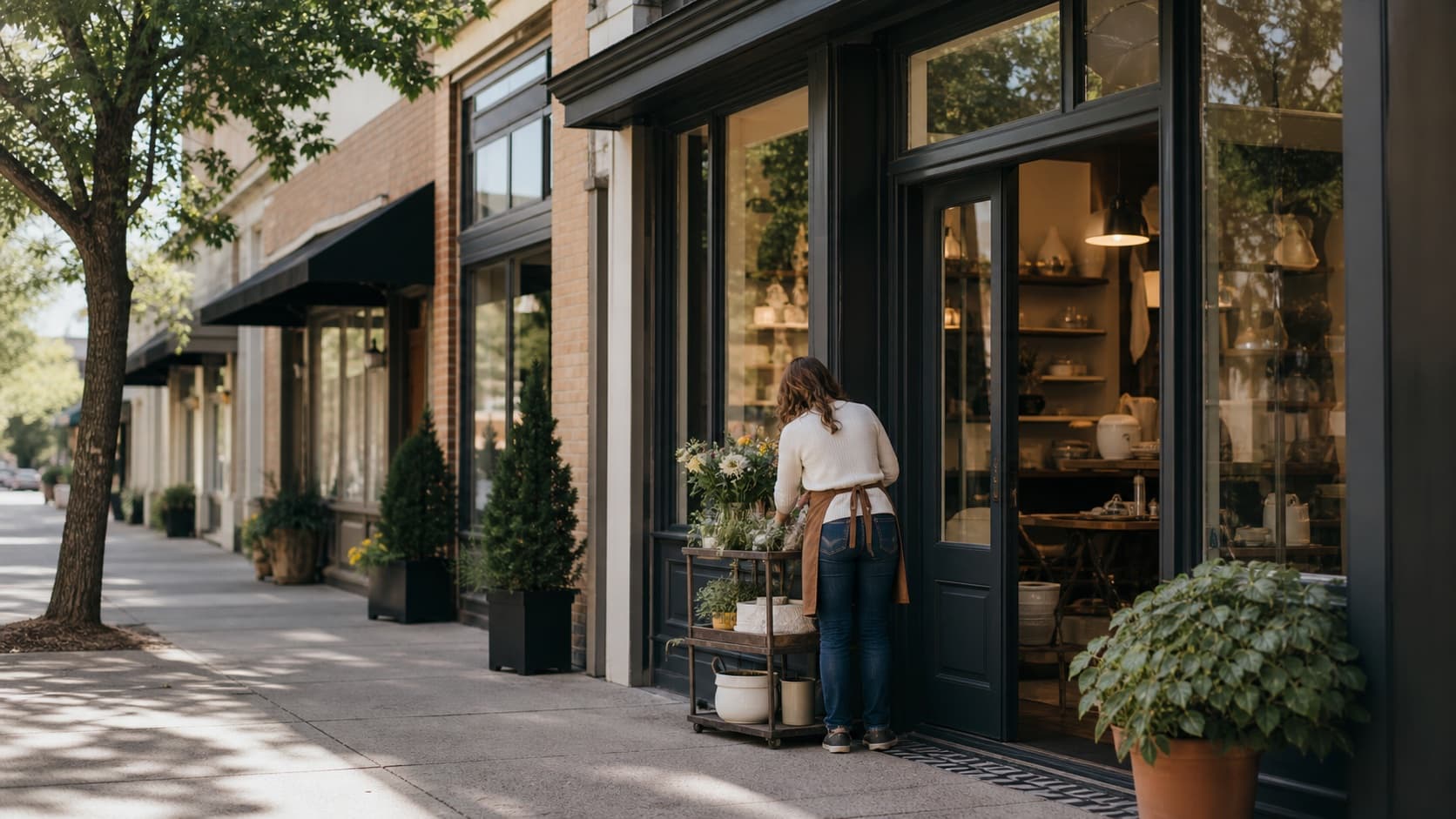
Three things run a retail or wholesale account: the space, the inventory, and the people moving through both. A boutique, a beer-and-wine grocery, a plumbing distributor, a gas station — same three things, four different risk pictures. The exposures, the appetite, and the coverage that answers all split apart from there.

Property and business income anchor most accounts. Property carries the building if you own it, plus tenant improvements, fixtures, and stock. Business income answers the revenue that stops when a covered loss closes the doors. Inventory value, location, construction, and fire protection all drive the underwriting. Pile inventory deep in a warehouse and carriers want the storage and sprinkler detail a storefront never gets asked for.

GL answers third-party bodily injury and property damage — in retail, that usually means a customer going down on your floor or your walkway. Product liability rides inside the standard GL form. For distributors and online sellers it is often the sharper exposure. Something in your supply chain hurts a downstream buyer, and your name lands on the claim next to the manufacturer's. Marketplace platform agreements commonly ask sellers for $1M commercial GL. Read your platform agreement for the exact terms.

Gas stations with convenience stores add a wrinkle. Underground storage tanks (USTs) open a pollution and environmental exposure that standard property and GL forms leave out. Owners and operators are often required to carry separate pollution coverage; some join a state UST assurance fund instead. The rules shift by state.

Theft and shrinkage — shoplifting one way, employee dishonesty the other — run through retail constantly. Crime coverage and dishonesty endorsements answer losses the property form may skip. Handle real cash or high-value stock, and crime coverage belongs in the review, not on the maybe list.

Trades we cover

Retail & Wholesale trades and business types

Choose the operation closest to yours for the exposures, underwriting details, and documents that usually matter at quote time.

Coverage

Coverage highlights for retail & wholesale

These are common lines to evaluate, not a preset package. Operations, current contracts, state requirements, and carrier policy forms determine what belongs in the final program.

  • Commercial Property & Business Income

    A storefront or warehouse lives on its location, its fixtures, and its stock staying put. Property covers the building if you own it, plus tenant improvements and inventory, against fire, theft, vandalism, and certain weather. Business income answers the revenue and continuing expenses when a covered loss shuts you for a stretch. For an established operation, the income you lose while closed often runs past the damage that closed you.

  • General Liability — Premises & Operations

    Put customers on your floor all day and slip-and-fall becomes one of the higher exposures in commercial lines. GL answers third-party bodily injury and property damage from your premises and operations — inside the store, on the walkway out front, in the lot you control. The products-completed operations piece of the GL form also answers claims from goods you sold, handled, or moved.

  • Product Liability

    You never touched the factory floor and the claim still names you. A retailer, a distributor, an online seller — any of them can be pulled into a product claim. It happens when an item in the supply chain injures a downstream buyer, and the claim reaches everyone who touched it, manufacturer included. Product liability usually rides inside the GL policy. The limit, the exclusions, and the form language decide how much of that answer you actually have.

  • Crime & Employee Dishonesty

    Theft comes at retail from several directions at once. Shoplifting, robbery, and employee dishonesty are three different losses, and the standard property form may not fully answer any of them. A crime policy or endorsement covers money, securities, and inventory against theft by staff or outsiders. Move real daily cash, high-value stock, or consumer electronics, and this is where the sharpest exposure sits.

  • UST Pollution Liability

    Bury fuel tanks under a gas station and you take on an environmental exposure that property and GL forms leave out. A release — a slow leak, an equipment failure, an overfill — can foul soil and groundwater and trigger a remediation bill. UST-specific pollution coverage answers that apart from the standard package. Some operators join a state assurance fund instead. Eligibility and rules shift by state.

  • Liquor Liability

    Sell beer and wine from a grocery, market, or convenience store and a liquor liability exposure rides alongside the GL. Dram shop statutes in many states let a third party bring a claim against a seller who served a visibly intoxicated person or a minor. Carriers read licensing history, hours of sale, and staff training before they write it.

Illustrative scenarios

Example claim scenarios

A few situations to make coverage concrete. These are illustrations only — not actual claims, and not a guarantee of any coverage outcome.

  • Example scenario

    Customer slip-and-fall in a retail store

    Example scenario: A customer slips on a wet floor near the entrance of a convenience store during a rainy afternoon. They sustain an injury and file a claim against the store. General liability covers bodily injury to third parties from premises operations. It can respond to medical costs and legal defense expenses, subject to the policy's terms, conditions, and exclusions.

    Stores with higher customer traffic and multiple entry points see this type of claim more frequently. Carrier underwriters review prior GL loss history when quoting.

  • Example scenario

    Product liability claim against a wholesale distributor

    Example scenario: A wholesale distributor ships commercial cleaning products to a restaurant supply buyer. A product labeling defect leads to an improper mixture, injuring a kitchen employee. The distributor is named in the resulting liability claim alongside the manufacturer.

    Product liability within the GL policy can respond to defense costs and liability exposure, subject to the policy's limits, conditions, and exclusions. Distributors handling products across multiple categories or from international suppliers may face broader exposure. Carriers review product categories and volumes as part of the underwriting process.

The claim scenarios above are illustrative examples only. They do not represent actual clients, actual claims, or guaranteed coverage outcomes. Coverage for any specific situation depends on the policy terms, conditions, exclusions, and the facts of the claim.

After you bind

Contracts, certificates, and policy changes

A certificate summarizes policy information; it does not create or change coverage. The policy and carrier-issued endorsements control.

  • Standard ACORD 25 certificates showing current GL and property limits.
  • Additional insured endorsements for landlords, property managers, or shopping center owners where required by lease.
  • Certificates confirming liquor liability coverage where required by state licensing or lease agreements.
  • Vendor certificates for wholesale accounts requiring proof of product liability coverage from suppliers.
  • Evidence of insurance for lenders on financed property or equipment.
  • Marketplace platform insurance requirement documentation support for e-commerce sellers (confirm specific platform requirements directly with the platform).

FAQ

Frequently asked questions

Ready to review retail & wholesale coverage?

Tell us how you operate and what you need reviewed. We'll identify the information required for a submission or policy-service request.

Coverage availability, pricing, terms, conditions, and eligibility depend on underwriting, carrier guidelines, state, operations, loss history, policy terms, and other risk-specific factors. Nothing on this site guarantees coverage, pricing, placement, or savings.

Illustrative claim scenarios are examples only and do not represent specific claims, predicted outcomes, or coverage guarantees. Whether a specific claim is covered depends on the policy terms, conditions, exclusions, and the facts of the specific situation.

Marketplace platform insurance requirements referenced on this page are general observations only. Sellers should review their specific platform seller agreement for the exact coverage terms and documentation required. Requirements vary by platform and may change.

Blue Lagoon Insurance Services, LLC is an independent insurance agency and is not affiliated with Amazon, FedEx, UPS, or any other parcel delivery service.