Retail & Wholesale · Clothing Stores

Retail Clothing Store Insurance That Follows the Inventory Swing

Retail clothing stores carry a coverage picture that a generic business owner policy rarely captures cleanly. Seasonal inventory swings, fitting-room liability, in-store theft, garment product claims, and vendor contract certificates all create specific exposures. We'll review inventory values, lease obligations, employee payroll, customer foot traffic, and the brand or vendor agreements that shape what your certificates must show.

Licensed commercial insurance support across 5 states

Smart intake

Retail Clothing quote

One question to start. We do the reading from there.

Start your quote

Get Started

Request a Retail & Wholesale insurance quote

Complete the required contact fields and a few business details. A licensed BLIS representative will review the request.

1 / 2About you

How to reach you about your request.

We use this only to follow up.

Licensed in CA, NV, AZ, TX, and FL.

We only use this information to review your insurance request. BLIS is licensed in California, Nevada, Arizona, Texas, Florida. CA License 0M74955.

Submitting this form does not bind coverage and does not promise a specific quote, price, or coverage outcome. BLIS reviews submitted details and may follow up for information needed to evaluate the account.

What to expect

What to expect after you submit

A BLIS representative reviews the information you submit and follows up if something important is missing.

  1. A real person reads it

    Your details get read against what carriers actually want for your kind of account — not routed through a form stack.

  2. Your account gets matched

    How you operate maps to the coverage lines and markets that fit the risk.

  3. Gaps get filled

    If something important is missing, a few targeted questions — not another long form.

  4. Options get laid out

    Coverage, exclusions, carrier fit, and cost — side by side, not just price.

  5. Bound? We stay on.

    Certificates, endorsements, audits, renewals, policy changes — handled.

Prefer to talk it through? Call (818) 306-8333Monday – Friday, 9:00 AM – 5:00 PM PT

Your operation

How retail clothing operations shape the insurance review

Garment racks, fitting rooms, a seasonal inventory that swings hard, and a certificate request from your landlord every year — that's clothing retail. The coverage picture has to match it. A generic BOP written for a simpler storefront will miss the product liability on private-label imports, the peak-inventory gap before the holidays, and the endorsement language the lease requires. We review the full picture before placing the account.

Inventory values that shift with the season. Peak stock can more than double what's on the floor in a slow month. A clothing store in November is a different property risk than the same store in January. Standard commercial property policies carry a fixed limit.

A limit set for slow-season levels leaves merchandise unprotected when the racks are full — and a fire or break-in during the holiday buildup exposes that gap. Seasonal peak endorsements or a limit structured around actual peak values address this. It has to be built in at placement, not discovered afterward.

In-store shrinkage and employee dishonesty. Apparel is among the most frequently shoplifted categories in retail. Opportunistic theft and organized retail crime are one exposure. But employee dishonesty — theft by someone on your payroll — is a separate coverage question that standard property often excludes or sublimits.

Knowing which losses your policy actually covers for theft matters before you're looking at a significant shrinkage number and trying to figure out what responds.

Fitting rooms and premises liability. Customers in narrow aisles, carrying merchandise, using fitting rooms — that's ongoing premises liability exposure. Slips on wet entryways, trips over fixture bases, and injuries from garment rack falls all generate GL claims in retail. Fitting rooms add their own consideration: the temporary privacy they create raises the possibility of allegations involving surveillance.

Store layout, housekeeping, and fixture placement all feed how carriers assess the premises picture.

Product liability for garments and accessories. Sell a garment and you're part of the distribution chain. A skin reaction from a fabric treatment, a drawstring hazard, a fastener failure — product liability can run back to the retailer even when a manufacturer bears primary responsibility.

Import directly, carry private-label apparel, or source from overseas suppliers without a strong domestic compliance presence and you may be treated as the functional manufacturer.

Lease and landlord certificate requirements. Commercial leases typically require tenants to carry minimum limits and name the landlord as an additional insured. Those requirements arrive on the landlord's schedule. Some leases also specify endorsement wording, waivers of subrogation, or aggregate limit structures. The obligation has to be in the policy — not just noted on a certificate.

We review the lease's insurance requirements against the actual policy to confirm what the certificate represents is supported.

Workers' compensation classification and seasonal payroll. Clothing store staff — sales floor associates, stockroom workers, fitting room attendants, shift supervisors — fall under retail trade workers' comp codes. Seasonal hiring surges, back-of-house receiving work, and on-premises alterations or tailoring can involve employees working in different environments with different classification considerations.

Treating full-time retail employees as part-time at payroll reporting creates audit risk at expiration. We review payroll structure and employee duties during intake.

Vendor and brand partner certificate requirements. Consignment arrangements, in-store brand programs, and authorized reseller agreements carry their own insurance requirements — separate from the landlord's. A national sportswear brand's fixture program may require minimum GL limits and an additional insured endorsement for the brand.

A consignment arrangement may require property coverage extending to consigned goods in the store's care. These obligations come from vendor agreements and don't always align with the lease. Know which are active before a request arrives.

Coverage

Coverages commonly considered for retail clothing operations

These are common lines to evaluate, not a preset package. Your operations, current contracts, state requirements, and the carrier's policy forms determine the final program.

  • Commercial Property

    covers the building if owned, tenant improvements, fixtures, displays, point-of-sale systems, and merchandise inventory. For a clothing retailer, inventory is the primary asset at risk. Limits have to reflect peak seasonal values. A limit that works in spring may leave the store significantly underinsured in November. Business income is a key companion: it replaces lost revenue and continuing fixed costs while the store is closed after a covered loss.

  • General Liability

    covers third-party bodily injury, property damage, and products liability from the store's operations and the merchandise it sells. Premises liability responds to slip, trip, and fitting-room injury claims. Products liability responds to garment and accessory claims. If you import directly, carry private-label merchandise, or sell children's apparel subject to federal safety regulations, underwriters look at the sourcing structure and distribution chain.

  • Business Income / Extra Expense

    a closed clothing store loses not just the physical contents. It also loses the revenue from the weeks or months it cannot operate. Business income coverage replaces net income lost during a covered suspension and covers fixed costs that don't stop when the doors do. Extra expense covers the cost of expediting recovery: temporary space, rush reorders, or accelerated repairs. For stores with seasonal revenue concentration, when an interruption happens matters as much as how long it lasts.

  • Employee Dishonesty / Crime Coverage

    theft by employees is a real and recurring exposure in clothing retail. Employee dishonesty coverage is a crime line separate from standard commercial property theft. It covers merchandise, cash, or business property taken by someone on the payroll — typically discovered at inventory or audit, not just single-incident losses. Property policies often exclude or sublimit this. It's worth knowing exactly which form you're relying on before the inventory count produces an unexplained number.

  • Commercial Auto (Hired and Non-Owned, where applicable)

    owners and employees often use personal or rented vehicles for store business: bank deposits, merchandise runs, local deliveries. Personal auto may restrict or exclude regular business use beyond routine commuting. Hired and non-owned auto extends commercial auto liability to rented vehicles and employee-owned vehicles used for business errands — closing the gap the personal policy leaves.

  • Umbrella / Excess Liability

    extends coverage above the primary GL and, where applicable, commercial auto limits. For high-traffic locations or stores carrying children's apparel, excess coverage provides a buffer against claims that exhaust the primary policy. It's also often what the lease or a vendor agreement actually requires. Some retail center landlords specify a minimum excess limit as a lease condition.

Quote factors

Common quote factors

These are the details that can shape eligibility, terms, and pricing. You don't need all of them to start — send what you have, and we'll follow up on anything important that's missing.

  • Annual gross sales and revenue mix (in-store vs. online)sales volume is the primary rating basis for the products liability component of GL. The in-store/online split helps carriers understand how and where merchandise moves to consumers.
  • Total business personal property value, including peak inventoryinventory is the largest asset at risk for most clothing retailers. Carriers need both the average and peak values to structure an adequate limit. Understating peak values creates a gap that shows up after a loss, not before.
  • Merchandise type (adult apparel, children's, accessories, private label, imports)children's apparel carries federal safety considerations that affect the products liability underwriting. Private-label and imported goods place the retailer closer to manufacturer liability exposure. Accessories and jewelry may require separate scheduling.
  • Location, lease terms, and landlord insurance requirementslocation affects crime and premises liability assessments. The lease defines minimum coverage requirements the policy must satisfy for the store to remain in compliance.
  • Employee count, payroll breakdown, and seasonal staffing patternspayroll drives workers' compensation pricing. Seasonal staffing surges are a classification and audit question. Back-of-house, receiving, and alteration staff may carry different classification codes than sales floor employees.
  • Prior loss history (last 3–5 years)theft, property, and GL claim history show how the store manages common retail exposures. Repeated theft or slip-and-fall claims affect carrier appetite and pricing.
  • Active vendor, consignment, and brand agreements requiring certificateswe review what each agreement requires so the policy is in position before a certificate request arrives.
  • Current policy declarations (upload optional)reviewing existing coverage helps identify gaps, limit adequacy issues, and whether a seasonal peak endorsement is in place. Adjustments belong before the next peak period, not after.
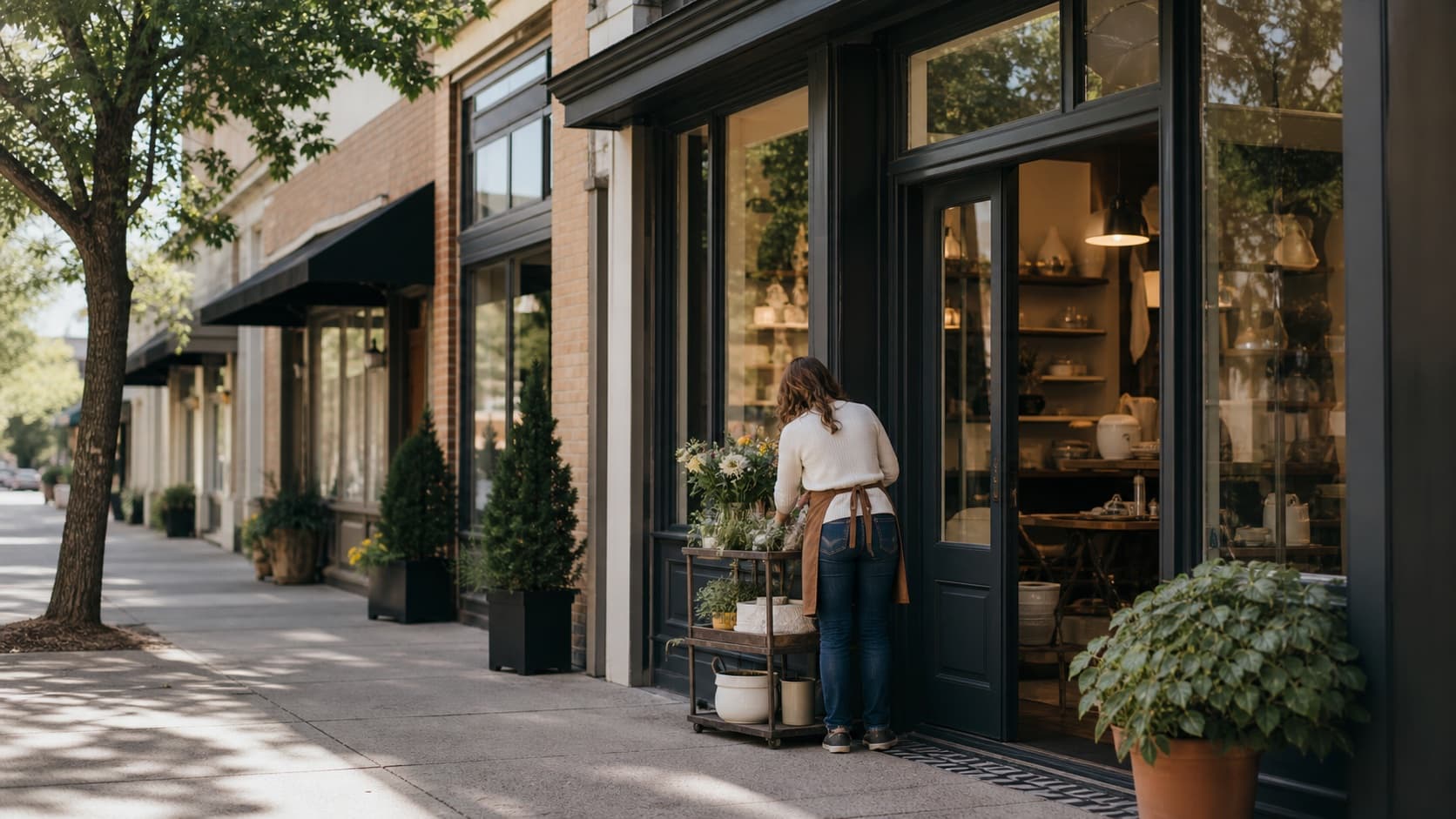
Illustrative scenarios

Example claim scenarios

A few situations that show how coverage can respond when something goes wrong. These are examples only — not actual claims, and not a guarantee of any outcome.

  • Example scenario

    Customer slip-and-fall near a display fixture

    A customer browsing a seasonal display near the front of a clothing store catches a foot on a floor-level fixture base and falls. The customer sustains a wrist injury that requires medical attention. The customer submits a bodily injury claim citing the placement of the fixture and an alleged failure to maintain a safe shopping environment.

    General Liability can respond to medical costs and legal defense arising from the premises liability claim. This is subject to the policy's terms and exclusions.

  • Example scenario

    Overnight break-in and inventory theft during a holiday merchandise build

    A clothing store experiences an overnight break-in during the holiday merchandise buildup. Holiday merchandise has been delivered and stocked. Inventory on the floor substantially exceeds base stock levels. The loss involves a significant quantity of premium outerwear taken from unlocked floor racks.

    A commercial property policy with a static inventory limit sized for the off-peak period may leave part of the loss uncovered. This happens when the limit was not adjusted to reflect the seasonal increase in business personal property values. Property coverage with a seasonal peak endorsement or an adequate annual peak limit can respond to covered theft losses. This is subject to policy terms and exclusions.

  • Example scenario

    Children's garment product liability claim

    A customer purchases a children's hooded garment from a clothing boutique that sources merchandise through an overseas importer. The garment is later identified as having a drawstring length that exceeds federal children's apparel safety guidelines. The customer alleges that the drawstring created a hazard.

    Because the boutique sold the garment directly to the consumer and the importer has limited domestic presence, the retailer is named in the claim. The products liability component of General Liability can respond to the defense and any covered damages. This is subject to policy terms, exclusions, and how the carrier treats the retailer's position in the distribution chain.

  • Example scenario

    Business income loss after a landlord-building water loss

    A burst pipe in an upper floor of a multi-tenant retail building causes water to flow into a clothing store overnight. A significant portion of the merchandise on display and the store's interior finishes are damaged. The landlord's insurer handles the building, but the store's clothing inventory, display fixtures, and point-of-sale system are the tenant's responsibility. Cleanup and remediation takes several weeks.

    The store misses the opening weeks of the spring selling season. Commercial property coverage can respond to the contents loss. Business income coverage can help replace the net income and continuing fixed costs lost during the period the store is unable to operate normally. This is subject to policy terms and exclusions.

The claim scenarios above are illustrative examples only. They do not represent actual clients, actual claims, or guaranteed coverage outcomes. Coverage for any specific situation depends on the policy terms, conditions, exclusions, and the facts of the claim.

After you bind

Common certificate and service needs

After a carrier binds coverage, contracts and operational changes can create new documentation needs. A certificate summarizes policy information; the policy and its endorsements control coverage.

Contract and certificate requests

  • Certificate of insurance (COI) for landlord or property managerretail leases require proof of insurance before occupancy and at each renewal. The certificate typically names the landlord as additional insured and reflects the minimum limits the lease specifies.
  • Additional insured endorsements for landlords, property owners, and shopping center managementthe specific endorsement wording is what matters. We review the lease's requirements against the actual policy endorsements to confirm alignment before anything is issued.
  • Waiver of subrogation in favor of the landlord where the lease requires itthe waiver has to be in the policy. Noting it on the certificate face without the endorsement in place doesn't satisfy the obligation.
  • Certificates for vendor, brand partner, or consignment agreementseach relationship may carry its own limits and endorsement requirements, separate from the landlord's. We review what each agreement calls for.
  • Business income documentation for lenders or SBA loanslenders secured by commercial property or equipment may require evidence of business income coverage and loss payee status.

Ongoing service

  • Seasonal inventory limit reviewswe review whether the current business personal property limit reflects anticipated peak values before the holiday, back-to-school, or spring buying season. Catching the gap after a loss doesn't help.
  • Lease renewal coverage reviewlandlords frequently update insurance requirements at renewal. We compare the updated demands against the current policy to identify what needs to change before the renewal certificate goes out.
  • Mid-term policy adjustmentsa new vendor relationship, an additional location, or a shift in merchandise categories can affect the policy structure. Adding children's apparel or accessories are common examples. We handle the endorsements.
  • Workers' Compensation audit supportretail WC policies audit at expiration against actual payroll. We review what documentation carriers typically request and how seasonal staffing patterns are handled in the audit.
  • Renewal strategy and market reviewas the store grows or the merchandise mix changes, the coverage structure may need to be revisited. We review upcoming renewals against current operations before they arrive at the table.
  • Claims guidance and carrier coordinationdocumentation, process steps, and follow-up after a theft, property loss, or GL incident. The carrier handles adjudication; we help you understand what to expect and what to track.

FAQ

Frequently asked questions

Coverage availability, pricing, terms, conditions, and eligibility depend on underwriting, carrier guidelines, state, operations, loss history, policy terms, and other risk-specific factors. Nothing on this site guarantees coverage, pricing, placement, or savings.

Examples are hypothetical and illustrative. They show how a coverage can respond, not a promise that any specific claim will be covered. Actual coverage depends on your policy’s terms, conditions, and exclusions.

Blue Lagoon Insurance Services, LLC is an independent insurance agency licensed in California (0M74955), Nevada (3983946), Arizona (3003332484), Texas (2966873), and Florida (L120266). BLIS does not underwrite insurance; coverage and underwriting decisions are made by the insurance carrier.