Agriculture · Wineries

Winery Insurance for Cellar, Tasting Room, and Label

A winery runs across multiple exposure categories at once: production equipment, bonded wine storage, tasting room hospitality, seasonal labor, farm vehicles, and finished product in distribution channels. Starting a wine club or adding wholesale distribution this year? Those changes affect your coverage picture. We'll review the whole account: the facility, the workforce, the product, and the liability that comes with serving alcohol.

Licensed commercial insurance support across 5 states

Smart intake

Winery quote

One question to start. We do the reading from there.

Start your quote

Get Started

Request a Agriculture insurance quote

Complete the required contact fields and a few business details. A licensed BLIS representative will review the request.

1 / 2About you

How to reach you about your request.

We use this only to follow up.

Licensed in CA, NV, AZ, TX, and FL.

We only use this information to review your insurance request. BLIS is licensed in California, Nevada, Arizona, Texas, Florida. CA License 0M74955.

Submitting this form does not bind coverage and does not promise a specific quote, price, or coverage outcome. BLIS reviews submitted details and may follow up for information needed to evaluate the account.

What to expect

What to expect after you submit

A BLIS representative reviews the information you submit and follows up if something important is missing.

  1. A real person reads it

    Your details get read against what carriers actually want for your kind of account — not routed through a form stack.

  2. Your account gets matched

    How you operate maps to the coverage lines and markets that fit the risk.

  3. Gaps get filled

    If something important is missing, a few targeted questions — not another long form.

  4. Options get laid out

    Coverage, exclusions, carrier fit, and cost — side by side, not just price.

  5. Bound? We stay on.

    Certificates, endorsements, audits, renewals, policy changes — handled.

Prefer to talk it through? Call (818) 306-8333Monday – Friday, 9:00 AM – 5:00 PM PT

Your operation

How winery operations shape the insurance review

Three operations running under one roof — production, hospitality, distribution. A winery doesn't map neatly to any single policy form. Farm policies miss the tasting room. Commercial packages miss the barrel cellar and the bonded storage. Fermentation tanks, bottling lines, and refrigeration tell one carrier story. Tasting room guests, wine club events, and private functions tell another. Every bottle that leaves under your label is a product liability event waiting to be underwritten. Building coverage around a winery means building it around all three sides. Stopping at two leaves the third exposed.

The production building and winery equipment. Tanks, presses, conveyors, pumps, chillers — purpose-built for one thing. Replace them after fire or breakdown and the cost reflects that. Generic commercial property forms often understate value or apply the wrong valuation clause to fermentation and refrigeration equipment. Equipment breakdown is a separate line from property insurance.

It responds to mechanical and electrical failure that a standard property policy won't touch. Carriers reviewing a winery property account want to know building construction, fire suppression, and tank capacities. Fixed equipment value is reviewed separately from inventory.

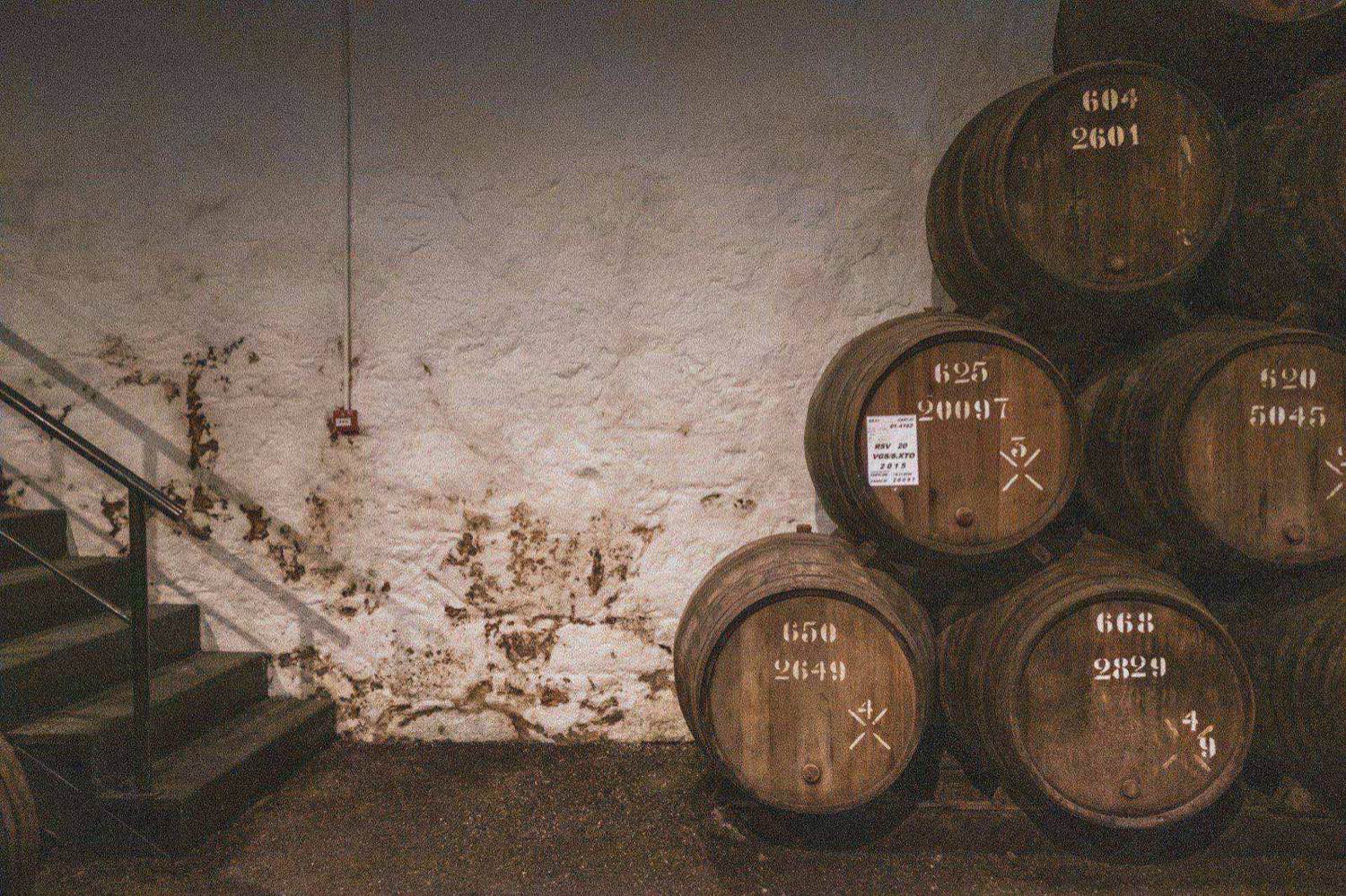
Bonded wine inventory and in-process product. Wine aging in barrels or tanks is raw material and finished inventory simultaneously. Value builds across months and years. TTB bonded-cellar records tell the government what's there — they don't answer the insurance question. What's the current value of wine in your barrels? Is it valued at cost, at market, or at estimated selling price?

Does the property policy's stock provision cover in-process wine, or does a separate inland marine arrangement need to be made? The answer determines whether a fermentation loss or a barrel-room event gets proper treatment in your policy.

Tasting room premises liability. Public visits change the liability picture. Tastings, wine club events, and private functions move a winery from agricultural context into hospitality territory. Cellar floors, patio stone, parking lots — all premises liability exposures that need a carrier comfortable with hospitality, not just farm operations.

Some farm package forms restrict or exclude tasting room activity outright. That gap stays invisible until after a claim arrives.

Liquor liability from tastings and events. Pour wine to the public and dram shop exposure follows. Many states hold the server liable when a guest leaves intoxicated and causes an accident. Host liquor coverage applies to incidental alcohol service. It's not designed for a winery that sells wine by the glass and earns tasting room revenue. Those two things aren't the same.

A dedicated commercial liquor liability policy, or a GL form written to include alcohol service, closes that gap.

Seasonal and year-round workforce and Workers' Compensation. Cellar staff, tasting room employees, harvest crews, event labor — a winery rarely has a simple payroll. WC class codes span agricultural workers during harvest, machine operators on bottling equipment, hospitality staff, and clerical employees. Each code carries a different rate.

The split between agricultural and non-agricultural payroll affects how WC is written and audited. California and other states with active agricultural labor enforcement treat harvest worker misclassification seriously — failing to cover seasonal employees creates both legal and audit exposure. Payroll structure and workforce mix are reviewed at intake.

Farm vehicles, forklifts, and delivery equipment. The vehicle mix at a winery is wider than most. Pickup trucks and tractors, forklifts moving barrel stacks in the cellar, delivery vans running DTC or wine club orders — each one sits under a different coverage rule. Farm auto and commercial auto apply differently depending on where and how a vehicle is used.

A forklift that never leaves the property is treated differently than a van making weekly deliveries on public roads. Inventory the whole fleet and match each vehicle to the right form. One policy form cannot cover both ends without gaps.

Product liability for finished wine. Every bottle under your label is a products liability event waiting to be reviewed by a carrier. Labeling errors, contamination, cork taint — any of these can generate a claim. Product liability sits under a GL policy's products-completed-operations section. Carrier appetite for alcohol product liability varies by market.

Coverage needs to specifically address wine sold DTC, through the tasting room, and through wholesale distribution — because the territory and channel matter to the carrier writing it.

Agritourism and event liability. Harvest festivals, weddings, corporate retreats, charity dinners — each one pushes beyond what a standard tasting room GL is rated to cover. Larger crowds, extended alcohol service, temporary structures, vendor activity on premises: the liability profile changes when a winery becomes a venue. Some farm and GL forms exclude or cap event venue operations.

A special events endorsement — or a standalone policy for large annual events — may be needed. Knowing where the standard policy boundary falls before an event is scheduled matters more than finding out afterward.

Crop and hail on estate-grown fruit. Estate grapes carry a risk that commercial property doesn't address: crop loss from hail, freeze, disease, or fire before harvest. Wine grape crop insurance runs through the USDA Risk Management Agency Multi-Peril Crop Insurance program and private crop-hail markets. Separate application, separate yield history documentation, separate acreage reporting.

This is not a line added to a commercial submission. BLIS coordinates crop coverage inquiries and can connect you with appropriate markets — but it's a separate process that needs lead time. Requesting crop coverage at the same time as a commercial property renewal is too late.

Coverage

Coverages commonly considered for winery operations

These are common lines to evaluate, not a preset package. Your operations, current contracts, state requirements, and the carrier's policy forms determine the final program.

  • Commercial Property

    The foundation of your property account spans several structures: the production building, barrel cellar, tank farm, crush pad, bottling area, and tasting room. Coverage should address building replacement cost, business personal property, and business income plus extra expense if a covered loss interrupts production or tasting room operations. The business income calculation matters a lot here. A fire that shuts down production during crush can affect an entire vintage. A closed tasting room is a separate income loss on top of that. Coverage forms and valuation methods should reflect your actual replacement cost. Business income worksheets should reflect your revenue structure.

  • Equipment Breakdown

    Winery production depends on refrigeration systems, pumps, fermentation monitoring equipment, bottling conveyors, filtration systems, and electrical panels. Standard property insurance doesn't cover loss from mechanical or electrical breakdown. If a chiller fails during fermentation and the wine in those tanks is compromised, property coverage doesn't respond — equipment breakdown coverage does. At some wineries, one equipment failure during a critical production stage can affect an entire tank or barrel lot. Leaving this line out of the program is a meaningful gap.

  • General Liability

    Tasting room incidents, public event injuries, and product claims from wine sold under your label all flow through GL. The policy should schedule the tasting room and any event venue as covered locations. When outside vendors operate on your premises, confirm they carry their own coverage and name the winery as an additional insured — or confirm the GL explicitly addresses contractor activity. Assuming it does without checking is the gap that surfaces in a claim.

  • Liquor Liability

    Serving alcohol for sale puts you in commercial liquor liability territory. That's a step beyond the host liquor coverage included in most GL policies. Commercial liquor liability responds to dram shop claims — allegations that you served an already-intoxicated guest who later caused injury or property damage. In California and other states with active dram shop statutes, this line should be written as a standalone policy or a specific GL endorsement. Don't assume it's included in your GL. Carriers underwriting winery liquor liability review tasting room revenue, event frequency, server training programs, and alcohol management practices.

  • Workers' Compensation

    Your workforce spans several class code categories. Agricultural codes apply during harvest, production codes cover cellar workers and machine operators, and hospitality or clerical codes cover tasting room staff and coordinators. Each class code carries a different rate. The payroll split across classifications is reviewed and audited at policy expiration. California requires WC for all employees — including seasonal harvest workers. Coverage gaps or misclassifications create significant compliance risk. We'll review your payroll breakdown and workforce structure at intake — don't wait until audit time to discover a classification problem.

  • Farm Auto / Commercial Auto

    Your vehicle mix is wide. On-premises equipment includes tractors, forklifts, and utility vehicles. Over-the-road vehicles include trucks and vans for wine club shipments or distributor deliveries. Farm auto coverage addresses vehicles used primarily on the farm premises. Commercial auto liability is required for vehicles on public roads. The coverage structure should reflect how each vehicle is actually used. A straight truck used for DTC delivery routes needs commercial auto. A forklift that never leaves the production building is addressed differently. Keep your vehicle schedule accurate and update it when your fleet changes.

  • Product Liability (within GL products-completed-operations)

    Every bottle sold through the tasting room, wine club, or distribution channels creates a products liability exposure under your name and label. The GL policy's products-completed-operations aggregate limit is the coverage that responds to product claims after the wine has left your premises. Carriers assess product liability for wineries based on annual sales volume, distribution channels (DTC vs. wholesale), bottle production volume, and any prior product complaints or recalls. If you're using co-packing or custom crush arrangements, confirm one thing: whether your label's product liability is covered by your own policy or the facility's policy. Verify this before a product issue arises.

Quote factors

Common quote factors

These are the details that can shape eligibility, terms, and pricing. You don't need all of them to start — send what you have, and we'll follow up on anything important that's missing.

  • Annual cases produced and soldCase count tells the carrier the scale of your products-completed-operations exposure. Production volume also anchors the property valuation for finished goods.
  • Tasting room annual revenue (including events and wine club)Revenue from paid tastings, wine-by-the-glass sales, event fees, and wine club is the primary rating basis for liquor liability and hospitality GL. The alcohol-service component drives dram shop underwriting — carriers break this down, not just total revenue.
  • Estate-grown vs. purchased fruitGrowing your own grapes means a vineyard property exposure and a crop coverage question that purchased-fruit operations don't carry. Carriers need to know which applies to correctly scope the account.
  • Facility descriptionbuildings, construction, fire suppression — Building age, construction type, roof condition, sprinkler coverage in the production building and barrel room, and electrical panel condition are standard property review items. Barrel rooms holding aging inventory get particular attention for fire suppression adequacy.
  • Wine inventory valuecurrent and peak — The stock limit needs to reflect wine in tank, in barrel, and in finished bottle inventory at both average and peak periods. Undervaluing inventory is a common property gap in winery accounts — it shows up at loss time.
  • Workforce structurepermanent employees, seasonal harvest labor, tasting room staff — Payroll by category and classification drives Workers' Comp rating. Agricultural labor, production labor, and hospitality payroll carry different class codes. Carriers want the split, not a consolidated payroll figure.
  • Events hosted on premisesfrequency, scale, type — Wedding and corporate event frequency, public festival activity, and whether outside vendors operate on-site all affect GL and liquor liability underwriting. Regular large-scale events are reviewed differently than occasional private functions.
  • Distribution channelsDTC, wholesale, out-of-state — Tasting room, direct-to-consumer permit, wholesale, and out-of-state channels each affect product liability territory. Some carrier forms restrict coverage for out-of-state alcohol sales — know that before placing the policy.
  • Prior loss history (last 5 years)GL, liquor liability, and property claims on a winery account draw additional carrier scrutiny. A clean loss history carries real weight in underwriting a hospitality-linked agricultural account.
  • Vehicle count, types, and useOn-premises farm vehicles, forklifts, and over-the-road delivery vehicles each sit under different coverage rules. An accurate vehicle inventory prevents the coverage form mismatch that shows up after a loss.
Illustrative scenarios

Example claim scenarios

A few situations that show how coverage can respond when something goes wrong. These are examples only — not actual claims, and not a guarantee of any outcome.

  • Example scenario

    Tasting room slip-and-fall during a private event

    A winery hosts a private corporate event in its barrel room. A guest slips on a wet cellar floor near the bar and sustains a knee injury requiring medical treatment and a claim for lost wages. The event contract named the winery as responsible for premises safety. General Liability can respond to the guest's bodily injury claim and the winery's legal defense costs, subject to policy terms and exclusions.

    Two questions matter significantly in how this type of claim is handled. Was the event scheduled as a covered operation? And does the GL form address events with third-party alcohol service?

  • Example scenario

    Refrigeration failure causing fermentation loss

    A chiller serving a winery's fermentation room fails over a long weekend. Temperatures rise beyond the range needed for controlled fermentation. The resulting wine from several tanks is compromised and not salvageable. The cause is determined to be mechanical breakdown of the compressor — not fire, theft, or a covered property peril.

    A standard commercial property policy does not cover loss caused by mechanical breakdown. Equipment Breakdown coverage is the line designed to respond to this type of loss. That includes the resulting spoilage of in-process product, subject to policy terms and exclusions.

  • Example scenario

    Workers' Compensation claim during harvest

    A seasonal harvest worker helping unload fruit at the crush pad sustains a hand injury from equipment during intake. The worker requires medical treatment and the recovery period extends beyond the normal return-to-work window. Workers' Compensation covers medical expenses and a portion of lost wages for employees injured in the course of employment, subject to state law and policy terms.

    Many wineries rely on seasonal labor during crush. WC coverage that accurately reflects the harvest workforce lets this type of claim be handled cleanly. There is no coverage question about whether the worker was a covered employee.

  • Example scenario

    Product complaint following distributor delivery

    A restaurant purchasing cases through the three-tier distribution system reports that several bottles from a case showed signs of premature oxidation consistent with a compromised cork seal. The restaurant files a claim for the cost of the product and asserts that a server's attempt to serve affected wine resulted in a guest complaint and a refund.

    The winery's product liability coverage sits under the GL policy's products-completed-operations section. It can respond to a covered product claim once the wine has left the winery's control and entered distribution, subject to the policy's limits, terms, and exclusions. Confirm product liability coverage territory and the policy's treatment of wholesale distribution at placement.

The claim scenarios above are illustrative examples only. They do not represent actual clients, actual claims, or guaranteed coverage outcomes. Coverage for any specific situation depends on the policy terms, conditions, exclusions, and the facts of the claim.

After you bind

Common certificate and service needs

After a carrier binds coverage, contracts and operational changes can create new documentation needs. A certificate summarizes policy information; the policy and its endorsements control coverage.

Contract and certificate requests

  • Event venue contract certificatesprivate events bring certificate requests before the event date. Expect them for weddings, corporate functions, and hosted festivals. The certificate needs to show both liability and liquor liability coverage.
  • Additional insured endorsements for leased tasting room propertieslease agreements on production buildings or tasting rooms often require adding the property owner to the GL policy. The endorsement lives in the policy, not on the certificate face.
  • Distributor and wholesale partner certificatesalcohol distribution agreements sometimes require proof of product liability and GL coverage before the first order ships. These are coordinated as part of the distribution relationship setup.
  • Off-premises tasting permit certificateslicensed off-premises tasting events need a certificate confirming coverage extends to the specific venue and date. Location matters when the event isn't on your listed property.
  • Vendor certificates from outside operatorscaterers, entertainers, and equipment vendors working on your premises during events should carry their own GL and name the winery as an additional insured. That documentation protects both parties.

Ongoing service

  • Endorsement review when operations changea new event space, a special events permit, or a move into wholesale distribution each raise the question of whether existing coverage extends. Address those questions before the new operation opens, not after the first claim.
  • Seasonal inventory valuation adjustmentswine inventory peaks around harvest and year-end. A stock limit set at policy inception may understate peak value by a material amount. Mid-term adjustments or agreed value discussions may be warranted for operations with significant seasonal swings.
  • Workers' Compensation audit supportWC audits on winery accounts require payroll by classification, separation of agricultural versus non-agricultural payroll, and documentation of how seasonal workers were engaged. Getting the records organized before the auditor arrives saves rework.
  • Renewal review as revenue and capacity growa second production building, expanded tasting room, or higher event volume all affect the renewal submission. Those changes should be documented before the renewal goes to market.
  • Liquor liability renewal reviewliquor markets track loss experience and event volume. A clean tasting room record matters in renewal underwriting. The account is reviewed against current market conditions before the renewal submission goes out.
  • Claims questionsafter an incident, the first questions are usually about documentation and process. We help you understand what carriers typically need and how the process works for property, GL, liquor liability, and WC events.

FAQ

Frequently asked questions

Coverage availability, pricing, terms, conditions, and eligibility depend on underwriting, carrier guidelines, state, operations, loss history, policy terms, and other risk-specific factors. Nothing on this site guarantees coverage, pricing, placement, or savings.

Examples are hypothetical and illustrative. They show how a coverage can respond, not a promise that any specific claim will be covered. Actual coverage depends on your policy’s terms, conditions, and exclusions.

Blue Lagoon Insurance Services, LLC is an independent insurance agency licensed in California (0M74955), Nevada (3983946), Arizona (3003332484), Texas (2966873), and Florida (L120266). BLIS does not underwrite insurance; coverage and underwriting decisions are made by the insurance carrier.

Crop and hail coverage for wine grapes is a specialized market placement coordinated separately from a standard commercial insurance submission. Coverage availability, eligibility, and terms are subject to USDA RMA program rules or private carrier underwriting. BLIS does not guarantee placement or availability of crop coverage.