Janitorial Services · Post-Construction Cleaning

Post-Construction Cleaning Insurance Classed for Jobsites, Not Janitorial

Solvent-based removers, drywall dust, freshly finished surfaces, and a GC-driven turnover deadline — none of that fits a standard janitorial policy. BLIS reviews the full account: payroll, crew structure, chemical handling, and the subcontract terms that dictate what the certificate must show.

Licensed commercial insurance support across 5 states

Smart intake

Post-Construction Cleaning quote

One question to start. We do the reading from there.

Start your quote

Get Started

Request a Janitorial insurance quote

Complete the required contact fields and a few business details. A licensed BLIS representative will review the request.

1 / 2About you

How to reach you about your request.

We use this only to follow up.

Licensed in CA, NV, AZ, TX, and FL.

We only use this information to review your insurance request. BLIS is licensed in California, Nevada, Arizona, Texas, Florida. CA License 0M74955.

Submitting this form does not bind coverage and does not promise a specific quote, price, or coverage outcome. BLIS reviews submitted details and may follow up for information needed to evaluate the account.

What to expect

What to expect after you submit

A BLIS representative reviews the information you submit and follows up if something important is missing.

  1. A real person reads it

    Your details get read against what carriers actually want for your kind of account — not routed through a form stack.

  2. Your account gets matched

    How you operate maps to the coverage lines and markets that fit the risk.

  3. Gaps get filled

    If something important is missing, a few targeted questions — not another long form.

  4. Options get laid out

    Coverage, exclusions, carrier fit, and cost — side by side, not just price.

  5. Bound? We stay on.

    Certificates, endorsements, audits, renewals, policy changes — handled.

Prefer to talk it through? Call (818) 306-8333Monday – Friday, 9:00 AM – 5:00 PM PT

Your operation

How post-construction cleaning operations shape the insurance review

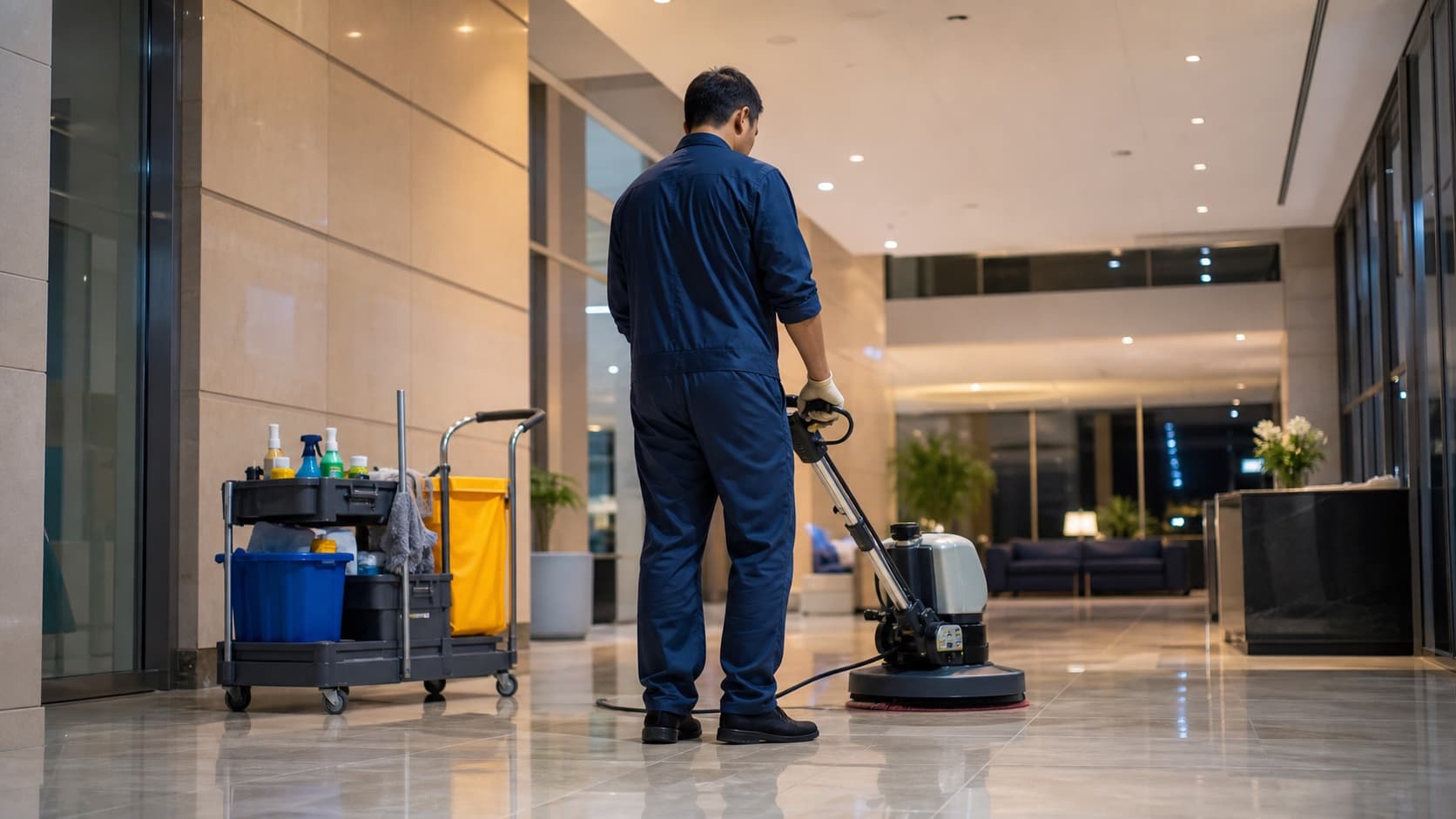
Post-construction cleaning runs on GC timelines. Crews work nights and weekends after the trades have cleared out, inside properties that have not been occupied yet — debris on the floor, solvent-based cleaners in the cart, freshly installed surfaces worth more than a year of revenue nearby. Clients are general contractors and developers, not recurring service accounts. Every job comes with a subcontract, a certificate requirement, and a class-code question. The class codes that apply to construction-site cleanup often differ from what a standard janitorial policy carries. Getting that structure right at the start keeps the coverage aligned with the work — and keeps the audit from finding it first.

Construction sites are not janitorial accounts. Floors may be unfinished or freshly coated. Edges may be unguarded. Overhead hazards from active or recently finished trades can still be present. WC class codes for construction-site cleanup often differ from standard janitorial codes — wrong codes create the same audit exposure as any other contractor with misclassified payroll. Describe the actual work at quote time.

Solvent-based paint removers, concrete dissolvers, grout haze removers, adhesive removers, and industrial degreasers are standard on every post-construction job. These are not the same chemicals a routine cleaning crew carries. A spill on freshly installed hardwood or newly poured concrete is a real GL exposure. Some policies exclude or limit chemical damage.

Review how your policy handles it before you take on a project where the finishing materials cost more than your yearly revenue.

Finish carpentry, tile work, countertops, millwork, plumbing fixtures, and glass no one has touched yet — your crew works around all of it on every job. Standard GL carries a care, custody, or control exclusion. It can limit or remove coverage for damage your crew causes to property in their care. Understand how your GL handles this before a finished surface gets damaged.

Some policies address it through the base form, an endorsement, or a separate coverage option.

General contractors treat post-construction cleaning crews the same as trade subcontractors. A certificate, additional insured status, and specific endorsements are required before site access is granted. These are subcontract conditions — not suggestions. If the certificate does not reflect the required endorsements, the project does not start.

Common terms include additional insured status for the GC and project owner, primary and non-contributory language, and waiver of subrogation. Minimum limits may also exceed what a basic cleaning policy carries.

New appliances, fixtures, millwork, and tools left by other trades are present in properties before the building is occupied or secured. GCs often require janitorial bonds — also called employee dishonesty or fidelity bonds — as a site-access condition. The bond pays the client for losses caused by covered crew members. It is not insurance — it is a separate legal instrument.

Review what the subcontract demands before the crew mobilizes.

Keys, fobs, and access codes issued for after-hours site access carry a specific cost if lost. If a key is not returned, the building owner or GC may require a lock replacement or security audit at your expense. Some GL policies include a key and lock replacement endorsement; many do not.

For cleaning companies working nights and weekends in high-value new construction, that endorsement is the difference between absorbing the cost and having coverage respond.

Nights and weekends after the trades have left — that is when post-construction cleaning happens. Low light, chemical agents, and heavy debris create a WC risk profile distinct from daytime office cleaning. At audit, carriers review payroll and work type together. A cleaning company that describes its work as standard janitorial but runs post-construction crews may face a class code and rate adjustment.

Describing the work clearly at quote time matters for both coverage and audit outcomes.

Post-construction cleaning is project-based, not recurring. Each job brings different property values, GC contract terms, and crew requirements. Carriers want to know the range of project sizes, the maximum property value worked in, and whether GC relationships involve consistent contract terms or vary project to project.

Rush jobs at the end of a construction project often mean bringing on added workers quickly. Workers treated as 1099 subcontractors who legally qualify as employees in your licensed states create uninsured WC exposure. Some GL carriers also limit or exclude coverage for claims from uninsured subcontractors. Carrier quote forms ask about subcontractor usage and whether those workers carry their own GL and WC.

Coverage

Coverages commonly considered for post-construction cleaning operations

These are common lines to evaluate, not a preset package. Your operations, current contracts, state requirements, and the carrier's policy forms determine the final program.

  • General Liability

    GL is the line GC contracts require you to carry before site access. It covers third-party bodily injury and property damage from your work. For post-construction cleaners, the care, custody, or control exclusion needs careful review — your crew works in and around high-value finished property on every job. GC subcontracts require additional insured endorsements, waiver of subrogation, and primary and non-contributory language. Those must be in the policy, not just stated on the certificate face.

  • Workers' Compensation

    Construction cleanup is classified differently from routine janitorial work. Debris removal, solvent handling, and partly secured jobsites affect class codes. Requirements vary by state and entity type; Texas generally permits many private employers to operate as nonsubscribers, subject to exceptions and consequences.

  • Janitorial Bond (Employee Dishonesty / Fidelity Bond)

    Post-construction crews work in properties containing high-value finished goods before the building is occupied. The bond pays clients for losses caused by theft or dishonest acts by covered employees. GC subcontracts and developer agreements often require it as a site-access condition. It is not insurance — it is a separate legal instrument covering employee conduct. BLIS can confirm that a GC contract's bond requirement is met before the crew mobilizes.

  • Key and Lock Replacement Coverage

    After-hours access means your crew routinely holds keys, fobs, or access codes. If a key is lost or not returned, the property owner may require lock replacement or a security audit. A key and lock replacement endorsement addresses that cost. For cleaners working nights and weekends in high-value buildings, the base GL policy may not cover this without a specific endorsement.

  • Commercial Auto

    Company vehicles transporting crews and cleaning equipment are in commercial use. Personal auto policies may restrict or exclude that use. Commercial auto can address covered vehicle liability and, when selected, physical damage; equipment and supplies may require separate property or inland marine coverage.

  • Umbrella / Excess Liability

    Newly finished properties carry major replacement values. A bodily injury or property damage claim on a large commercial project can approach or exceed standard GL limits. The umbrella sits above the underlying GL and commercial auto, extending coverage once those limits are exhausted. Some GC subcontracts and developer agreements specify minimum umbrella limits as a certificate term.

  • Inland Marine

    Equipment Floater — HEPA vacuums, pressure washers, floor scrubbers, and power washing rigs move from site to site. Standard commercial property policies cover equipment at a fixed address. An inland marine or equipment floater follows the equipment wherever it goes. Theft from a construction staging area or damage in transit is covered. A policy tied to your office address does not cover that.

Quote factors

Common quote factors

These are the details that can shape eligibility, terms, and pricing. You don't need all of them to start — send what you have, and we'll follow up on anything important that's missing.

  • Type of cleaning work performedCarriers distinguish post-construction cleanup from routine commercial janitorial and home cleaning. A company running primarily post-construction work is rated differently. Describe the actual work split clearly on the application.
  • Annual revenue and project countRevenue is the primary GL rating basis. Number of projects per year and average project size help carriers assess exposure volume. Property values vary widely across project types.
  • Project size range and maximum property valuesCarriers want to know the largest projects your company typically takes on. A cleaner working on single-family new construction is rated differently than one cleaning large commercial mid-rises.
  • Annual payroll and crew structure (W-2 vs. 1099)Payroll drives WC premium. The W-2 versus 1099 split matters. Carriers ask whether subcontractors carry their own GL and WC. Some policies limit coverage for work by uninsured subs.
  • Subcontractor usageIf subcontract labor is used, carriers want to know whether those workers carry their own coverage. Uninsured subcontractors create both coverage and audit risk.
  • Chemical and solvent usageIndustrial solvents, paint removers, and concrete dissolvents used in post-construction work carry a different chemical profile than standard janitorial products. Carriers ask what cleaning agents the crews use.
  • After-hours and night-shift operationsWhether cleaning happens during business hours or overnight affects the WC risk profile. Night and weekend site conditions differ from daytime.
  • Prior loss history (last 3–5 years)GL, WC, and bond claim history is reviewed for frequency and severity. Prior chemical-damage or property-damage claims receive additional scrutiny.
  • GC certificate termsKnowing what minimum limits, endorsements, and bond amounts your GC contracts require lets the policy be structured to meet those terms from day one.
  • Current policy (upload optional)Reviewing existing declarations pages identifies coverage gaps, missing endorsements, and limit adequacy before new options are quoted.
Illustrative scenarios

Example claim scenarios

A few situations that show how coverage can respond when something goes wrong. These are examples only — not actual claims, and not a guarantee of any outcome.

  • Example scenario

    Chemical damage to newly installed flooring

    A post-construction cleaning crew applies a solvent-based adhesive remover to a newly installed luxury vinyl tile floor during final clean. The solvent reacts with the tile adhesive and causes discoloration and surface damage across a large portion of the floor. The general contractor holds back payment and submits a claim for repair and replacement of the affected flooring.

    General Liability can respond to third-party property damage claims from cleaning work. The response depends on how the policy handles the care, custody, or control issue and the applicable terms, conditions, and exclusions.

  • Example scenario

    Crew injury during construction-site cleanup

    A cleaning crew member is working overnight to clear construction debris from an interior stairwell of a newly completed multi-story building. In the low light, the worker steps on an unsecured piece of flooring material, falls, and sustains a leg injury needing medical treatment and time away from work. Workers' Compensation can respond to the medical costs and lost wages from that employee injury.

    Coverage is subject to the policy's terms and applicable state law.

  • Example scenario

    Missing key leads to building lockout and lock replacement

    A post-construction cleaning company is given a master key to a newly completed commercial building to perform after-hours final cleaning. At the end of the project, the key is not returned — a crew member lost it. The property owner determines that the building's locks need to be rekeyed or replaced before turning over to the tenant.

    Key and lock replacement coverage, where available as a policy endorsement, can help cover this specific exposure, subject to the policy's terms and conditions.

  • Example scenario

    GC subcontract dispute over certificate endorsement terms

    A post-construction cleaning company is awarded a subcontract on a large mid-rise development. Before mobilizing, the company provides a certificate of insurance to the GC. The GC flags that the certificate shows additional insured status but the policy endorsement is a blanket additional insured — ongoing operations only form. The subcontract requires completed operations coverage.

    The discrepancy delays access while the broker works with the carrier to add the correct endorsement. This scenario shows why reviewing actual endorsements against what a GC subcontract requires — before the certificate is issued — matters more than assuming the certificate is enough.

The claim scenarios above are illustrative examples only. They do not represent actual clients, actual claims, or guaranteed coverage outcomes. Coverage for any specific situation depends on the policy terms, conditions, exclusions, and the facts of the claim.

After you bind

Common certificate and service needs

After a carrier binds coverage, contracts and operational changes can create new documentation needs. A certificate summarizes policy information; the policy and its endorsements control coverage.

Contract and certificate requests

  • Certificate of insurance requestsa certificate is required before mobilizing on each new project. Send the subcontract's insurance exhibit or any specific endorsement wording. BLIS reviews whether what the contract requires is reflected in the actual policy before the certificate is issued.
  • Additional insured endorsements for GCs and project ownersmost subcontracts require naming the GC as an additional insured. The project owner often must be named as well. The endorsement must match the contract — not just be referenced on the certificate face.
  • Waiver of subrogationGC subcontracts commonly require the cleaning contractor's GL and WC to waive subrogation in favor of the GC. The waiver must be written into the policy. Referencing it on the certificate alone is not sufficient.
  • Primary and non-contributory languagelarger commercial and developer-financed projects often require your coverage to respond first, ahead of the GC policy.
  • Janitorial bond documentationwhen a GC or developer subcontract requires a bond, BLIS can confirm the bond amount and terms match what the contract specifies.
  • Certificates naming lenders, developers, or owner entitiesnew-construction projects often involve lender requirements that flow down through the GC contract. Confirm whether the certificate holder list must include lender or owner entities beyond the GC.

Ongoing service

  • Policy changes and mid-term adjustmentsa new crew category, a project in a new state, a GC requiring higher limits, or a project involving chemicals not disclosed at inception may all require a mid-term change. BLIS handles those adjustments and issues updated certificates.
  • Workers' Compensation audit supportWC policies audit at expiration, comparing actual payroll and work type to estimates at inception. Companies with changing crew sizes or a mix of W-2 employees and subcontractors are audit-sensitive. Project-based seasonal work adds to that complexity.
  • Payroll and class-code review before the audit cycleconfirm that the class codes in place reflect the actual work being done. Construction-site cleanup and routine janitorial are often coded differently. Catching a mismatch before audit time prevents a corrective adjustment.
  • Subcontract insurance reviewwhen a new GC relationship involves a subcontract with insurance terms, BLIS reviews what the contract specifies against what the current policy provides. That review happens before a certificate is issued.
  • Renewal strategycarriers re-evaluate accounts on updated revenue, payroll, loss history, and changes in work performed. A shift toward larger commercial post-construction projects during the policy year matters at renewal. Added chemical uses matter too.
  • Claims questions and carrier coordinationif a chemical damage claim, a WC injury, or a bond claim arises, BLIS can help you understand the process, gather the records the carrier needs, and coordinate with the adjuster.

FAQ

Frequently asked questions

Coverage availability, pricing, terms, conditions, and eligibility depend on underwriting, carrier guidelines, state, operations, loss history, policy terms, and other risk-specific factors. Nothing on this site guarantees coverage, pricing, placement, or savings.

Examples are hypothetical and illustrative. They show how a coverage can respond, not a promise that any specific claim will be covered. Actual coverage depends on your policy's terms, conditions, and exclusions.

Blue Lagoon Insurance Services, LLC is an independent insurance agency licensed in California (0M74955), Nevada (3983946), Arizona (3003332484), Texas (2966873), and Florida (L120266). BLIS does not underwrite insurance; coverage and underwriting decisions are made by the insurance carrier.