Janitorial Services · Medical Facility Cleaning

Medical Facility Cleaning Insurance: Sharps, Pathogens, Night Shifts

Sharps containers, surgical suite turnovers, isolation room cleanup, and a hospital procurement checklist waiting on your certificate. Standard janitorial coverage was not built for this. BLIS reads the full account — payroll, facility types, chemical inventory, bonding requirements, and what the contract actually demands.

Licensed commercial insurance support across 5 states

Smart intake

Medical Facility Cleaning quote

One question to start. We do the reading from there.

Start your quote

Get Started

Request a Janitorial insurance quote

Complete the required contact fields and a few business details. A licensed BLIS representative will review the request.

1 / 2About you

How to reach you about your request.

We use this only to follow up.

Licensed in CA, NV, AZ, TX, and FL.

We only use this information to review your insurance request. BLIS is licensed in California, Nevada, Arizona, Texas, Florida. CA License 0M74955.

Submitting this form does not bind coverage and does not promise a specific quote, price, or coverage outcome. BLIS reviews submitted details and may follow up for information needed to evaluate the account.

What to expect

What to expect after you submit

A BLIS representative reviews the information you submit and follows up if something important is missing.

  1. A real person reads it

    Your details get read against what carriers actually want for your kind of account — not routed through a form stack.

  2. Your account gets matched

    How you operate maps to the coverage lines and markets that fit the risk.

  3. Gaps get filled

    If something important is missing, a few targeted questions — not another long form.

  4. Options get laid out

    Coverage, exclusions, carrier fit, and cost — side by side, not just price.

  5. Bound? We stay on.

    Certificates, endorsements, audits, renewals, policy changes — handled.

Prefer to talk it through? Call (818) 306-8333Monday – Friday, 9:00 AM – 5:00 PM PT

Your operation

How medical facility cleaning operations shape the insurance review

Patient rooms, dialysis centers, operating suite corridors — this is not a healthcare label on a standard cleaning policy. Payroll runs across night shifts and weekend rotations. Employees work under OSHA bloodborne-pathogen protocols. The hospitals and long-term care operators on the other side of the contract run formal vendor credentialing. Specific GL limits, bond coverage, and endorsements are all confirmed before a crew badge is issued. Carriers examine these accounts closely. Classification, chemical handling, and access practices all feed the underwriting picture. Getting that picture right from the start prevents a credential rejection and an audit surprise at year-end.

Blood, body fluids, and pathogenic surfaces are part of the job description. Sharps containers, isolation room turnovers, and post-procedure cleanup create occupational exposures that a corporate-lobby shift does not. OSHA's bloodborne-pathogen standard applies — and carriers ask whether employees are trained to it, whether PPE is issued and required, and how chemical disposal is handled.

That documentation is also what a hospital procurement coordinator will want before activating a vendor.

Work near regulated medical waste is not the same as handling it — but carriers treat proximity as an underwriting question. Cleaning crews are not typically licensed medical-waste handlers. They work alongside sharps disposal bins, isolation waste bags, and biohazard containers. If waste is mishandled or a crew member sustains a needlestick, the liability exposure follows.

Carriers ask whether the cleaning scope involves any direct contact with regulated waste, what protocols are in place, and how incidents get documented.

Keys to a medication room carry a specific cost when they go missing. Hospital and clinic cleaning contracts assign physical keys or fob credentials for secured areas — medication rooms, sterile supply corridors, server rooms, patient-care units. A lost key set in a large clinical facility can mean re-keying a significant number of access points. Standard GL does not cover that cost.

Key and lock replacement coverage exists specifically for this exposure. The price of re-keying a hospital wing is not a minor line item.

A janitorial service bond is not optional in most facility vendor programs. Hospital systems and long-term care operators require it as a credentialing condition before a cleaning contractor is activated. The bond protects the facility client — not your business — against employee theft. Crew members work in secured areas near patient valuables, prescription storage, and high-value equipment.

Bond limits, carriers, and financial-rating requirements vary by contract. Confirm what each facility specifies before signing.

Night-shift and weekend scheduling runs through the WC audit. Hospital deep cleaning, surgical suite turnovers, and room-disinfection work happen during low-census hours and between procedures. WC premium is based on actual payroll — including shift-differential pay, overtime, and seasonal staffing changes.

Carriers also distinguish between healthcare-facility cleaning and standard commercial janitorial when assigning class codes. A wrong code at inception becomes an audit adjustment at year-end.

Imaging equipment and laboratory stations cost more than your annual revenue. Medical facilities run MRI machines, surgical instruments, monitoring carts, and lab stations through the same rooms your crew cleans. Standard GL carries a care, custody, and control exclusion. That exclusion can limit or remove coverage for property in the insured's care.

A floor machine that contacts a mobile medical cart — or a chemical that reaches sterile storage — is exactly that scenario. Know where the exclusion lands before a claim lands first.

EPA-registered disinfectants are more aggressive than the label suggests. Sporicidal agents and concentrated hospital-grade chemicals are not consumer products. Misapplication on an incompatible surface, inadequate ventilation during use, or improper mixing creates property damage and injury exposure. Some GL policies exclude or sub-limit chemical damage through the pollution exclusion.

Carriers check whether Safety Data Sheets are maintained, whether employees are trained on the chemicals in use, and what controls are in place.

A hospital procurement checklist is more specific than a standard certificate request. Vendor credentialing programs specify GL limits — often $1M per occurrence / $2M aggregate or higher. They also require additional insured status on a primary and non-contributory basis, waiver of subrogation, and a janitorial bond at a minimum limit. All of that must appear in the policy, not just on the certificate face.

BLIS reviews the facility's contract and procurement requirements against the coverage before a certificate is issued.

PHI exposure in clinical spaces is a contractual risk, not just a compliance footnote. Cleaning crews work in rooms where protected health information may be visible on screens, charts, or printed materials. An employee who photographs or discloses what they see creates a HIPAA exposure for the facility client. It also creates serious contractual liability for the cleaning contractor.

Training employees on non-disclosure expectations matters independent of the insurance program. For HIPAA compliance and contractual obligations, consult qualified counsel.

Coverage

Coverages commonly considered for medical facility cleaning operations

These are common lines to evaluate, not a preset package. Your operations, current contracts, state requirements, and the carrier's policy forms determine the final program.

  • General Liability

    No healthcare facility activates a cleaning vendor without confirmed GL. The policy covers third-party bodily injury, property damage, and personal injury claims from work on the premises. Completed operations matters here — contamination or damage may not surface until after the crew has left the floor. Hospital procurement departments routinely specify higher limits than standard janitorial programs carry. They also require endorsements: additional insured, primary and non-contributory, waiver of subrogation. Coverage must be reviewed against the facility's actual contract terms before the certificate is issued.

  • Janitorial Service Bond (Employee Dishonesty)

    The bond runs in favor of the facility client, not the cleaning company. Hospital systems and long-term care facilities require it as a vendor credentialing condition. Crew members work in secured areas alongside patient valuables, prescription storage, and sensitive equipment — that proximity is why facilities prioritize the bond. If a covered employee steals, the bond compensates the client. Bond limits, carrier financial-rating requirements, and conditions vary by contract.

  • Workers' Compensation

    Clinical cleaning is physically demanding, chemically active work done overnight and on weekends. Floor machines on hard surfaces, disinfectant handling, and long shifts generate real injury exposure. WC covers medical costs and lost wages as required by state law. Payroll classification under the applicable janitor or cleaner class code drives the premium. Night-shift differentials, overtime, and seasonal staffing fluctuations all feed the audit.

  • Key and Lock Replacement Coverage

    Secured-area credentials issued to cleaning crews carry a specific cost if lost. In a large hospital or clinical campus, re-keying medication rooms, sterile corridors, and patient-care units involves a significant number of hardware sets. Standard GL does not cover it. Key and lock replacement coverage — typically structured as an endorsement on the janitorial policy — addresses that cost directly. Healthcare facilities are particularly attentive to this requirement because of the security-sensitivity of the areas involved.

  • Commercial Auto

    Crew vehicles and supply vans transporting employees, equipment, and disinfectants are in commercial use. Personal auto policies may restrict or exclude that use. Commercial auto can address covered liability and, when selected, physical damage, subject to the vehicle schedule and policy terms.

  • Umbrella / Excess Liability

    Hospital systems and large clinical networks frequently specify minimum umbrella or excess limits as a vendor credentialing term. The umbrella sits above the GL and commercial auto limits. It responds after those underlying limits are exhausted. For operations serving multiple facilities or a hospital system, umbrella coverage is often a contract requirement, not an optional line.

  • Pollution Liability (where applicable)

    EPA-registered disinfectants and sporicidal agents can trigger the pollution exclusion in a standard GL policy. That exclusion may limit or eliminate GL coverage for chemical-related bodily injury or property damage. A pollution liability policy fills that gap. Businesses using concentrated medical-grade chemicals or handling chemical waste regularly should know what their GL excludes. Whether pollution coverage belongs in the program is worth reviewing before a chemical incident raises the question.

Quote factors

Common quote factors

These are the details that can shape eligibility, terms, and pricing. You don't need all of them to start — send what you have, and we'll follow up on anything important that's missing.

  • Type of medical facilities servicedHospital systems, ambulatory surgical centers, dialysis clinics, long-term care facilities, outpatient clinics, and medical office buildings carry different clinical intensity and infection-control demands. Underwriters want to know what facility types make up the account.
  • Scope of cleaning servicesOperating room turnover, isolation room cleanup, and sterile-supply area cleaning are evaluated more carefully than corridor and administrative-area maintenance. Scope affects both GL and WC underwriting directly.
  • Annual payroll and shift structureWC premium is based on actual payroll. Night-shift differentials, overtime, and seasonal staffing patterns all affect what the audit finds at year-end. Carriers want figures by employee type, not a rounded estimate.
  • Employee count and bloodborne-pathogen trainingHeadcount feeds WC and bonding underwriting. Carriers ask whether employees are trained to OSHA bloodborne-pathogen standards and whether training records are maintained.
  • Bond limit required by client contractsHospital systems may specify higher bond limits than smaller clinics. Knowing what the contract actually requires is how the bond gets structured at the right amount.
  • Chemical inventory and handling practicesType of disinfectants and cleaning chemicals in use, storage and transport practices, and whether a Safety Data Sheet program is maintained all factor into how carriers evaluate chemical exposure.
  • Number of client facilities and geographic spreadAccounts covering multiple hospitals or a regional clinical network are evaluated on the aggregate exposure. Geographic spread also affects WC jurisdiction and commercial auto exposure.
  • Prior loss history (last 3–5 years)Medical facility cleaning claims can carry serious severity — patient-area contamination, damaged medical equipment, employee bloodborne-pathogen incidents. Carriers review the history carefully.
  • Certificate and vendor-credentialing requirements from client facilitiesA copy of the facility's insurance requirements or vendor credentialing checklist helps BLIS structure coverage that meets the contract before a certificate is issued.
  • Current policy (upload optional)Reviewing existing declarations pages identifies coverage gaps, limit adequacy, and whether current endorsements align with what client contracts require.
Illustrative scenarios

Example claim scenarios

A few situations that show how coverage can respond when something goes wrong. These are examples only — not actual claims, and not a guarantee of any outcome.

  • Example scenario

    Damage to medical equipment during floor cleaning

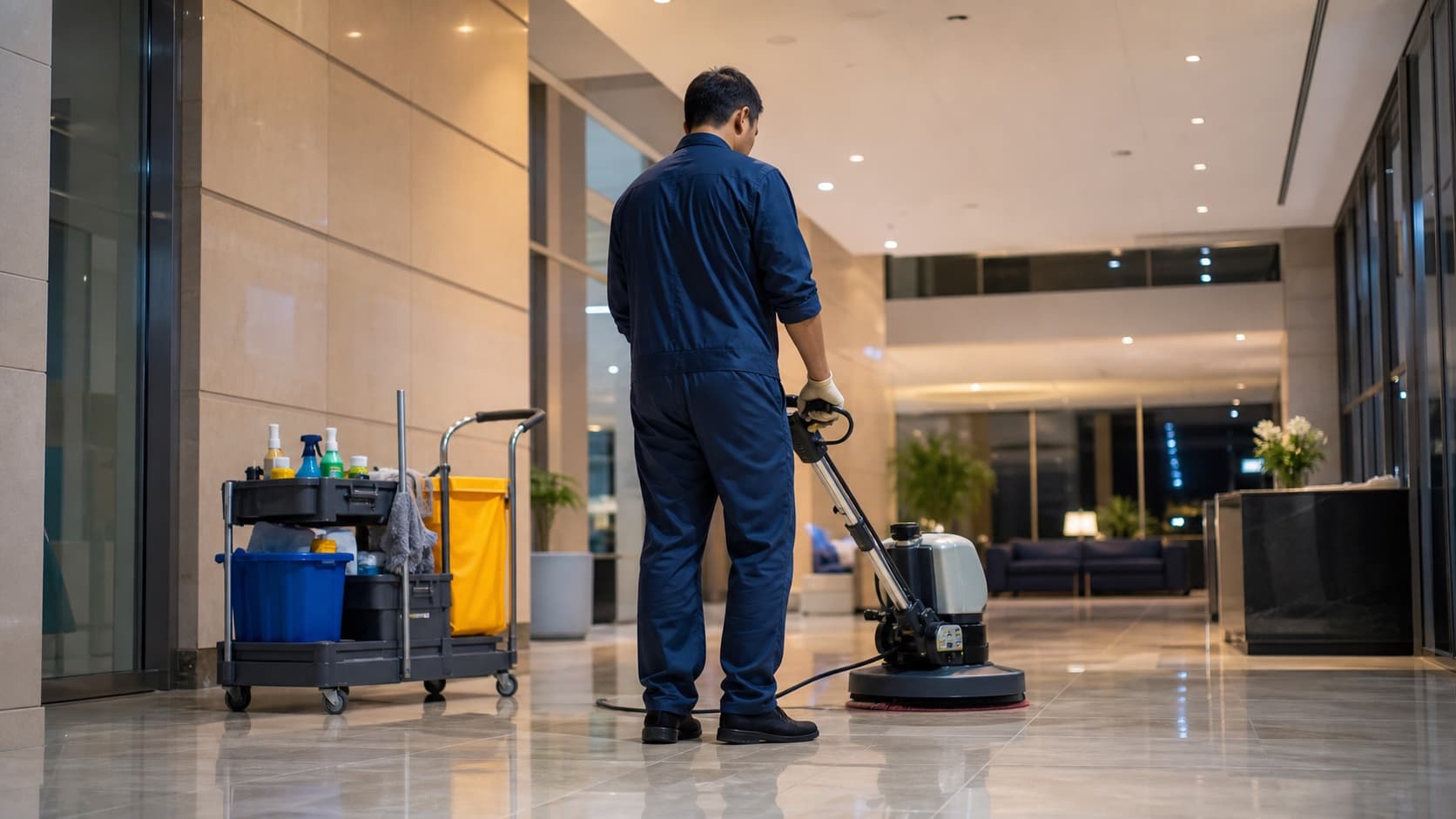
    A cleaning crew operating a floor-scrubbing machine in a hospital corridor causes water intrusion into a mobile medical cart. The cart was not moved before the floor work began. It contains electronic monitoring equipment that is damaged. The hospital holds the cleaning contractor responsible and submits a damage claim. This type of property damage claim involves equipment in the area the cleaning crew was working.

    It falls under General Liability, subject to how the policy addresses the care, custody, and control exclusion and the applicable terms, conditions, and exclusions.

  • Example scenario

    Employee dishonesty claim involving patient valuables

    A cleaning employee working a night shift in a patient room takes a patient's personal property left in a bedside drawer. The hospital facility files a claim under the janitorial service bond, and the patient reports the theft. A janitorial service bond (employee dishonesty bond) can respond to this type of claim on behalf of the facility client. That response is subject to the bond's terms, conditions, and limits.

    The bond is structured to protect the client against employee theft. Healthcare facilities require this coverage specifically because employees work in secured areas with access to patient valuables.

  • Example scenario

    Bloodborne-pathogen exposure incident and Workers' Compensation

    A cleaning technician servicing an isolation room discovers an improperly disposed sharps item and sustains a needlestick injury during cleanup. The employee requires post-exposure prophylaxis, testing, and follow-up care over several months. Workers' Compensation can respond to the medical expenses and any lost wages from a work-related injury of this type.

    That response is subject to the policy's terms and the applicable state's workers' compensation requirements.

  • Example scenario

    Lost facility keys and lock-replacement cost

    A cleaning supervisor loses a key ring containing master keys to multiple secured areas of a clinical building, including a medication room and a sterile supply corridor. The facility management requires immediate re-keying of all affected locks. That involves a significant number of hardware sets across the building.

    Key and lock replacement coverage can help address the cost of the re-keying, subject to the policy's terms and limits. Standard GL does not cover this type of loss.

The claim scenarios above are illustrative examples only. They do not represent actual clients, actual claims, or guaranteed coverage outcomes. Coverage for any specific situation depends on the policy terms, conditions, exclusions, and the facts of the claim.

After you bind

Common certificate and service needs

After a carrier binds coverage, contracts and operational changes can create new documentation needs. A certificate summarizes policy information; the policy and its endorsements control coverage.

Contract and certificate requests

  • Certificate of insurance naming the healthcare facility client as additional insuredprocurement departments require a certificate before a vendor is activated in the system. Periodic re-certification is standard. BLIS reviews specific wording requirements and confirms that policy endorsements match what the certificate shows.
  • Additional insured endorsements on a primary and non-contributory basishealthcare contracts specify that your GL responds first, before any coverage the hospital carries. That endorsement must be written into the policy, not noted on the certificate face.
  • Waiver of subrogation in favor of the facility clientmost hospital vendor contracts require this. The waiver must appear in the policy itself, not just be referenced on the certificate.
  • Evidence of janitorial service bond meeting client-specified limitsfacility procurement coordinators often specify a minimum bond limit and may require the bond carrier to meet a financial strength threshold. BLIS confirms bond terms against the contract before issuing documentation.
  • GL and umbrella limits confirmationhospital systems and large clinical networks frequently specify limits above what standard janitorial programs carry. Reviewing what the contract demands against what the policy provides prevents a certificate rejection at activation.
  • Additional insured status for facility management companies or property owners where the hospital leases spaceoutpatient clinic and medical office cleaning contracts may require two separate named parties. The facility operator and building landlord may each need to appear on the certificate.

Ongoing service

  • Policy changes when a new facility contract is addeda new hospital system or clinic network may require limit adjustments, additional insured endorsements, or a review of whether the bond covers the new client relationship. BLIS handles mid-term adjustments and issues updated certificates.
  • Bond renewaljanitorial service bonds renew annually and must stay continuously in force under most healthcare facility contracts. BLIS coordinates renewals and provides updated bond certificates on request.
  • Audit supportWC and some GL policies audit at expiration, comparing actual payroll and operations to the original estimates. Healthcare cleaning accounts with night-shift differentials, overtime, and seasonal crew changes are more complex to audit; BLIS helps organize the records carriers typically request.
  • Payroll and class-code review before the audit cycle startsconfirming that the codes in place reflect the actual work avoids a corrective assessment at year-end.
  • Renewal strategythis market evaluates infection-control practices, loss history, and facility-client profile. BLIS reviews what has changed in the operation and organizes the renewal submission.
  • Certificate support for vendor credentialing programshospital systems and integrated health networks run annual vendor recertification cycles requiring fresh certificates and bond documentation. BLIS manages ongoing certificate issuance for cleaning operations with multiple facility clients.
  • Coverage review when adding new facility typessurgical center work, dialysis clinic cleaning, or long-term care contracts shift the risk profile. Review coverage adequacy before signing the contract, not after a claim raises the question.

FAQ

Frequently asked questions

Coverage availability, pricing, terms, conditions, and eligibility depend on underwriting, carrier guidelines, state, operations, loss history, policy terms, and other risk-specific factors. Nothing on this site guarantees coverage, pricing, placement, or savings.

Examples are hypothetical and illustrative. They show how a coverage can respond, not a promise that any specific claim will be covered. Actual coverage depends on your policy's terms, conditions, and exclusions.

Blue Lagoon Insurance Services, LLC is an independent insurance agency licensed in California (0M74955), Nevada (3983946), Arizona (3003332484), Texas (2966873), and Florida (L120266). BLIS does not underwrite insurance; coverage and underwriting decisions are made by the insurance carrier.