Janitorial Services · Commercial Cleaning
Commercial Cleaning Insurance for Overnight Work in Client Buildings
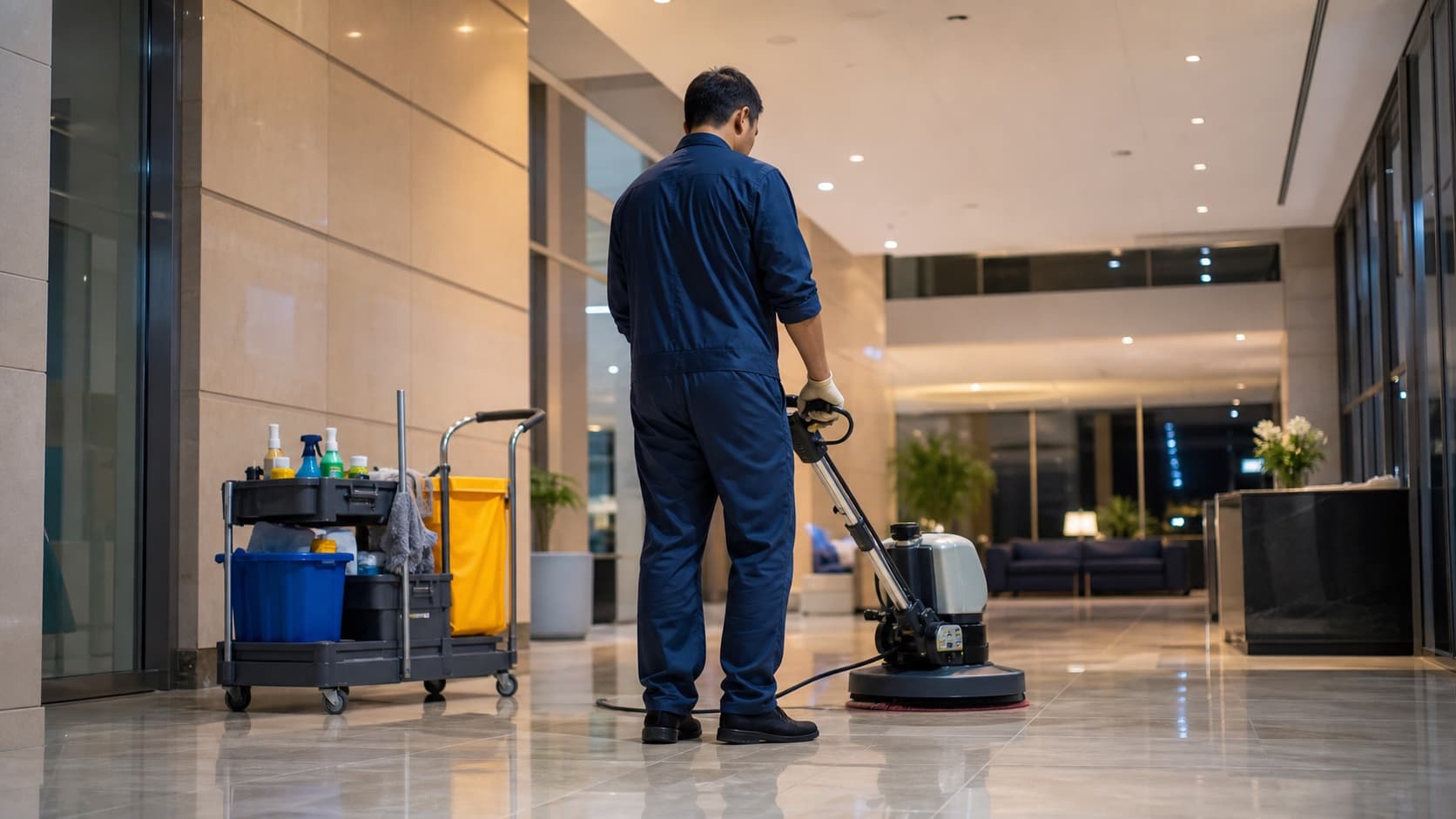
Your crews may work after hours with access to client property, keys, chemicals, vehicles, and equipment. BLIS helps cleaning-business owners review liability, workers' compensation, bonds or crime coverage, auto, and client contract requirements.
Licensed commercial insurance support across 5 states
Easy start
Commercial Cleaning quote
Share a few basics. We’ll help you with the rest.
Start your quoteStart here
Tell us about your janitorial insurance needs
Share your contact information and a few basics about your business. A licensed BLIS representative will review your request.
Privacy: We use the information you provide to review and respond to this request. Do not include Social Security, driver’s license, payment, or medical information. See our Privacy Policy and notice at collection.
Submitting this request does not bind coverage or guarantee a quote. BLIS is licensed in California, Nevada, Arizona, Texas, Florida. CA License 0M74955.
Sending this form does not start coverage or guarantee a quote, price, or coverage result. BLIS will review what you send and may ask for a few more details before discussing available options.
What to expect
What to expect after you submit
Commercial accounts may span several legal entities, locations, and policy schedules. Share how those pieces connect, when current coverage renews, and any contract or certificate deadline. Start with the information you have; BLIS can ask about missing details.
Helpful details, if available
- Business and locations — Legal entity names, who operates each site, and what work happens there.
- Current records — Policy declarations and endorsements, schedules, recent changes, and loss runs if you have them.
- Timing and requirements — Renewal date, contract insurance language, or a certificate deadline.
See the commercial insurance renewal checklist to organize records, and the quote comparison guide and worksheet to line up proposals.
We learn how you operate
A licensed BLIS representative reviews what you share to understand the operation, its entities and locations, and the reason for the request.
We look at what needs protection
We connect day-to-day work, property, people, vehicles, contracts, and current policies with the coverage questions that may matter.
We fill in the blanks
If a key detail such as a policy relationship, location, or deadline is missing, we’ll ask focused questions. You can begin with partial information.
We explain the options
When options are available, we help you compare price, limits, deductibles, exclusions, and policy terms.
We stay available
After coverage starts, BLIS can help with certificates, policy changes, audits, renewals, and claim questions.
Prefer to talk it through? Call (818) 306-8333Monday – Friday, 9:00 AM – 5:00 PM PT
Your operation
What matters for commercial cleaning
Running a commercial cleaning company means coordinating crews, client access, products, equipment, vehicles, and service agreements across multiple locations. A useful insurance review starts with the work you actually perform and the promises in your contracts. BLIS helps you sort those details into a practical coverage plan without treating every cleaning operation the same.
Keys, cards, and alarm codes can create an expensive problem when they are lost or not returned. A client contract may make the cleaning company responsible for replacement credentials or rekeying. Ask how the policy handles keys and locks, then support the insurance with a written process for issuing, returning, and disabling access.
A missing item can put a client relationship under pressure when your crew had after-hours access. Some contracts ask for a janitorial bond or other employee-dishonesty protection. These products have different definitions, limits, and proof requirements, so confirm what the contract asks for and whose loss the coverage is designed to address.
Wrong products, dropped equipment, and moving furniture can damage flooring, fixtures, electronics, or other client property. General liability may address some accidental damage, but policy terms can limit coverage for property in your care or the specific surface being cleaned. Review those details before taking on locations with expensive finishes or specialized equipment.
Wet floors and floor-care work can affect employees, tenants, visitors, and delivery drivers. General liability may help with a covered third-party injury claim, subject to the policy. Warning signs, blocked work areas, coordination with building management, and clear incident notes can help prevent injuries and document what happened.
Cleaning products can damage a surface or affect indoor air quality when they are mixed, mislabeled, or used incorrectly. Policies treat chemical-related incidents differently, and a pollution exclusion may apply. Share the products and specialized processes you use so those terms can be reviewed alongside training, labels, and safety-data procedures.
Workers' compensation requirements vary by state and business structure. When coverage applies, employee duties and payroll can affect classification and cost. Describe general cleaning, floor care, carpet work, and other services accurately, and give overnight crews a simple way to report injuries when a supervisor is not on site.
A client may ask for a certificate, specific limits, additional insured status, a waiver of subrogation, or primary and non-contributory wording. A certificate only summarizes existing insurance; it does not add an endorsement or change the policy. Review the contract early enough to confirm which requested terms are available before promising them.
Using subcontractors does not automatically shift responsibility away from your company. A client or injured party may still make a claim against the business that signed the cleaning contract, while your policy may contain conditions or exclusions for subcontracted work. Use written agreements, confirm required licenses where applicable, and review each subcontractor's insurance before work begins.
Coverage
Coverage options for commercial cleaning
These are common coverages to consider, not a preset package. The right mix depends on how your business works, your contracts, state requirements, and the policy options available.
Janitorial Bond / Commercial Crime. A client contract may request a janitorial bond or evidence of employee-dishonesty coverage because crews have access to client property. These are not the same as general liability. Review who is protected, which workers qualify, what proof is required, and whether the requested limit matches the contract.
Workers' Compensation. This coverage can provide benefits for covered work-related injuries, such as strains, falls, or chemical exposure. Requirements vary by state and business structure. Accurate payroll and job descriptions help the policy reflect general cleaning, floor care, carpet work, office duties, and other roles.
Key and Lock Replacement Coverage. Some policies offer an endorsement or separate coverage for lost client keys and related rekeying costs. Limits, deductibles, covered causes, and treatment of electronic access devices vary. Compare the coverage with the responsibilities in each client agreement.
Commercial Auto. Company-owned vans and trucks may need commercial auto liability, with optional physical damage depending on the vehicle and business needs. If employees drive personal, rented, or borrowed vehicles for work, ask about hired and non-owned auto liability. Personal auto policies may limit business use, so the driving setup should be reviewed rather than assumed.
Inland Marine
Equipment and Supplies. Floor buffers, auto scrubbers, carpet extractors, and wet vacuums may spend more time in vehicles or client buildings than at your office. Property policies differ in how they cover equipment away from the listed premises. Inland marine may provide broader protection for scheduled or portable equipment in transit and at job sites, subject to its terms.
Umbrella / Excess Liability. This coverage may add limits above scheduled underlying policies such as general liability and commercial auto. The policies it follows, exclusions, and attachment points matter. Some client contracts request an umbrella or excess limit, but the business should also consider its vehicles, locations, contracts, and overall ability to absorb a large claim.
What shapes your quote
Details that can affect your quote
These details can affect which options are available and what they may cost. You don't need all of them to start — send what you have, and we'll follow up on anything important that's missing.
- Revenue and services. Share annual revenue and the mix of routine cleaning, floor care, carpet cleaning, pressure washing, or other specialty work.
- Payroll by job duty. Separate general cleaning, specialty floor work, driving, supervision, and office roles so workers' compensation classifications can be reviewed accurately.
- Employees and shifts. Include full-time, part-time, temporary, and seasonal staff, plus daytime, overnight, and weekend schedules.
- Subcontracted work. Explain which services subcontractors perform, what they are paid, and what insurance your agreements require them to maintain.
- Clients and buildings. Offices, retail centers, warehouses, schools, healthcare facilities, and multi-tenant properties can involve different access, safety, and contract needs.
- Products and processes. List routine products, disinfectants, floor strippers, degreasers, and any specialized equipment or chemical procedures.
- Keys and access. Describe how the business logs, issues, returns, and disables keys, cards, and codes.
- Vehicles and equipment. Include company vehicles, employee driving, equipment values, storage locations, and how tools move between jobs.
- Claims and changes. Share prior property, injury, auto, or dishonesty claims and the practical steps taken afterward.
- Current policies and contracts. An optional policy upload and representative client agreements can help compare current coverage with today's work and certificate requests.
Coverage examples
Example claim scenarios
A few situations that show how coverage can respond when something goes wrong. These are examples only — not actual claims, and not a guarantee of any outcome.
- Example scenario
Wet floor slip-and-fall in a commercial lobby
A crew finishes mopping an office lobby before opening time. A delivery driver enters before the floor dries and falls. General liability may help with a covered claim against the cleaning company, subject to the policy's terms. Warning signs, restricted access, and incident records can also help show how the work area was managed.
- Example scenario
Flooring damage from chemical misapplication
A crew mistakenly applies floor stripper to specialty hardwood, damaging the finish. The client asks the cleaning company to pay for repairs. Whether general liability responds may depend on the policy's property-damage, care-or-control, worked-on-property, and chemical-related provisions.
- Example scenario
Employee theft allegation at a client office
A client reports missing cash after an evening cleaning visit and asks the company to investigate. A janitorial bond or employee-dishonesty form may apply if the event, worker, and proof meet its terms. Preserve schedules, access logs, and communications while the allegation is reviewed.
- Example scenario
Key loss requiring building rekey after employee departure
An employee leaves without returning a master key, and the property manager asks the cleaning company to pay for rekeying. Key and lock replacement coverage may help if the cause and expense meet the endorsement's terms, limits, deductible, and reporting requirements.
The claim scenarios above are illustrative examples only. They do not represent actual clients, actual claims, or guaranteed coverage outcomes. Coverage for any specific situation depends on the policy terms, conditions, exclusions, and the facts of the claim.
After coverage starts
Common certificate and service needs
Once coverage is in place, new contracts or business changes can mean new paperwork. A certificate only summarizes policy information; the policy and its endorsements determine the actual coverage.
Contract and certificate requests
- Certificate requests. Send BLIS the current contract or certificate instructions before work begins. A certificate summarizes policies in force; it does not create coverage or add terms that are not in the policies.
- Additional insured endorsements. A client may ask to be added to general liability for specified work. The wording and scope depend on the available endorsement, so the policy—not the certificate alone—should be checked.
- Waiver of subrogation. Some service agreements request a waiver on one or more policies. Availability, cost, and scope vary, and a certificate notation does not replace an approved endorsement.
- Primary and non-contributory wording. A contract may request this status for covered claims involving an additional insured. Confirm the requested wording and available endorsement before accepting the requirement.
- Bond or crime documentation. When a client requires a janitorial bond or crime coverage, confirm the requested form, limit, protected party, and proof document.
Ongoing service
- New accounts and locations. A new building can change payroll, services, access responsibilities, equipment use, driving, or contract terms. Share material changes so the policies can be reviewed.
- Workers' compensation reviews and audits. Keep payroll organized by employee and job duty. When a policy is audited, BLIS can help you understand the requested records and address classification questions.
- Certificates for new and renewing contracts. Send the complete request early so limits and endorsements can be compared with the actual policies before the client deadline.
- Renewal planning. Review new employees, buildings, services, vehicles, equipment, claims, and contract requirements so the next policy term reflects the business today.
- Bids for unfamiliar work. Industrial, healthcare, school, and office cleaning can involve different products, access rules, employee duties, and insurance requests. Review those differences before committing to the contract.
- Claim support. Report an injury, property event, auto accident, lost key, or theft allegation promptly. BLIS can help organize the available facts and connect you with the insurer handling the claim.
FAQ
Frequently asked questions
A janitorial bond is a type of fidelity protection that may address a client's covered loss caused by employee theft. It is different from general liability. It is not automatically required for every cleaning company, but a client contract may request one or ask for commercial crime coverage instead. Check the required form, limit, covered workers, protected party, and proof conditions.
It may, depending on what was damaged and the policy terms. General liability can cover some third-party property damage, but provisions involving property in your care or the particular surface being cleaned may limit the response. Chemical-related exclusions can also matter. Review the policy against the property and services involved rather than assuming every accidental-damage claim works the same way.
Time of day does not by itself decide whether an injury is covered. Workers' compensation can provide benefits for a covered work-related injury, subject to state law and the policy. Night work can make communication and documentation harder when no supervisor is present, so crews should know how to get medical help, report an incident, and preserve the basic facts promptly.
Codes and classification rules vary by state and rating system. Routine janitorial work may be treated differently from carpet cleaning, pressure washing, exterior window work, or specialty floor services. Describe each employee's actual duties and keep payroll records by role. The insurer or appropriate rating authority ultimately determines the classification used.
Coverage depends on the event and the policy. General liability forms can treat a damaged surface, fumes, spills, and pollution differently. Share the products and processes you use, then review the pollution exclusion and any cleaning-chemical provisions. Safe storage, labels, training, and safety-data sheets remain important whether or not coverage is available.
Notify the client, disable electronic access when possible, document who last held the credential, and follow the contract's reporting steps. The client may request replacement credentials or rekeying. A key and lock endorsement or separate coverage may help with eligible costs, but limits, deductibles, and covered causes vary by policy.
Requirements depend on your contracts, policies, state rules, and the work being subcontracted. A subcontractor's actions can still lead to a claim against your company, and your policy may contain conditions or exclusions for subcontracted work. Use a written agreement and review licenses, general liability, workers' compensation, auto, and certificates as applicable. A certificate is useful evidence, but it does not guarantee that a particular claim is covered.
There is no universal certificate package. A client may request general liability, workers' compensation, commercial auto, umbrella or excess, a janitorial bond, or specific endorsements such as additional insured, waiver of subrogation, or primary and non-contributory wording. Send the exact contract language to BLIS. The requested terms must be compared with the policies, because a certificate cannot create coverage or an endorsement.
Keep exploring
Related pages and next steps
In janitorial services
Related coverage
- General Liability
- Workers' Compensation
- Employee Dishonesty / Janitorial Bond
- Commercial Auto
- Inland Marine / Equipment
- Umbrella / Excess Liability
From the insights library
Related reading
Coverage Guide Cleaning Company Insurance: Bonds, Keys, and Night Work
Learn how to protect your cleaning company from damaged client property, missing keys, employee theft, workplace injuries, and contract problems.
Workers' Comp Guide Workers' Compensation Guide for Business Owners
Compare workers' compensation requirements, job classifications, payroll, audits, owner treatment, and claims history across BLIS's five licensed states.
Risk Note Before You Sign: Check the Contract’s Insurance Requirements
Turn a contract's insurance section into a practical checklist for limits, certificates, additional insured status, payment order, and recovery rights.
Ready to discuss your business insurance needs? Share the basics to get started.
Review Your Cleaning CoverageCoverage availability, pricing, terms, conditions, limits, and eligibility depend on the insurer, state, details of the business, claims history, and policy terms. Nothing on this site guarantees coverage, pricing, approval, or savings.
Examples are hypothetical and illustrative. They show how a coverage can respond, not a promise that any specific claim will be covered. Actual coverage depends on your policy’s terms, conditions, and exclusions.
Blue Lagoon Insurance Services, LLC is a licensed insurance agency. Insurance products are offered through licensed representatives in the states listed above. California License 0M74955.