Know when a client wants a bond, not liability insurance
General liability is not generally designed to cover an employee's theft. A janitorial bond or employee-dishonesty coverage may address that separate risk, depending on the form and the client contract.
A janitorial service bond and employee-dishonesty coverage are not interchangeable in every program. Eligibility, proof of loss, covered employees, and who receives payment depend on the bond or policy wording. Match the instrument to the client's current contract.
Building managers may require both general liability and a bond. A liability certificate does not prove the bond exists. Bond structures vary, so compare the client's contract with the people, acts, and limits the bond actually covers.
Plan for the cost of a missing master key
Cleaning several buildings may put master keys, access cards, and codes in your employees' hands. If one goes missing, a client may demand a costly building-wide rekey. Standard general liability may not cover that expense.
Key-and-lock replacement may be available through an endorsement or separate coverage. Confirm that the policy clearly includes it and review any limit or deductible.
Example scenario: An employee resigns and a ring of building keys goes missing. The building manager requires every exterior and stairwell lock to be changed. Key-and-lock coverage may address eligible costs, subject to the policy's terms and limits.
Check how damage to the property you clean is handled
General liability can cover certain damage your work causes to other people's property. But policies often limit damage to property in your care, custody, or control — in plain terms, the surfaces and items your crew is directly handling. That can leave a larger gap than many cleaning-company owners expect.
Pay close attention to damage involving the surface or item being cleaned. Examples include specialty tile damaged by the wrong chemical or a floor stripped incorrectly. Coverage depends on the policy's care, custody, or control and property-worked-on provisions.
The policy should reflect the property your crews handle. Healthcare and technology sites may contain equipment worth far more than ordinary office furniture. Review the policy language before deciding whether an endorsement or separate property coverage is needed.
Make injury reporting work on the night shift
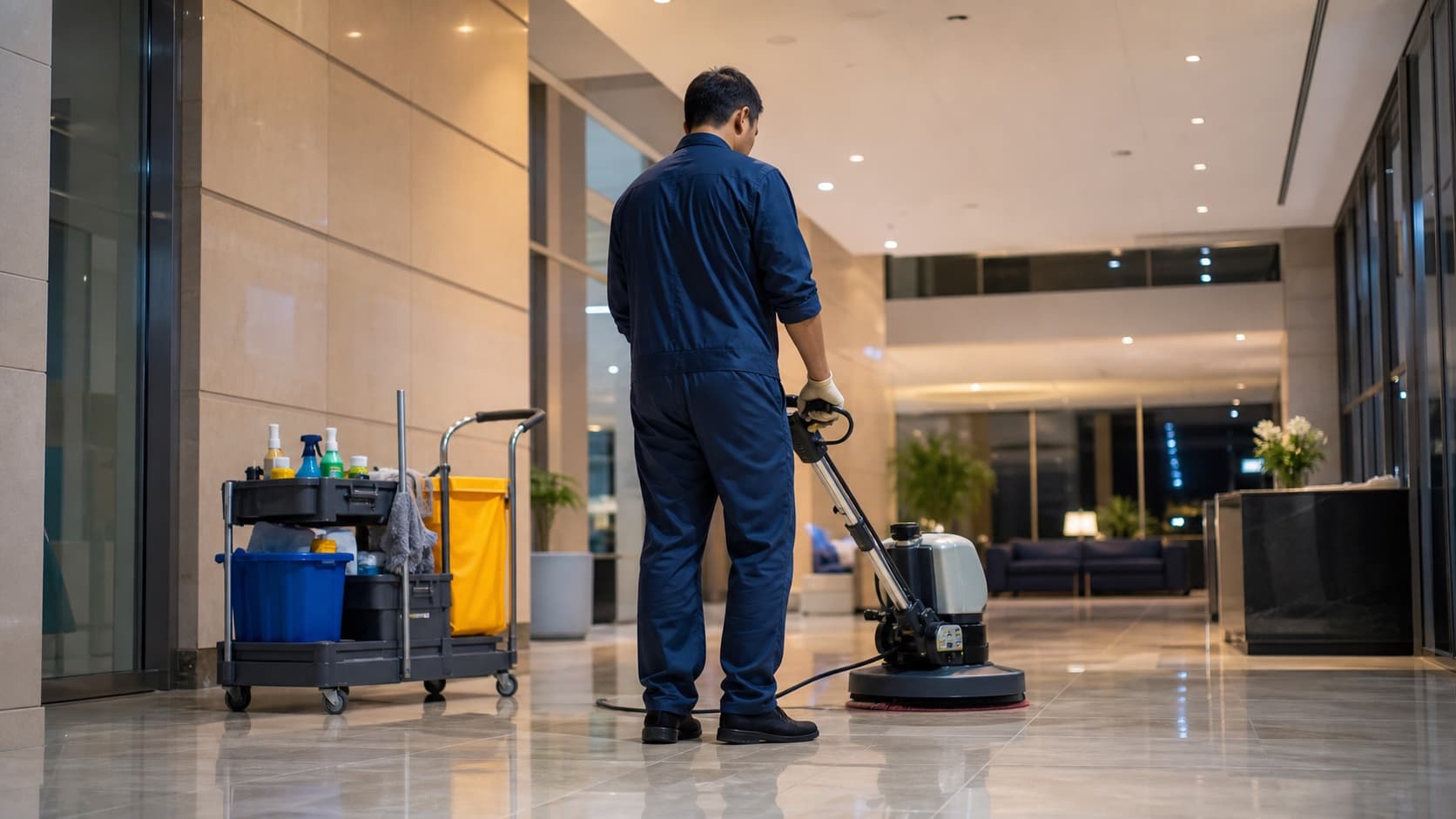
Most cleaning work runs after hours in an empty facility. Workers' compensation can cover an eligible on-the-job injury regardless of the shift, but overnight work changes how quickly an incident is reported and documented.
With no building management on site, an employee hurt overnight may wait until the next day to report it. Give every crew a clear after-hours process: who to call, what to document, and when a supervisor must respond. That supports the employee and gives the business a clearer record of what happened.
Job classifications are separate from shift timing. Cleaning payroll commonly falls under janitorial or building-cleaning categories, while floor care, carpet extraction, and pressure washing may be classified and priced differently. If a mixed crew is reported under one category, the year-end audit may produce a premium adjustment.
Turn client insurance requirements into a checklist
A standard cleaning contract asks for a GL limit threshold, workers' compensation confirmation, additional insured status naming the property owner, and often a waiver of subrogation endorsement. Healthcare and property management contracts frequently add primary and non-contributory language.
A certificate of insurance is evidence, not a guarantee. When one lists additional insured status, the policy endorsement controls what that status actually provides — not the certificate face. Issue a certificate showing additional insured status without the endorsement behind it, and you've created a document that doesn't match the real coverage. Need a certificate for an active contract? Email service@blisins.com and BLIS handles it from there.
Build coverage around the way your crews work
General liability is an important foundation, but it may not address employee theft, missing keys, or every type of damage to property being cleaned. Bonds and endorsements can address some of those gaps.
Workers' compensation requirements vary by state and business structure, with Texas rules differing from the other BLIS states. Commercial auto may apply to owned vehicles, while hired and non-owned auto can be relevant to other vehicle use. Umbrella or excess coverage may be requested by contract and responds only according to its terms and scheduled underlying coverage.
Start with the business you actually run: the facilities you clean, how crews are organized, which chemicals and equipment they use, how they travel, and what client contracts require. The commercial insurance intake helps you organize those details for a coverage review.