Transportation · Refrigerated Trucking

Reefer Trucking Insurance for the Rejected-Load Claim

A standard cargo policy was not written for a load that can be rejected at two degrees off-spec. Temperature excursions, reefer unit failure, perishable commodity exclusions, and shipper contract terms each pull the account in a different direction. BLIS reads what your commodities, radius, equipment age, and broker agreements actually demand — then builds the submission around that picture.

Licensed commercial insurance support across 5 states

Smart intake

Reefer Trucking quote

One question to start. We do the reading from there.

Start your quote

Get Started

Request a Trucking insurance quote

Complete the required contact fields and a few business details. A licensed BLIS representative will review the request.

1 / 2About you

How to reach you about your request.

We use this only to follow up.

Licensed in CA, NV, AZ, TX, and FL.

We only use this information to review your insurance request. BLIS is licensed in California, Nevada, Arizona, Texas, Florida. CA License 0M74955.

Submitting this form does not bind coverage and does not promise a specific quote, price, or coverage outcome. BLIS reviews submitted details and may follow up for information needed to evaluate the account.

What to expect

What to expect after you submit

A BLIS representative reviews the information you submit and follows up if something important is missing.

  1. A real person reads it

    Your details get read against what carriers actually want for your kind of account — not routed through a form stack.

  2. Your account gets matched

    How you operate maps to the coverage lines and markets that fit the risk.

  3. Gaps get filled

    If something important is missing, a few targeted questions — not another long form.

  4. Options get laid out

    Coverage, exclusions, carrier fit, and cost — side by side, not just price.

  5. Bound? We stay on.

    Certificates, endorsements, audits, renewals, policy changes — handled.

Prefer to talk it through? Call (818) 306-8333Monday – Friday, 9:00 AM – 5:00 PM PT

Your operation

How reefer trucking operations shape the insurance review

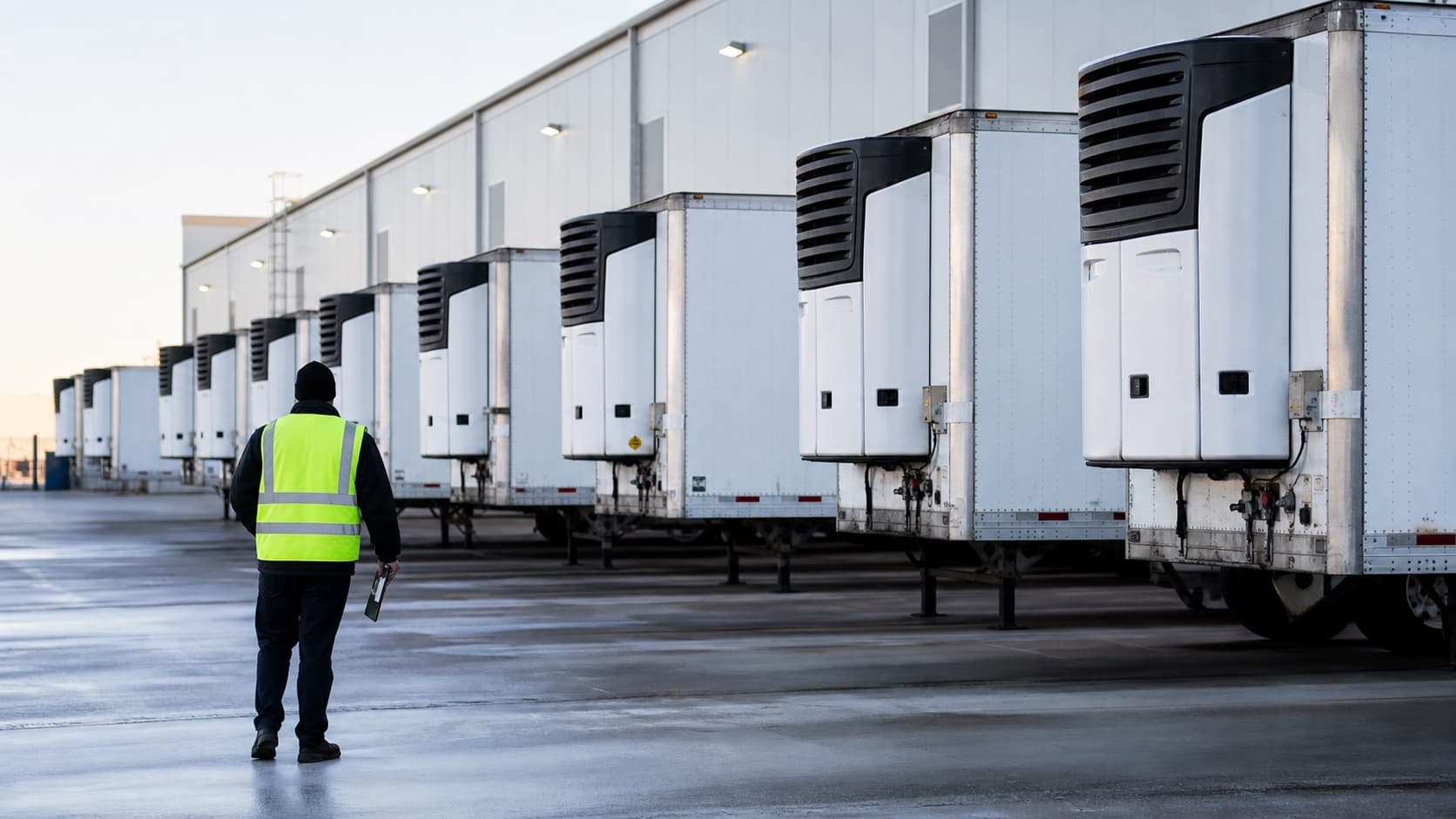
Temperature-controlled freight fails in ways that leave no visible damage on the trailer. Produce, dairy, pharmaceutical, and protein loads get rejected when the logger says the set-point drifted — and a rejection is a cargo claim whether the unit looks fine or not. Carriers write more exclusions on reefer accounts than most operators expect. They ask about commodity types, reefer unit age, maintenance records, and who verified the set-point at loading. Every answer shapes which coverage applies when a load is disputed — and which part of the policy holds the line.

Reefer unit failure turns a cargo question into a coverage dispute. When a unit malfunctions mid-transit, loses fuel, or fails at an overnight stop, the load arrives outside specification — and four parties often disagree about why. Carriers ask pointed questions up front: unit age, maintenance records, pre-trip practices, who confirmed the set-point at loading.

Those answers determine which coverage line is expected to respond. Without them answered accurately, a temperature excursion claim can sit between policies while the load spoils.

Spoilage and exclusion are not the same word on a cargo form. Produce, seafood, and meat products are routinely carved out — either as excluded commodities or as excluded causes of loss — depending on the carrier and the form language. Some policies name mechanical reefer breakdown as a covered peril. Others exclude temperature change entirely unless the reefer breakdown endorsement is added.

A cargo policy that does not explicitly cover your commodity type is not a minor gap. It is the difference between a paid claim and a denied one. Confirm which commodities the form covers before the load moves.

Federal authority brings a federal compliance layer. For-hire motor carriers must maintain minimum liability limits and file proof of financial responsibility with the FMCSA through an MCS-90 endorsement. That endorsement is not extra coverage — it is a regulatory condition that keeps your operating authority intact if a judgment goes unsatisfied.

Carriers reviewing a reefer submission pull the DOT number, review the type of authority held, and check the safety record. A clean history reads as a positive on the submission; a compliance flag needs to be addressed before the account reaches underwriting.

Long shifts and time-sensitive loads create pressure to push hours. Carriers know that and rate it accordingly. Moving violations, prior accidents, and hours-of-service history all factor into underwriting on a reefer account. Run MVRs before hire — not after the driver is already in the seat. On a fleet, pull them on a defined schedule after that. Adding a driver mid-term with an undisclosed record is a problem.

The carrier may exclude that driver, surcharge the policy, or decline to renew when it surfaces.

Insure the steel box and you have not insured the reefer trailer. The refrigeration unit on the nose is a separate high-value component — replacing one can cost as much as the trailer itself. A physical damage claim on a totaled reefer trailer valued without the refrigeration unit will pay short of replacement cost. State values accurately at inception.

Lenders and lessors on financed or leased equipment must appear on the policy as loss payees. Their requirements set a floor on insured values.

Contracts write the requirements — your policy has to match them. Freight brokers placing reefer loads typically specify minimum auto liability and cargo limits above general freight standards. Food-grade shippers and pharmaceutical clients go further: temperature logging protocols, food safety certifications, and coverage language specific to their commodity.

When a contract requires higher limits or specific endorsements than the policy carries, the contractual obligation and the coverage diverge before a load is even dispatched. BLIS reviews broker and shipper contracts alongside the policy to find those mismatches before they become claim disputes.

New equipment that moves before the policy is updated is uncovered equipment. Reefer additions are not automatic — each tractor and trailer must be endorsed onto the policy, with the reefer unit value included in the physical damage schedule. Newly acquired vehicle provisions exist, but they have time windows and conditions that do not protect indefinitely.

A refrigerated trailer hauling loads during an endorsement delay is an exposure with no coverage behind it. Notify promptly. BLIS coordinates mid-term additions and can walk through how your specific policy handles newly acquired vehicles.

Where you run shapes every pricing and filing decision on the account. A coast-to-coast produce operator accumulates miles, overnight stops, multiple drivers, and multi-state filing exposure. A regional dairy hauler on a defined lane still draws territory-specific questions: terminal location, whether routes cross into Mexico, how the policy defines the radius. The radius is not just a classification checkbox.

It determines which federal filings apply and which markets are willing to write the account.

Coverage

Coverages commonly considered for reefer trucking operations

These are common lines to evaluate, not a preset package. Your operations, current contracts, state requirements, and the carrier's policy forms determine the final program.

  • Commercial Auto Liability

    The primary coverage line for any motor carrier hauling for hire. For reefer operators with FMCSA authority, the policy carries the MCS-90 endorsement certifying federal financial responsibility. Broker and shipper contracts set their own minimums — typically above the regulatory floor. At each renewal, carriers pull the DOT safety rating, loss history, and driver MVRs. What they find there sets the tone for the whole account.

  • Physical Damage

    Covers the tractor and reefer trailer against collision, rollover, fire, theft, vandalism, and other covered causes. For reefer trailers, the stated or agreed value must include the refrigeration unit — that component alone can represent a significant portion of the trailer's replacement cost. Lenders and lessors on financed or leased equipment must appear as loss payees. Cutting stated values at renewal to reduce premium creates a gap that reveals itself only at total loss.

  • Motor Truck Cargo

    Reefer Qualified — Protects the commodity in your care while it's in transit. Standard cargo policies often limit covered causes of loss to collision and overturn — not refrigeration failure. A reefer-qualified cargo policy, sometimes paired with a reefer breakdown endorsement, extends to temperature excursion losses tied to mechanical failure. Cargo limits should reflect the maximum value of a full load. Produce, pharmaceutical, and protein loads regularly exceed what standard limits were set to address.

  • Reefer Breakdown Coverage

    Extends the cargo policy to cover losses from refrigeration unit mechanical failure — beyond collision and fire. Without it, a temperature-related spoilage claim may be denied outright. Not every carrier writes this endorsement on every commodity type, and it typically carries its own sub-limit and deductible. When shipper contracts require coverage for temperature losses, verify the endorsement is in the policy itself. A certificate does not confirm endorsement terms — the policy does.

  • General Liability

    Responds to third-party bodily injury and property damage claims that fall outside the commercial auto policy. Premises exposures, loading and unloading incidents, and customer-location claims all land here. Some broker and shipper contracts require GL separately from auto liability — the contract language controls, not assumptions. Review contracts before accepting a load under a new agreement.

  • Workers' Compensation

    Covers medical costs and lost wages when an employee is injured on the job. Refrigerated loading docks, load securement, hookup, and pre-trip inspection all present injury exposure specific to reefer operations. Workers' Compensation is required for qualifying employees in California and the other states where BLIS writes. Brokers and shippers may ask for a WC waiver or proof of exempt status from owner-operators. Know what each operating state requires.

  • Umbrella / Excess Liability

    Extends coverage above auto and GL limits once those limits are exhausted. Severity exposure scales with fleet size — multiple units, multiple drivers, and multi-state lanes mean more opportunities for a loss that pushes past the primary. Some broker and shipper contracts specify umbrella thresholds. BLIS can help assess whether an umbrella fits the scale of the operation.

Quote factors

Common quote factors

These are the details that can shape eligibility, terms, and pricing. You don't need all of them to start — send what you have, and we'll follow up on anything important that's missing.

  • Commodity types hauledProduce, frozen food, dairy, pharmaceuticals, meat, and seafood are each evaluated differently. Some sit outside standard cargo form language or require specific endorsements to be covered at all.
  • Radius of operations and lanesLocal, regional, or long-haul classification drives filing requirements, mileage exposure, and driver count. The states the operation moves through add their own regulatory and permit questions.
  • Number and type of tractors and reefer trailersVehicle count, make, model, year, and VIN shape physical damage rating and carrier acceptance. The age and condition of the refrigeration units factor into how values are assessed.
  • Tractor and trailer values including reefer unitsStated or agreed values must reflect current replacement cost, refrigeration unit included. A value that omits the reefer unit is a gap that only shows at total loss.
  • Driver roster and MVR historyCarriers review motor vehicle records for every listed driver. Accidents, moving violations, DUIs, and suspensions affect both underwriting appetite and pricing. CDL tenure and driver age are standard inputs.
  • DOT number, MC authority, and safety recordFMCSA safety rating, out-of-service history, and authority type all factor into the submission. A clean compliance record opens more markets; a flagged one narrows them.
  • Prior cargo loss historyCarriers ask what prior cargo claims were, what caused them, and how they resolved. A pattern of temperature-related losses affects which markets will write the account and on what terms.
  • Broker and shipper contract requirementsInclude minimum cargo limits, auto liability limits, umbrella thresholds, and additional insured requirements your brokers or shippers specify. The policy must support what the contracts require.
  • Current policy upload (optional)Declarations pages let BLIS review existing limits and spot exclusions before the submission goes out — not after.
  • Needed-by dateAn upcoming load commitment, a new broker agreement, or an expiring policy tells us where to focus first.
Illustrative scenarios

Example claim scenarios

A few situations that show how coverage can respond when something goes wrong. These are examples only — not actual claims, and not a guarantee of any outcome.

  • Example scenario

    Reefer unit failure and load rejection

    A reefer driver hauling fresh produce makes a scheduled overnight stop. The trailer-mounted refrigeration unit loses fuel because the auxiliary tank was not properly filled at loading. By morning, the trailer temperature has risen well outside specification and the receiving facility rejects the load.

    A reefer breakdown endorsement can respond to the value of the spoiled load — subject to the policy's limits, terms, and the deductible. Without that endorsement, a standard cargo policy may deny the claim. Temperature excursion alone is not a named covered peril.

  • Example scenario

    Collision with trailer damage and refrigeration unit loss

    A reefer tractor-trailer is involved in a collision during interstate travel. The front of the refrigerated trailer is badly damaged, including the refrigeration unit on the nose. The physical damage claim involves both the trailer structure and the reefer unit. If the policy's stated value reflects only the base trailer and not the reefer unit's replacement cost, the recovery may fall short of the actual loss.

    Physical damage coverage with accurate stated values can respond to the combined loss, subject to policy terms and deductibles.

  • Example scenario

    Pharmaceutical load temperature deviation

    A reefer carrier delivers a pharmaceutical shipment where the electronic temperature logger shows a brief deviation above the specified range during a delivery stop. The shipper refuses the load and submits a claim for the full shipment value. The dispute centers on the cause: a reefer unit issue, a door opening at an intermediate stop, or an improper set-point at origin.

    The resolution depends on what the cargo policy covers for pharmaceutical commodities and whether the reefer breakdown endorsement applies to the logged deviation.

  • Example scenario

    Mid-term trailer addition and coverage gap

    A reefer operator adds a second refrigerated trailer and begins hauling before updating the policy. While moving the trailer to a customer facility, it is sideswiped and sustains damage to the side panels and the reefer unit. Because the policy had not been endorsed to add the new trailer, the physical damage claim is disputed.

    The carrier examines whether the newly acquired vehicle provision covers the trailer and for how long. Newly acquired vehicle provisions have specific conditions and a limited time window. Prompt mid-term endorsement avoids this gap.

The claim scenarios above are illustrative examples only. They do not represent actual clients, actual claims, or guaranteed coverage outcomes. Coverage for any specific situation depends on the policy terms, conditions, exclusions, and the facts of the claim.

After you bind

Common certificate and service needs

After a carrier binds coverage, contracts and operational changes can create new documentation needs. A certificate summarizes policy information; the policy and its endorsements control coverage.

Contract and certificate requests

  • Certificate of insurance for broker agreementsfreight brokers require a current certificate before activating a carrier agreement. Certificates must show the specific minimum limits and confirm the type of cargo coverage in place. BLIS issues certificates that reflect the actual policy terms.
  • MCS-90 endorsement recordsoperators with FMCSA for-hire authority need the MCS-90 on the commercial auto policy. Brokers, shippers, and the FMCSA each may ask for evidence it is in place. BLIS confirms the endorsement is part of the placement.
  • Additional insured endorsements for shippers and food-grade customersa certificate does not make a party an additional insured. The policy endorsement does. When shippers require additional insured status before tendering a load, the endorsement must be in the policy and reflected on the certificate.
  • Cargo coverage confirmation for temperature-sensitive loadssome shippers require written evidence that the cargo form covers temperature-related losses and that a reefer breakdown endorsement is in effect. BLIS provides confirmation of what the policy actually covers.
  • Lender and lessor certificateslenders and equipment lessors require physical damage evidence with their interest listed as loss payee. Include the lienholder name and address when requesting a certificate for financed or leased equipment.

Ongoing service

  • Mid-term additionseach new tractor, trailer, or driver requires a policy endorsement before operations begin. BLIS handles additions and walks through the records and timing the carrier needs to keep coverage current.
  • Reefer unit value updatesrefrigeration unit replacement costs shift between policy periods. BLIS reviews stated values at renewal and can update them mid-term when equipment is replaced or upgraded.
  • Broker contract reviewa new broker agreement with different coverage requirements needs to be reviewed against the policy before the first load moves under it. BLIS identifies mismatches and coordinates changes.
  • Renewal preparationcarriers evaluate cargo loss history, safety record, equipment age, and commodity mix at every renewal. BLIS organizes those factors ahead of the submission so the account is presented accurately.
  • MVR monitoringwhen drivers are added or rotated, BLIS can help you assess how MVR history affects the account and when the carrier needs to be informed.
  • Claims questionsafter a cargo rejection, temperature dispute, or auto loss, BLIS explains the claims process and identifies what records the carrier will need to review the claim.

FAQ

Frequently asked questions

Coverage availability, pricing, terms, conditions, and eligibility depend on underwriting, carrier guidelines, state, operations, loss history, policy terms, and other risk-specific factors. Nothing on this site guarantees coverage, pricing, placement, or savings.

Examples are hypothetical and illustrative. They show how a coverage can respond, not a promise that any specific claim will be covered. Actual coverage depends on your policy’s terms, conditions, and exclusions.

Blue Lagoon Insurance Services, LLC is an independent insurance agency licensed in California (0M74955), Nevada (3983946), Arizona (3003332484), Texas (2966873), and Florida (L120266). BLIS does not underwrite insurance; coverage and underwriting decisions are made by the insurance carrier.