Manufacturing · Recycling Centers

Recycling Center Insurance Where Fire Underwriting Comes First

Paper bales, sorting conveyors, outdoor material piles, and municipal contracts — a recycling center carries exposures that general commercial programs price wrong or miss entirely. Fire underwriting starts with the combustible load. Equipment breakdown is a production question, not just a property one. Environmental liability hinges on what the facility accepts and how it stores it. We review all of it before anything gets placed.

Licensed commercial insurance support across 5 states

Smart intake

Recycling Center quote

One question to start. We do the reading from there.

Start your quote

Get Started

Request a Manufacturing insurance quote

Complete the required contact fields and a few business details. A licensed BLIS representative will review the request.

1 / 2About you

How to reach you about your request.

We use this only to follow up.

Licensed in CA, NV, AZ, TX, and FL.

We only use this information to review your insurance request. BLIS is licensed in California, Nevada, Arizona, Texas, Florida. CA License 0M74955.

Submitting this form does not bind coverage and does not promise a specific quote, price, or coverage outcome. BLIS reviews submitted details and may follow up for information needed to evaluate the account.

What to expect

What to expect after you submit

A BLIS representative reviews the information you submit and follows up if something important is missing.

  1. A real person reads it

    Your details get read against what carriers actually want for your kind of account — not routed through a form stack.

  2. Your account gets matched

    How you operate maps to the coverage lines and markets that fit the risk.

  3. Gaps get filled

    If something important is missing, a few targeted questions — not another long form.

  4. Options get laid out

    Coverage, exclusions, carrier fit, and cost — side by side, not just price.

  5. Bound? We stay on.

    Certificates, endorsements, audits, renewals, policy changes — handled.

Prefer to talk it through? Call (818) 306-8333Monday – Friday, 9:00 AM – 5:00 PM PT

Your operation

How recycling center operations shape the insurance review

Material arrives in volume, moves through sort lines and mechanical equipment, gets baled or containerized, and leaves as commodity sold to downstream processors. Each step adds exposure that most general commercial programs can't price accurately. Fire underwriting for accumulated combustibles. Equipment breakdown for continuous mechanical operations. Environmental liability tied to outdoor storage and drainage. Business income limits built around actual restoration timelines. These are the lines where recycling center operators find gaps after a loss, not before.

Combustible material accumulates faster than most facilities expect. Paper, cardboard, and plastic film are the dominant inputs at single-stream centers — and before they reach the baler, they represent a real fire load. Baled material in open or partially enclosed storage can sustain a fire for an extended period. The highest ignition risk sits with material waiting to be processed.

Carriers evaluate suppression systems, baling frequency, material mix, site layout, and separation from neighboring structures. Facilities without functional sprinklers — or where material accumulates before processing — face limited admitted carrier appetite and higher property rates. If you're unsure how your controls read at application, we'll help you frame them accurately.

When the primary baler stops, so does revenue. Throughput at a recycling facility depends on balers, conveyors, eddy-current separators, optical sorters, shredders, and forklifts running continuously. Standard commercial property responds to fire, weather, and external perils — mechanical breakdown is specifically excluded.

Equipment Breakdown coverage responds when a machine fails from a mechanical or electrical cause. For facilities processing hundreds of tons per month, weeks of downtime carries a real revenue cost. Business income coverage tied to equipment breakdown is the companion that makes the gap whole.

Outdoor storage and drainage make environmental liability a live question — even without hazardous materials. Facilities accepting electronics, plastics with residual chemical content, batteries, or motor oil carry obvious exposure. Centers limited to clean paper and cardboard can still face claims.

Leachate from saturated material piles reaching a storm drain, runoff from uncovered outdoor storage, or off-spec material improperly disposed — all generate environmental claims. Standard GL policies exclude most of that. Environmental liability is underwritten in specialty markets. The inquiry focuses on accepted material types, outdoor storage layout, drainage and containment, and permit status.

Prior regulatory notices require disclosure — we'll help you frame them.

Sorting lines, forklifts, and maintenance cycles all carry distinct WC exposure. Sorting workers face sharps, contamination from uncleaned containers, and cumulative ergonomic injury. Equipment operators face struck-by and crush exposure. Maintenance staff work near moving machinery under repair.

Each role maps to a different Workers' Compensation class code — and the rate spread between a sort-line code and an office code can be substantial. Allocating payroll to a lower-rated code at inception creates an audit liability when the carrier reconciles actual job functions at year-end. We review job categories and actual work performed as part of intake so the classifications hold.

Replacement cost has moved. Sorting halls, bale storage structures, and drive-through receiving areas are often large metal-frame, pre-engineered buildings — and per-square-foot construction costs have risen significantly. Limits that held at the last renewal may not reflect what it costs to rebuild today.

Property insured below replacement cost can trigger a coinsurance penalty when a claim is settled, reducing the payout below the expected amount. We review building values and scheduled equipment values at each renewal so underinsurance doesn't surface as a surprise at the worst possible moment.

Repairs completing doesn't mean operations resuming. After a major fire or storm loss, a recycling facility faces more than reconstruction time. Commodity contracts may be suspended. Municipal collection agreements may require alternative arrangements. Specialized equipment — major balers, optical sorters — can take months to source after insurance funds are available.

Permitted facilities must pass re-inspection and re-permitting before they can run again. Business income coverage responds to lost revenue during the restoration period. At a recycling facility, that restoration timeline typically extends well past the time to fix the building. The limit should reflect the realistic window, not a best-case estimate.

Municipal contracts set their own coverage requirements — not the industry average. Facilities operating under franchise agreements or hauler contracts face insurance minimums, endorsement language, and certificate obligations defined by those contracts specifically. Municipal agreements often require specific GL limits, commercial auto, and pollution liability coverage.

The municipality may need to be named as additional insured on a primary-and-non-contributory basis. Commercial haulers and material suppliers may carry their own certificate requirements layered on top. Managing obligations across multiple clients means tracking the differences between each contract. We handle that coordination.

Commodity bales carry downstream liability once they ship. Centers selling recycled fiber or plastic resin to mills take on exposure tied to what those shipments contain. A rejected bale with contamination that damages a buyer's equipment can trigger a third-party claim. It's lower-frequency than property or WC at most facilities.

But once operations move into higher-value material streams or contracts that include quality representations, it warrants a deliberate look at what the products-completed operations component of your GL actually covers.

Coverage

Coverages commonly considered for recycling center operations

These are common lines to evaluate, not a preset package. Your operations, current contracts, state requirements, and the carrier's policy forms determine the final program.

  • Commercial Property

    Recycling center buildings, sorting infrastructure, and stored commodity inventory need to be insured to actual replacement cost. The fire exposure — driven by accumulated paper, cardboard, and plastic — means property carriers underwrite the account carefully. They look at fire suppression, material accumulation practices, and site layout. Property coverage should address the building, equipment inside it, baled material inventory, and outdoor material storage. Coinsurance provisions require that insured values keep pace with replacement cost. We'll review this at each renewal as construction costs change.

  • Equipment Breakdown

    A baler, conveyor system, or optical sorter that fails from a mechanical or electrical cause isn't covered under a standard property form. Equipment breakdown coverage responds to mechanical and electrical failure — the most likely cause of equipment downtime at a recycling facility. It can include business income protection for revenue lost while equipment is repaired or replaced. For operations whose revenue depends on continuous mechanical output, this coverage isn't optional.

  • General Liability

    GL covers third-party bodily injury, property damage, and products-completed operations claims. For recycling centers, that means slip-and-fall incidents in the receiving area and injuries to visiting hauler drivers. It also means product liability claims tied to commodity bales you ship to downstream buyers. GL limits and endorsements may be specified by municipal or commercial contracts. We'll review the policy against those requirements before issuing certificates.

  • Workers' Compensation

    Sorting, equipment operation, and maintenance create injury exposure from sharps, heavy equipment, conveyor pinch points, and lifting. Requirements vary by state and entity type; Texas generally permits many private employers to operate as nonsubscribers, subject to exceptions and consequences. Payroll classifications should reflect the work actually performed.

  • Environmental Liability

    Standard GL policies typically exclude pollution and environmental liability claims. Some facilities have outdoor storage near drainage or accept electronics, batteries, or materials with residual contamination. For them, a standalone environmental liability policy covers third-party claims for pollution conditions at the facility. Coverage is underwritten based on accepted material types, storage and containment practices, and facility permit status. Facilities with prior environmental notices should disclose those at application.

  • Business Income

    Business income coverage responds to lost revenue during the restoration period after a covered loss. For a recycling facility, restoration is rarely quick — processing buildings, specialized equipment with long lead times, and re-permitting requirements all extend the realistic timeline. Business income should be evaluated against the facility's actual monthly revenue and a realistic estimate of restoration time. Business income tied to equipment breakdown is a separate trigger and should be confirmed on the equipment breakdown form.

  • Commercial Auto

    Facilities that operate roll-off trucks, collection vehicles, or any vehicle used in hauling material to or from the facility need commercial auto coverage. Personal auto policies may restrict or exclude regular business use. Commercial auto can cover liability for accidents involving business vehicles and physical damage to those vehicles. Facilities that hire outside carriers to move material should also confirm whether their operations create hired auto or non-owned auto exposure.

Quote factors

Common quote factors

These are the details that can shape eligibility, terms, and pricing. You don't need all of them to start — send what you have, and we'll follow up on anything important that's missing.

  • Material types acceptedPaper, cardboard, plastics, glass, metals, e-waste, batteries, and motor oil each carry different fire and environmental exposure profiles. Carriers want specifics: what the facility accepts and in what volume. A general description isn't enough.
  • Annual throughput (tons per month or year)Throughput calibrates property exposure, fire underwriting severity, and the scale of business income at risk. Understating throughput creates a mismatch between the program and the actual operation.
  • Fire suppression and building constructionSprinkler type and condition, construction class (metal frame, masonry, open-air), and separation between material storage and processing areas are core property underwriting questions. Facilities without functional suppression face a sharply narrowed admitted market.
  • Building replacement cost and equipment valuesActual replacement cost is the basis for property underwriting, not acquisition cost or book value. Depreciated figures create a coinsurance gap. It surfaces at claim time — not before.
  • Annual payroll by job categorySort workers, equipment operators, maintenance staff, and office employees each carry distinct WC codes. Different rates apply to each. A payroll breakdown by role — not a combined total — is what carriers need to rate and audit the WC policy accurately.
  • Employee count and shift structureHeadcount, shift patterns, and seasonal throughput peaks affect both WC and GL underwriting. Extended hours and multiple-shift operations change the exposure profile relative to a single-shift facility.
  • Environmental permit status and accepted materialsEnvironmental liability underwriters ask about facility permits, accepted material categories, storage configuration, and drainage containment. Prior regulatory notices must be disclosed. Disclosing with context is always better than an underwriter finding it independently.
  • Prior loss history (3–5 years)Fire losses, equipment breakdown events, workers' comp claims, and liability claims are all reviewed. Losses must be disclosed. Undisclosed history creates a coverage risk that compounds if a subsequent claim arises.
  • Municipal or commercial contracts with insurance requirementsFranchise agreements, hauler contracts, and material supplier arrangements each carry specific coverage minimums and endorsement requirements. We confirm the policy matches those requirements before certificates go out.
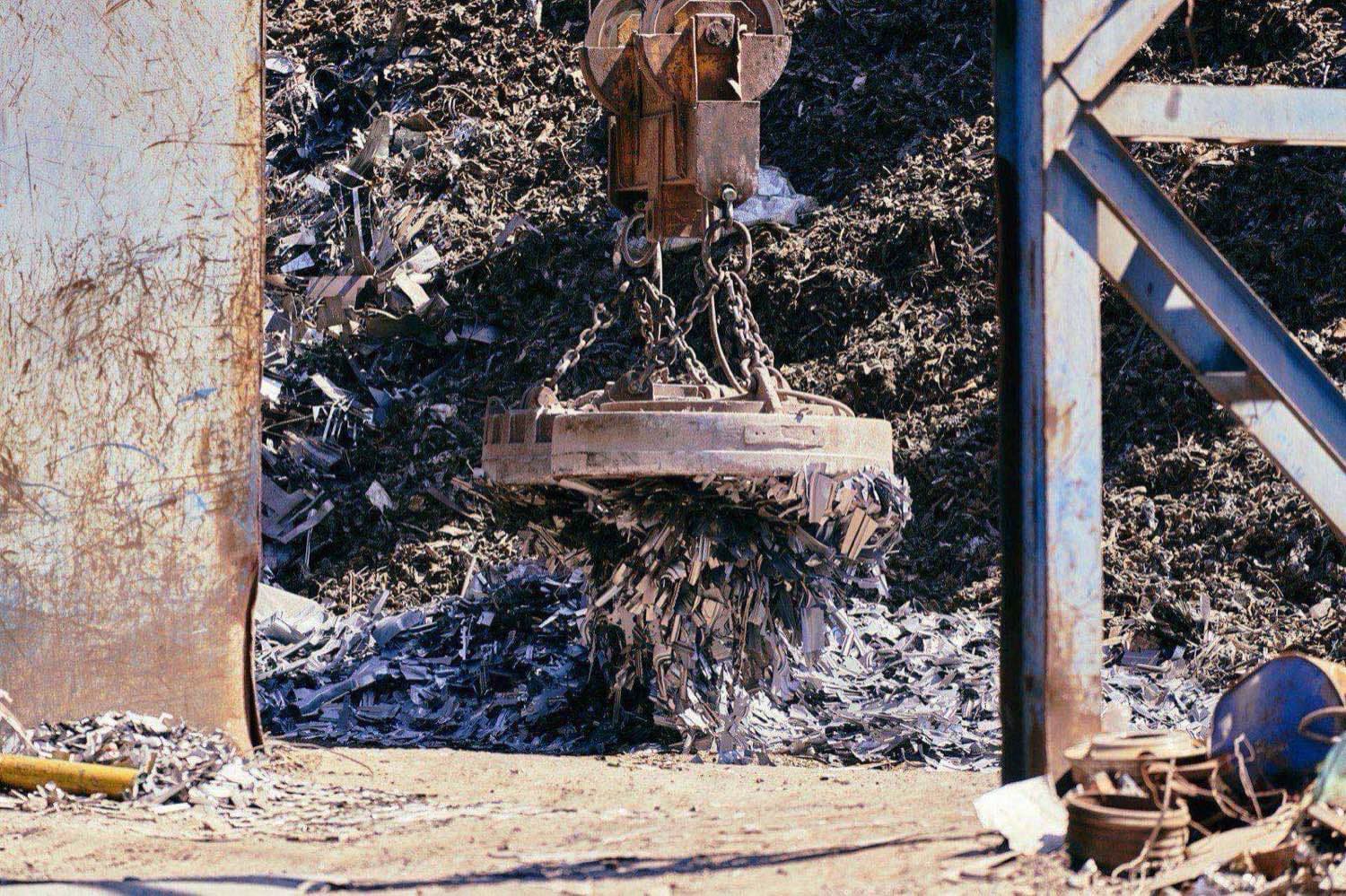
Illustrative scenarios

Example claim scenarios

A few situations that show how coverage can respond when something goes wrong. These are examples only — not actual claims, and not a guarantee of any outcome.

  • Example scenario

    Baler fire with production shutdown

    A fire starts in the infeed area of a horizontal baler at a single-stream recycling facility, igniting accumulated cardboard and spreading to nearby sorted paper inventory. The processing building sustains significant structural damage, and the baler is destroyed. The facility cannot process incoming material for an extended period while the building is repaired and a replacement baler is sourced.

    Commercial property coverage can respond to building repair and equipment replacement costs, subject to the policy's terms and exclusions. Business income coverage can respond to the lost processing revenue during the restoration period. That restoration period — covering building repair, equipment lead time, and re-inspection — can extend several months, which the business income limit should reflect.

  • Example scenario

    Sorting line worker injury from conveyor contact

    A sorting line employee reaches into a moving conveyor to clear a jam without following lockout-tagout procedures. The employee's hand contacts a moving part, resulting in a hand injury requiring surgery and lost work time. Workers' Compensation can respond to the employee's medical expenses and lost wage replacement, subject to the policy's terms and state workers' compensation law.

    The claim may also prompt a Cal/OSHA investigation if the facility is in California. Other states run an equivalent regulatory inquiry where the incident occurs.

  • Example scenario

    Environmental contamination from outdoor material pile runoff

    Extended rainfall causes runoff from an outdoor pile of mixed recyclable material to reach an adjacent storm drain. The runoff contains residual contaminants from improperly sorted materials including unwashed containers. The municipal stormwater authority issues a notice of violation and requires the facility to fund an assessment and remedial action for the affected drainage area.

    Standard GL policies typically exclude pollution claims. Environmental liability coverage can respond to third-party clean-up costs and regulatory response expenses from a pollution condition at the facility, subject to the policy's terms and exclusions.

  • Example scenario

    Delivery driver injury at receiving area

    A commercial hauler's driver arrives to tip a load of corrugated cardboard at the facility's receiving area. The driver exits the cab and slips on a wet surface near the unloading area, sustaining an injury. The driver brings a bodily injury claim against the recycling facility.

    General Liability can respond to third-party bodily injury claims from the facility's premises and operations, subject to the policy's terms and exclusions. If third-party drivers regularly enter your premises, review your GL limits against the volume of daily site traffic.

The claim scenarios above are illustrative examples only. They do not represent actual clients, actual claims, or guaranteed coverage outcomes. Coverage for any specific situation depends on the policy terms, conditions, exclusions, and the facts of the claim.

After you bind

Common certificate and service needs

After a carrier binds coverage, contracts and operational changes can create new documentation needs. A certificate summarizes policy information; the policy and its endorsements control coverage.

Contract and certificate requests

  • Certificate of insurance for municipal franchise agreementsMunicipal contracts require evidence of GL, auto, and pollution liability coverage before execution and at each annual renewal. We issue the certificate and confirm that the endorsements in the actual policy match what the municipality requires — not just what the certificate states.
  • Additional insured endorsements for municipalities and commercial clientsContracts with municipalities and commercial haulers often require the contracting entity named as additional insured, with primary-and-non-contributory wording. The endorsement must appear in the policy, not just on a certificate. We confirm the language before issuing.
  • Pollution liability certificates where required by permit or client contractFacility permits and hauler agreements may require separate evidence of environmental liability coverage. We coordinate the environmental certificate alongside the standard GL certificate.
  • Lender or mortgagee certificates for financed buildings and equipmentLenders financing major equipment or processing buildings must be named as loss payees. We handle the endorsement and the certificate.
  • Waiver of subrogation where required by contractSome municipal and commercial agreements require the facility's insurer to waive recovery rights against the contracting entity. That endorsement must be in the policy, not added as a notation on the certificate. We verify it's in place before the certificate goes out.

Ongoing service

  • Mid-term policy changes for facility expansionAdding a processing line, extending the covered building area, or acquiring mobile equipment all require mid-term endorsements. We handle the policy change and issue updated documentation before new equipment or space is operational.
  • Workers' Compensation audit preparationWC policies audit at expiration, comparing actual payroll by classification to the inception estimate. Recycling facilities with sorting workers, equipment operators, maintenance technicians, and office staff should organize payroll records by job function before the carrier's auditor requests them. We help you understand what's needed and prepare accordingly.
  • Renewal strategy for fire and environmental underwritingCarrier appetite for recycling center property and environmental coverage can be limited. We review fire suppression records, throughput changes, and environmental notices ahead of the submission. The account is presented accurately so carriers can assess it fairly.
  • Environmental liability review when accepted materials changeAdding electronics, batteries, or motor oil containers mid-policy changes the environmental exposure. We coordinate notification to the carrier and confirm whether the new material types fall within the current policy terms.
  • Market comparison at renewalAccounts can qualify for admitted markets or require surplus lines placement depending on fire controls and environmental profile. We evaluate options across coverage terms, exclusions, and cost. You see what you're choosing between.
  • Claims questions and carrier coordination after a lossProperty losses, environmental incidents, and liability claims often involve multiple coverage lines and multiple adjusters. We answer process questions, organize documentation the carrier requests, and stay in the conversation between your facility and the adjuster through the review.

FAQ

Frequently asked questions

Coverage availability, pricing, terms, conditions, and eligibility depend on underwriting, carrier guidelines, state, operations, loss history, policy terms, and other risk-specific factors. Nothing on this site guarantees coverage, pricing, placement, or savings.

Examples are hypothetical and illustrative. They show how a coverage can respond, not a promise that any specific claim will be covered. Actual coverage depends on your policy's terms, conditions, and exclusions.

Blue Lagoon Insurance Services, LLC is an independent insurance agency licensed in California (0M74955), Nevada (3983946), Arizona (3003332484), Texas (2966873), and Florida (L120266). BLIS does not underwrite insurance; coverage and underwriting decisions are made by the insurance carrier.