Manufacturing · Metal Fabrication

Metal Fabrication Insurance for Hot Work and Heavy Machines

Heavy equipment, hot-work fire exposure, and product liability on components that end up in structures and machinery. Add Workers' Comp across four or five trade classifications. BLIS reviews the full account — equipment values, payroll, customer contracts, and property — before any policy gets placed.

Licensed commercial insurance support across 5 states

Smart intake

Metal Fabrication quote

One question to start. We do the reading from there.

Start your quote

Get Started

Request a Manufacturing insurance quote

Complete the required contact fields and a few business details. A licensed BLIS representative will review the request.

1 / 2About you

How to reach you about your request.

We use this only to follow up.

Licensed in CA, NV, AZ, TX, and FL.

We only use this information to review your insurance request. BLIS is licensed in California, Nevada, Arizona, Texas, Florida. CA License 0M74955.

Submitting this form does not bind coverage and does not promise a specific quote, price, or coverage outcome. BLIS reviews submitted details and may follow up for information needed to evaluate the account.

What to expect

What to expect after you submit

A BLIS representative reviews the information you submit and follows up if something important is missing.

  1. A real person reads it

    Your details get read against what carriers actually want for your kind of account — not routed through a form stack.

  2. Your account gets matched

    How you operate maps to the coverage lines and markets that fit the risk.

  3. Gaps get filled

    If something important is missing, a few targeted questions — not another long form.

  4. Options get laid out

    Coverage, exclusions, carrier fit, and cost — side by side, not just price.

  5. Bound? We stay on.

    Certificates, endorsements, audits, renewals, policy changes — handled.

Prefer to talk it through? Call (818) 306-8333Monday – Friday, 9:00 AM – 5:00 PM PT

Your operation

How metal fabrication operations shape the insurance review

CNC cutters, press brakes, overhead cranes, and welding tables — each one a capital asset, each one a production constraint if it goes down. Structural steel work, sheet metal, precision machining, or custom job-shop: the operation type shifts the risk profile but not the core problem. Heavy equipment values, hot-work fire exposure, finished-component accountability, and a payroll that runs across four or five Workers' Comp class codes all land on the same policy. A standard BOP was written for none of that. BLIS reviews the full shop: equipment values, product end-use, payroll by job function, customer contracts, and the certificate obligations that come with commercial and construction work.

Know what your equipment is worth — before you need to replace it. CNC plasma cutters, press brakes, laser cutters, welding tables, ironworkers, tube benders, overhead cranes: the list in a fabrication shop adds up fast. Standard commercial property is written on blanket or scheduled values. The replacement cost must be accurate. An understated value creates a shortfall when a covered loss occurs.

Equipment that is old but still productive often carries a market value well below its actual replacement cost. That gap becomes a real problem at claim time. Replacement-cost inventories — not depreciated book values — are the foundation of property coverage that actually closes out a total loss.

When the machine stops, so does the shop. Commercial property policies cover external causes of loss — fire, theft, windstorm. A CNC controller board that burns out, a hydraulic press that blows a seal, a laser tube that needs replacement: none of those are covered. Equipment breakdown coverage addresses that cause of loss directly. It pays to repair or replace equipment that fails from a covered breakdown.

Depending on the policy form, it also covers business income lost while equipment is out of service. For a shop where one critical machine is the production bottleneck, an uninsured breakdown means uninsured repair costs and uninsured lost revenue — both hitting at once.

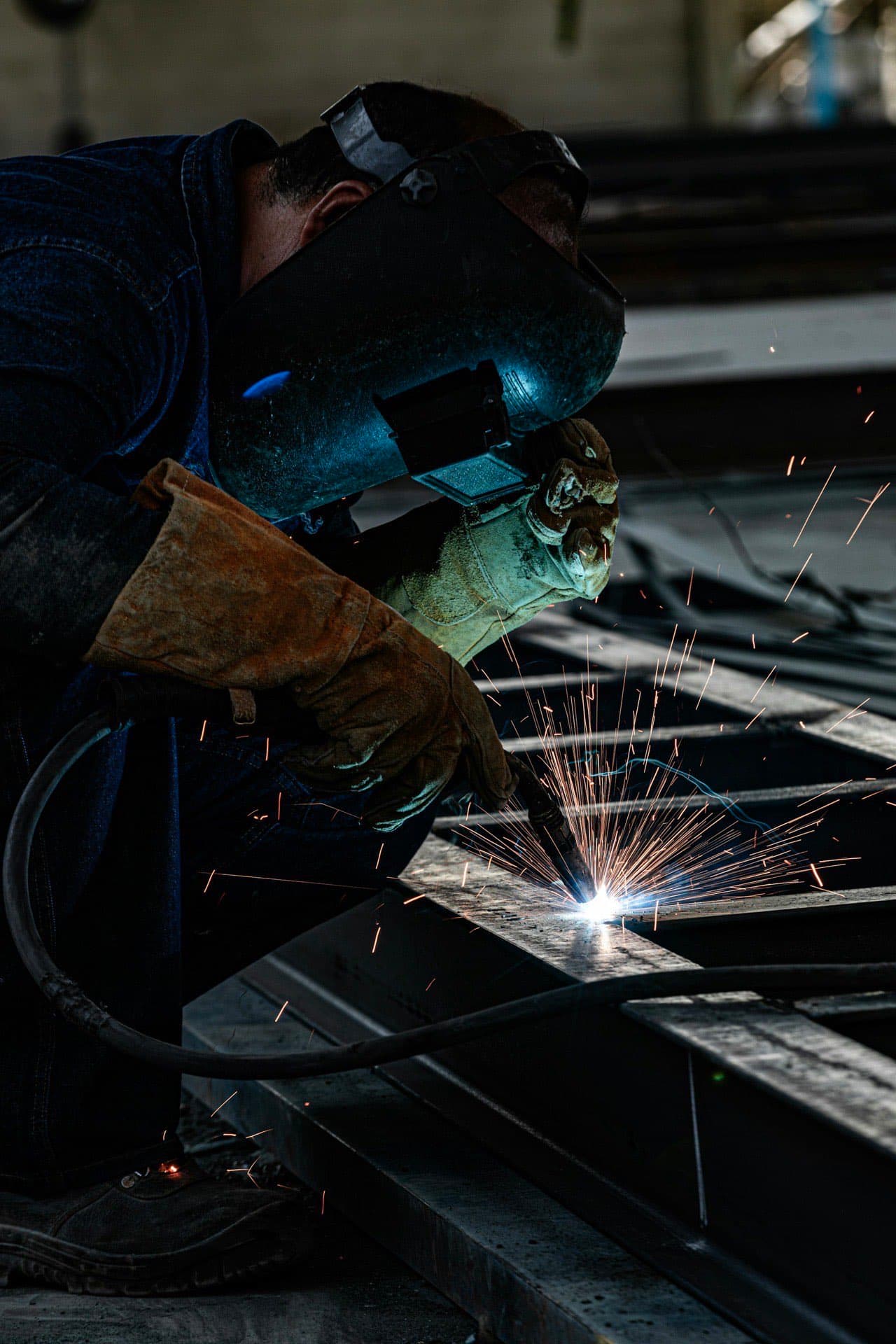
Sparks are part of the job. The exposure they create is not free. Welding, plasma cutting, angle grinding, and torch work produce sparks that travel and ignite nearby materials — cardboard packaging, oil-soaked rags, accumulated grease. Grinding dust from stainless steel or aluminum can build up into a fire or dust-explosion hazard.

Carriers underwriting metal fabrication review hot-work controls, suppression systems, building construction type, and housekeeping practices. A shop with documented hot-work permits and a functional sprinkler system presents a materially different risk profile than one without. That difference shows up in both carrier appetite and pricing.

Your part goes into their structure. If it fails, the claim comes to you. A steel beam, a bracket, a weld assembly, a machined shaft, a pressure vessel — each one gets integrated into something another party depends on. When a fabricated component fails and causes property damage or injury, the shop that made it can be named in a products liability claim. Defense costs start before any settlement determination.

If the part is embedded in a building or machine that has to be partially dismantled for inspection, the investigation alone compounds the cost. Products/completed operations aggregate limits deserve a hard look. Default limits were not set with structural or pressure-rated components in mind.

One floor, four class codes — and the wrong one at audit costs money. Structural ironworkers, sheet metal workers, welders, CNC machine operators, press brake operators, crane operators, and office staff each carry a different WC rate. That rate reflects a specific injury frequency and severity history by trade. A structural steel welder does not belong in the same code as a light assembly worker.

Payroll assigned to the wrong classification at inception gets reassigned at audit — and additional premium is owed. BLIS reviews the payroll breakdown by job function during intake to establish defensible classifications before the policy is issued.

Machinery is only part of the property exposure — and often not the largest part. Raw material inventory — plate steel, structural shapes, pipe, tubing, coil stock, aluminum extrusions — carries real value. Finished goods waiting for delivery and work-in-process assemblies both belong in the property limit.

Business income coverage applies the same scrutiny: a fire or equipment loss halts production while fixed costs keep running. Replacing specialty fabrication equipment means lead times, not a quick swap. The business income limit should reflect the realistic recovery window for the equipment involved, not an optimistic few-week estimate.

Parts out of tolerance, wrong material, failed inspection — GL does not pay for that. Metal fabrication shops produce to customer specifications: drawings, tolerances, materials callouts, and inspection criteria. When a part fails those requirements, the shop faces rework costs, replacement costs, or delay damages. Standard GL policies exclude the cost of correcting or replacing your own defective work.

GL responds when your product causes third-party bodily injury or property damage — not when the product itself is the problem. What the customer contract says about defect liability is a business-risk question. It runs alongside the insurance program but is not answered by it.

Heavy steel on a flatbed is not the same risk as a sedan in a parking lot. Many fabrication shops run their own delivery — flatbeds, stake beds, enclosed trailers moving finished work to job sites, GC yards, or customer facilities. Heavy or oversized components create loading and securement exposure. A load that shifts in transit can damage cargo or create a road hazard.

Commercial auto coverage should reflect the actual vehicle types, load characteristics, and driving radius. Hired and non-owned auto exposure applies where employees use personal vehicles for business errands.

Coverage

Coverages commonly considered for metal fabrication operations

These are common lines to evaluate, not a preset package. Your operations, current contracts, state requirements, and the carrier's policy forms determine the final program.

  • General Liability

    Products and Completed Operations — Fabricated parts carry liability exposure long after they ship. GL covers third-party bodily injury and property damage from your operations. The products and completed operations component extends that to goods after they leave the shop. For a fabrication operation, this component is the most consequential GL element. A failed structural component, a weld discontinuity in a pressure-rated assembly, a load-bearing part that gives way — any of those can generate a third-party claim. Standard limit adequacy deserves a real look. A single severe products claim involving structural or mechanical components can approach or exceed default GL limits.

  • Workers' Compensation

    Mixed trades, multiple codes, one audit at year-end. Workers' Comp for a metal fabrication operation is not a commodity purchase. Machine operators, welders, ironworkers, crane operators, and material handlers each carry distinct injury frequency profiles, and the payroll assigned to each code drives the premium. Audit at policy expiration reconciles actual payroll to the estimate — misclassification creates additional premium at that point. Hand injuries, eye injuries, burns, and overhead crane incidents represent the documented loss types in this industry class. Accurate classification at inception reduces what the audit produces.

  • Commercial Property

    Equipment and Inventory — Set limits on what it costs to replace, not what it cost to buy. Property coverage for a metal fabrication shop must reflect actual replacement costs: machinery, metal inventory across raw material, work-in-process, and finished goods, and the building if owned. CNC laser cutters, heavy press brakes, overhead cranes, plasma tables — replacement cost is what matters, not depreciated book value. In a leased building, the landlord covers the structure; your policy covers tenant improvements and every piece of machinery and inventory you own. Under-insuring either creates a gap at claim time that the policy will not close.

  • Equipment Breakdown Coverage

    Commercial property covers what happens to equipment from the outside. Equipment breakdown covers what happens on the inside. Mechanical, electrical, and pressure-vessel failure — the cause of loss property policies specifically exclude — is what this coverage addresses. A failed CNC controller, a hydraulic power unit breakdown, a laser resonator failure, a transformer burnout: each one responds under breakdown coverage. Most modern forms also cover the resulting business income loss during the repair period. Equipment age, maintenance history, and original manufacturer status all factor into availability and pricing.

  • Business Income and Extra Expense

    Fixed costs do not pause while the shop is closed. Business income coverage replaces lost revenue — net profit plus continuing expenses — during the period a covered property loss forces operations to suspend or reduce. Extra expense pays reasonable additional costs to keep production going: renting time at another facility, expediting a repair. At a fabrication shop, restoration after a major fire or equipment loss can run well past a few weeks. Specialty equipment has to be sourced, delivered, installed, and calibrated. The business income limit and waiting period should reflect the fixed-cost structure and a realistic equipment-replacement timeline.

  • Commercial Auto

    Liability and Physical Damage — The vehicles that carry your fabrications to job sites are a business exposure, not a personal one. A shop delivering with company-owned flatbeds, stake trucks, or trailers needs commercial auto coverage structured to those vehicle types and loads. Commercial auto liability answers third-party claims from accidents involving company vehicles. Physical damage covers the vehicles themselves. Where employees use personal vehicles for business or outside carriers handle occasional runs, hired and non-owned auto coverage addresses those gaps.

  • Umbrella / Excess Liability

    Standard GL limits were not benchmarked for structural or pressure-rated component failures. An umbrella or excess liability policy extends the underlying GL and Commercial Auto limits. For a fabrication shop, one severe products claim — a structural component failure, a pressure-vessel incident — can approach or exceed standard GL limits on its own. General contractors and industrial buyers often write minimum umbrella requirements into their subcontracts. The right limit depends on the products produced, the customer base, and contract language. Know the requirements before signing.

Quote factors

Common quote factors

These are the details that can shape eligibility, terms, and pricing. You don't need all of them to start — send what you have, and we'll follow up on anything important that's missing.

  • Type of metal fabrication work performedstructural steel, sheet metal, precision machining, welding fabrication, custom job shop work, or mixed operations each carry different risk profiles. The profile determines which carriers are positioned to write the account.
  • Primary metals processed and end-use applicationswhere fabricated components go is as important as what they are. Structural construction, mechanical equipment, HVAC systems, consumer products, pressure vessels: end-use shapes how carriers assess products liability severity.
  • Annual revenue and production volumeGL for manufacturing accounts is often rated on revenue. Volume also tells carriers how broadly the products liability exposure is distributed across customers and applications.
  • Annual payroll by employee classificationthe payroll breakdown across welders, machine operators, material handlers, crane operators, and office staff sets the WC classification mix. Accurate classification at application reduces what the audit produces at year-end.
  • Equipment schedule and replacement cost valuesan accurate equipment list is the foundation. Use replacement cost values, not depreciated book values. That distinction prevents a coinsurance gap from cutting the settlement at claim time.
  • Hot-work controls and fire protectionwritten hot-work permit procedures, functional suppression systems, and active housekeeping for grinding dust and combustible accumulation. Carriers ask about these directly. The answers shape property appetite and pricing.
  • Prior loss history (3-5 years)frequency and severity across GL, Workers' Comp, and property lines. Products liability claim history, machine-related injuries, and prior fire or equipment losses each affect both availability and the terms carriers offer.
  • Customer contracts and certificate requirementscontracts from general contractors, industrial buyers, or government customers specify minimum limits, additional insured endorsements, and indemnity terms. Those requirements shape how the policy must be structured.
  • Building ownership or lease status and construction typeowned buildings require building coverage at replacement cost. Leased buildings need tenant improvement coverage. Masonry, metal, or frame construction and sprinkler status all move property pricing.
  • Delivery operations and vehicle fleetvehicle count, types (flatbed, stake, enclosed trailer), and driving radius all shape the commercial auto structure. Whether drivers are employees or contracted carriers affects pricing and coverage requirements.
Illustrative scenarios

Example claim scenarios

A few situations that show how coverage can respond when something goes wrong. These are examples only — not actual claims, and not a guarantee of any outcome.

  • Example scenario

    Weld failure on a structural component — products liability claim

    A metal fabrication shop produces custom steel connection brackets for a commercial construction project. The brackets are made to a general contractor's specifications. After installation, a bracket is identified as having a weld discontinuity during a structural inspection. The general contractor removes the affected components and requires a re-inspection of all similar brackets from the same production run.

    The GL products/completed operations component can respond to covered third-party property damage and related claims arising from the fabricated product. This is subject to the policy's terms, conditions, and exclusions. Legal defense costs begin before any settlement determination.

  • Example scenario

    CNC plasma cutter breakdown during a production run

    A sheet metal fabrication shop is running a large production order on its primary CNC plasma cutting table. The cutting head's motion controller fails due to an internal electrical fault. The machine is out of service for several weeks while a replacement controller is sourced and installed.

    The shop cannot complete the contracted order on schedule and incurs additional costs for subcontracting part of the cutting work to an outside facility. Equipment breakdown coverage can respond to the repair cost for the failed controller. Depending on the policy form and waiting period, it can also cover the business income loss during the shutdown period, subject to policy terms and exclusions.

  • Example scenario

    Machine operator hand injury on a press brake

    An employee operating a hydraulic press brake sustains a hand injury when forming a part with an unfamiliar tooling setup. The injury requires medical treatment, a period of restricted duty, and temporary partial work restrictions. Workers' Compensation responds to the employee's medical costs and wage replacement during the recovery period, subject to the policy's terms and the applicable state's WC schedule.

    Press brake operations are among the hand-injury exposure types that carriers review when evaluating Workers' Compensation accounts for metal fabrication shops.

  • Example scenario

    Shop fire originating from welding operations

    A welder in a fabrication shop completes a weld on a structural assembly and moves to the next workstation. A spark from the previous weld lands on accumulated grinding dust near a cardboard pallet. It ignites a fire that spreads to adjacent work-in-process inventory before the shop's suppression system activates. The fire damages machinery, raw material inventory, and a section of the building's interior.

    Commercial property coverage can respond to the direct property damage, subject to the policy's terms, limits, deductible, and exclusions. Business income coverage can respond to the revenue loss during the cleanup and repair period. Both are subject to the specific policy terms.

The claim scenarios above are illustrative examples only. They do not represent actual clients, actual claims, or guaranteed coverage outcomes. Coverage for any specific situation depends on the policy terms, conditions, exclusions, and the facts of the claim.

After you bind

Common certificate and service needs

After a carrier binds coverage, contracts and operational changes can create new documentation needs. A certificate summarizes policy information; the policy and its endorsements control coverage.

Contract and certificate requests

  • Certificates for general contractor and industrial customer requirementssubcontracts and purchase orders specify the coverage they require. Minimum GL and umbrella limits, additional insured endorsements, waiver of subrogation: BLIS reviews the contract before the certificate goes out.
  • Additional insured endorsements for general contractors, project owners, and commercial customersthe endorsement must be in the policy. A certificate cannot reflect coverage that the policy does not actually carry. Structural and commercial fabrication contracts regularly require the fabricator to extend GL coverage to the customer or project owner for claims arising from the fabricated product.
  • Waiver of subrogation endorsements where contracts require itindustrial and construction contracts often require GL and Workers' Comp carriers to waive recovery rights against the additional insured. The waiver only applies if the endorsement is in the policy. It must exist before the loss occurs.
  • Equipment schedules and loss payee documentation for lender requirementslenders financing fabrication equipment need proof that property coverage is in place. They must be listed as a loss payee. Certificate documentation should reflect current lender information and coverage limits.
  • Evidence of Workers' Compensation coverage for contractor registration and customer programsmany larger customers require ongoing WC proof as a condition of doing business. Some states require it for contractor licensing. Both situations need current documentation.

Ongoing service

  • Workers' Compensation payroll audit supportWC policies for fabrication shops audit at expiration. Actual payroll by classification gets compared to the estimate used at inception, and premium adjusts from there. BLIS helps organize payroll records by job function and explains what documentation carriers typically request.
  • Mid-term adjustments for new equipment, fleet changes, or operational shiftsnew machinery, a new delivery vehicle, a customer requiring higher limits. Each change needs a policy update. Changes should be reflected before they create a gap.
  • Renewal strategyfabrication accounts are re-underwritten at renewal based on updated equipment values, payroll, loss history, and production mix. BLIS reviews what has changed and ensures the renewal submission presents the risk accurately for the markets being approached.
  • Equipment breakdown review as machinery ages or is replacedolder specialized equipment may need different coverage structuring than newer machinery. Replacement cost versus actual cash value elections move the claim outcome meaningfully as equipment depreciates.
  • Coverage comparison across carriersthe comparison runs deeper than the premium line. Property limits, equipment breakdown sub-limits, products liability aggregates, WC carrier claims service, and commercial auto structure all factor in.
  • Claims navigation after an incidentunderstanding the claims process and knowing what documentation the carrier will request reduces friction. The shop has enough to deal with after a loss. BLIS handles the coordination so that part is not added to the list.

FAQ

Frequently asked questions

Coverage availability, pricing, terms, conditions, and eligibility depend on underwriting, carrier guidelines, state, operations, loss history, policy terms, and other risk-specific factors. Nothing on this site guarantees coverage, pricing, placement, or savings.

Examples are hypothetical and illustrative. They show how a coverage can respond, not a promise that any specific claim will be covered. Actual coverage depends on your policy's terms, conditions, and exclusions.

Blue Lagoon Insurance Services, LLC is an independent insurance agency licensed in California (0M74955), Nevada (3983946), Arizona (3003332484), Texas (2966873), and Florida (L120266). BLIS does not underwrite insurance; coverage and underwriting decisions are made by the insurance carrier.