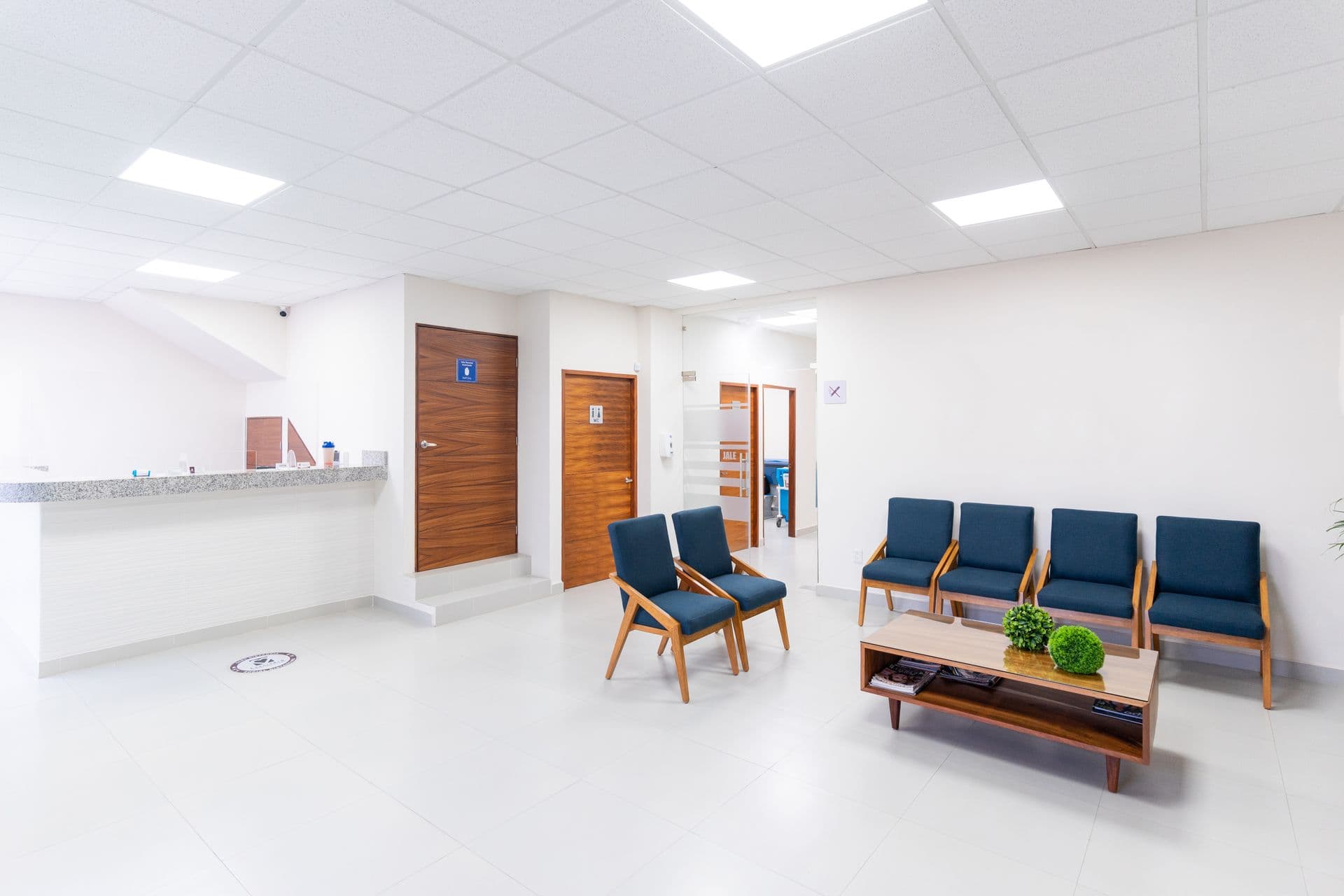
Healthcare Services · Medical Offices & Physician Practices

Medical Office Insurance Beyond the Malpractice Policy

Running a medical office means managing several things at once. You manage patient-facing premises, a staff with distinct job functions, sensitive electronic health records, and the administrative operations that keep the practice running. A commercial program behind a medical office has to reflect those layers. Property, liability, workforce, and data exposure don't consolidate neatly into a single off-the-shelf policy. BLIS reviews the whole account so coverage is structured to match how your office actually operates.

Licensed commercial insurance support across 5 states

Smart intake

Medical Office quote

One question to start. We do the reading from there.

Start your quote

Get Started

Request a Healthcare insurance quote

Complete the required contact fields and a few business details. A licensed BLIS representative will review the request.

1 / 2About you

How to reach you about your request.

We use this only to follow up.

Licensed in CA, NV, AZ, TX, and FL.

We only use this information to review your insurance request. BLIS is licensed in California, Nevada, Arizona, Texas, Florida. CA License 0M74955.

Submitting this form does not bind coverage and does not promise a specific quote, price, or coverage outcome. BLIS reviews submitted details and may follow up for information needed to evaluate the account.

What to expect

What to expect after you submit

A BLIS representative reviews the information you submit and follows up if something important is missing.

  1. A real person reads it

    Your details get read against what carriers actually want for your kind of account — not routed through a form stack.

  2. Your account gets matched

    How you operate maps to the coverage lines and markets that fit the risk.

  3. Gaps get filled

    If something important is missing, a few targeted questions — not another long form.

  4. Options get laid out

    Coverage, exclusions, carrier fit, and cost — side by side, not just price.

  5. Bound? We stay on.

    Certificates, endorsements, audits, renewals, policy changes — handled.

Prefer to talk it through? Call (818) 306-8333Monday – Friday, 9:00 AM – 5:00 PM PT

Your operation

How medical office operations shape the insurance review

A medical office is a business first. It has premises, employees, leases, and data obligations — and each one generates insurance exposure a standard commercial policy wasn't built around. Patient falls happen in waiting rooms. HIPAA breach notification is a legal requirement, not an option. Employment claims arise from the physician-staff relationship. Lease and health system contracts set insurance minimums the practice must meet before keys or credentials are handed over. Solo practice or multi-provider group, the program has to reflect the actual operation — staff mix, data environment, and contractual obligations included.

Every patient visit is a premises liability event in progress. The waiting room, exam corridor, hallway, and restroom are all open to patients and visitors throughout the day. A wet floor after a cleaning cycle, a poorly lit step into an exam room, or a patient losing balance at a chair transfer — each is a real GL claim pattern.

GL needs to cover third-party bodily injury and property damage from the premises and the office's non-clinical operations. Landlords require it before keys are handed over.

Build out the space, then make sure the policy covers it. Medical offices invest in build-outs far beyond standard office space. Exam rooms with cabinetry and plumbing, medical gas lines, specialized lighting, lead-lined walls for radiology equipment, and reception build-outs with check-in systems all add up. That value belongs to the practice, not the landlord.

The building owner's policy doesn't protect tenant improvements. Commercial property coverage needs to reflect the actual replacement cost of those improvements along with business personal property.

Know the equipment value before a loss forces the question. Examination tables, EKG machines, ultrasound units, infusion pumps, ophthalmic instruments, and clinical workstations carry meaningful replacement cost. Breakdown or theft disrupts scheduling and creates revenue impact while replacement is arranged. Business interruption coverage helps offset lost income during a covered interruption.

For practices that depend on specific equipment, what the waiting period and limit actually cover matters more than the premium line on the declarations page.

Manage PHI carefully and a breach can still happen. Medical offices handle protected health information under HIPAA — demographic records, clinical notes, insurance identifiers, billing data. A breach creates notification obligations, potential fines, and reputational consequences that outlast the incident.

Ransomware affecting a practice management system or EHR locks access to scheduling and clinical records while appointments keep arriving. Standard commercial property coverage doesn't address any of those costs.

Payroll classification in a medical office is more complex than it looks from the outside. Medical assistants and nurses assist with patient transfers and positioning. Phlebotomists perform draws and face needle-stick risk. Front-office and billing staff have sedentary ergonomic profiles.

Clerical and clinical staff are classified under different WC codes, and the payroll split between categories matters at audit time. Needle-stick and bloodborne pathogen exposures are documented occupational risks that Workers' Comp addresses when a work-related injury occurs.

Know which policy responds before a claim forces the answer. A patient injured during wheelchair-to-table transfer, or while recovering from a procedure, may generate claims under both GL and professional liability. Clinical acts by licensed practitioners typically fall under professional liability. Non-clinical acts — a wet floor, a broken chair — typically fall under GL.

The gap between the two policies matters at claim time.

Mixed clinical-administrative teams generate employment practices exposure that pure office businesses don't. Physicians, NPs, and PAs may be employees, partners, or contractors — and that classification carries direct employment-law weight. A front-office employee terminated after a disciplinary incident may allege wrongful termination. A medical assistant may raise a harassment claim involving a physician.

Employment Practices Liability Insurance (EPLI) covers defense costs and judgments for those claims — the ones GL explicitly excludes.

Confirm the GL policy's position on A&M before a complaint arrives. Many standard commercial GL policies exclude abuse and molestation claims entirely. Practices serving pediatric, geriatric, or vulnerable adult populations should know exactly how their GL treats those allegations. A complaint of that nature falling outside the GL policy at claim time is a bad outcome to discover late.

Separate A&M coverage coordinates with the professional liability program and can be reviewed at placement.

Lease and health system requirements don't stop at signing — they generate ongoing certificate and endorsement work. Professional office buildings commonly require minimum GL limits, landlord additional insured status, waiver of subrogation, and sometimes specified umbrella limits. Health system affiliations add their own insurance specifications. Certificates need to reflect what's actually in the policy.

BLIS manages that administrative work as part of the service relationship.

Coverage

Coverages commonly considered for medical office operations

These are common lines to evaluate, not a preset package. Your operations, current contracts, state requirements, and the carrier's policy forms determine the final program.

  • General Liability

    GL covers the premises and non-clinical operations — what happens before and around the clinical encounter, not within it. Patient slips in waiting areas, visitor injuries in assigned parking, property damage to the landlord's building from a plumbing leak in your suite — these are GL claims. Nearly every commercial medical office lease requires GL. The limits and endorsements — additional insured for the landlord, waiver of subrogation — must match what the lease specifies. Clinical acts require a professional liability policy, not GL.

  • Commercial Property

    Write the property policy to reflect actual replacement cost, not depreciated book value. Tenant improvements, medical equipment, computers, and clinical furnishings all need to be covered against fire, water damage, and theft. Specialized build-outs — lead-lined walls, procedure room plumbing, built-in cabinetry — can far exceed what the landlord's building policy covers. That gap shows up at claim time. Replacement cost coverage narrows it, subject to policy terms.

  • Workers' Compensation

    Get payroll classification right at inception — audits at year-end recalculate on actual payroll. Front-office and billing staff carry different WC codes than clinical assistants, nurses, and phlebotomists. Clinical staff face occupational exposures sedentary workers don't: needle sticks, bloodborne pathogen exposure, patient handling injuries, musculoskeletal strain from positioning work. Workers' Comp covers medical expenses and lost wages for work-related injuries as required by state law.

  • Cyber Liability

    A cyber event creates costs that standard commercial property and GL policies don't address. HIPAA governs how PHI is collected, stored, and transmitted. A breach triggers notification obligations, potential regulatory scrutiny, and patient-relations costs on top of technical remediation. That event could be ransomware, a phishing attack exposing patient records, or a vendor breach affecting the EHR. Cyber liability for medical offices addresses breach response: forensics, notification letters, credit monitoring, regulatory defense where applicable, and business income impact during a covered disruption.

  • EPLI

    A medical practice is an employer. Claims for wrongful termination, discrimination, harassment, and retaliation don't require a clinical incident to arrive — and GL explicitly excludes every one of them. Clinical staff may allege differential treatment based on licensure. Administrative staff may allege harassment by a physician. Retaliation claims follow internal complaints. Employment Practices Liability Insurance covers those defense costs and damages whether the claim has merit or not.

  • Commercial Umbrella / Excess Liability

    An umbrella extends above the underlying GL and commercial auto once those limits are used up. Lease or health system affiliation requirements often drive it — medical offices with significant patient volume, multi-physician practices, or buildings with high minimum-limit specifications may need the added depth.

  • Professional Liability (coordinated placement)

    Malpractice insurance covers claims alleging errors, omissions, or negligence in delivering professional medical services. Map how the commercial GL and the malpractice policy interact before a claim arrives — not during one. BLIS works with your professional liability carrier to identify where each policy responds and where the boundary sits. No guarantee of placement is implied.

Quote factors

Common quote factors

These are the details that can shape eligibility, terms, and pricing. You don't need all of them to start — send what you have, and we'll follow up on anything important that's missing.

  • Medical specialty and scope of servicesCarriers read primary care, OB/GYN, psychiatry, dermatology with procedures, and other specialties differently. The type of care delivered and whether in-office procedures are performed both shape how the commercial GL and property account is underwritten.
  • Patient volume and appointment cadenceHigher throughput increases premises liability frequency and the volume of PHI the practice holds. Carriers factor patient volume into both GL and cyber underwriting.
  • Number of locations and leased premisesEach additional office location adds premises liability, property exposure, and lease-certificate obligations. Multi-site practices need programs structured across every site.
  • Staff headcount and composition (clinical vs. administrative)WC premium is payroll-driven by classification. The clinical-to-administrative split, whether physicians are employees or partners, and the use of per-diem or contractor staff all affect how payroll is allocated and audited.
  • EHR and practice management systemCarriers ask about the EHR platform, cloud or on-premises setup, and whether third-party billing vendors access PHI. Those details shape the cyber underwriting picture.
  • Tenant improvement value and equipment schedulesUnderstating improvement values or equipment schedules creates a gap when a loss requires replacing at current prices. Accurate figures at application are worth more than correcting them at audit.
  • Prior loss history (GL, property, and employment claims)Claims across all commercial lines factor into underwriting. A patient fall GL claim, a property loss, or an employment claim each prompts closer carrier scrutiny at application and renewal.
  • Lease insurance requirementsKnow the limits and endorsements the landlord or health system requires before the policy is placed. Discovering a gap when a certificate is requested is a harder problem to solve than building the program correctly from the start.

Illustrative scenarios

Example claim scenarios

A few situations that show how coverage can respond when something goes wrong. These are examples only — not actual claims, and not a guarantee of any outcome.

  • Example scenario

    Patient fall in a clinical waiting area

    A patient exits a wheelchair and attempts to stand in the waiting room before a staff member can assist. The patient loses balance and falls, sustaining an injury requiring medical follow-up and a period of limited mobility. The patient makes a bodily injury claim against the practice alleging that the waiting room configuration contributed to the fall.

    General Liability can respond to defense costs and damages from this type of premises claim, subject to the policy's terms and exclusions. Whether the claim implicates the professional liability policy as well depends on the facts and the specific policy language. That is why reviewing how GL and malpractice interact before a claim arrives matters.

  • Example scenario

    Ransomware affecting the practice management and EHR system

    A phishing email leads to a ransomware infection that encrypts the practice's scheduling, billing, and electronic health record system. The practice cannot access appointment records or clinical notes for several days while the incident is remediated. Notification obligations are triggered for patients whose PHI may have been accessible during the event.

    The incident involves forensic investigation costs, patient notification expenses, and revenue disruption during the period the system is inaccessible. Cyber liability coverage can help address breach response costs, notification expenses, and business income impact from a covered cyber event, subject to the policy's terms and conditions.

  • Example scenario

    Employment claim following staff termination

    A medical assistant is terminated after a series of disciplinary incidents related to patient scheduling errors. The former employee files a claim alleging that the termination was discriminatory. The claim says the practice applied a different standard to similar performance issues from clinical staff.

    The practice incurs legal defense costs investigating and responding to the claim, even before the claim's merits are evaluated. Employment Practices Liability Insurance can respond to the defense costs and potential settlement from this type of employment claim, subject to the policy's terms and exclusions.

  • Example scenario

    Water damage from plumbing failure in a leased medical suite

    An overnight plumbing failure in the ceiling above a medical office suite results in water damage. The damage affects exam room cabinetry, a ceiling-mounted procedure light, and stored medical supplies. The practice's commercial property coverage can respond to the cost of repairing or replacing the damaged tenant improvements and business personal property.

    That response is subject to the policy's terms and deductible — and to the distinction between what the landlord's building policy covers and what the tenant's own policy covers. Some practices have not clearly mapped this coverage boundary. At the time of a loss, they discover that the landlord's carrier treats tenant improvements differently from the building structure.

The claim scenarios above are illustrative examples only. They do not represent actual clients, actual claims, or guaranteed coverage outcomes. Coverage for any specific situation depends on the policy terms, conditions, exclusions, and the facts of the claim.

After you bind

Common certificate and service needs

After a carrier binds coverage, contracts and operational changes can create new documentation needs. A certificate summarizes policy information; the policy and its endorsements control coverage.

Contract and certificate requests

  • Landlord or property management company named as additional insurednearly every commercial medical office lease requires this. The endorsement form and the limits in the policy both need to match the lease requirement, not just the certificate.
  • Health system or hospital affiliation certificateshospital affiliations, shared-services agreements, and health system relationships each carry their own insurance minimum specifications. Proof of coverage has to meet those specs before the affiliation is active.
  • Waiver of subrogation in favor of the landlord or building ownermany commercial leases require the tenant to waive subrogation rights against the landlord in a covered property loss. That waiver must be in the policy before the certificate shows it.
  • Umbrella or excess coverage confirmation for leases with higher minimum limitslarger professional buildings and health system campuses frequently specify umbrella limits in the lease. The umbrella has to be in place before the certificate is issued.
  • Workers' Compensation certificates for health system credentialing or staffing agency requirements, where applicable.

Ongoing service

  • Policy changes for new locations or lease renewalsadding an office, renewing a lease with revised requirements, or opening a satellite clinic each require policy updates. New endorsements may also be needed to satisfy the incoming lease or affiliation agreement.
  • Workers' Compensation payroll audit supportWC policies audit at expiration on actual payroll by classification. Practices with a clinical-administrative staff mix benefit from organized payroll records before the audit opens. BLIS helps clients understand what the audit examines.
  • Cyber incident coordination supporta data or system incident requires understanding the notification timeline, engaging breach response vendors, and coordinating with the cyber carrier. BLIS supports clients through the process and connects them with the right carrier resources.
  • Renewal strategy and re-marketingcarrier appetite for medical office accounts shifts with claim history, specialty mix changes, and practice growth. BLIS reviews upcoming renewals against what has changed and identifies where re-marketing makes sense.
  • Employment practices guidance for policy changesadding employees, changing the physician employment model, or expanding into a new licensed state each warrant an EPLI review. Coverage scope and limits should be revisited as part of the renewal cycle.
  • Mid-term endorsement requestscertificate requests, additional insured endorsements, and waivers of subrogation happen outside renewal. So do policy changes driven by new lease amendments or health system agreements. BLIS handles those as part of the service relationship.

FAQ

Frequently asked questions

Coverage availability, pricing, terms, conditions, and eligibility depend on underwriting, carrier guidelines, state, operations, loss history, policy terms, and other risk-specific factors. Nothing on this site guarantees coverage, pricing, placement, or savings.

Examples are hypothetical and illustrative. They show how a coverage can respond, not a promise that any specific claim will be covered. Actual coverage depends on your policy's terms, conditions, and exclusions.

Blue Lagoon Insurance Services, LLC is an independent insurance agency licensed in California (0M74955), Nevada (3983946), Arizona (3003332484), Texas (2966873), and Florida (L120266). BLIS does not underwrite insurance; coverage and underwriting decisions are made by the insurance carrier.