Construction · Tree Trimming & Arborists

Tree Trimming & Arborist Insurance for Chainsaws Aloft

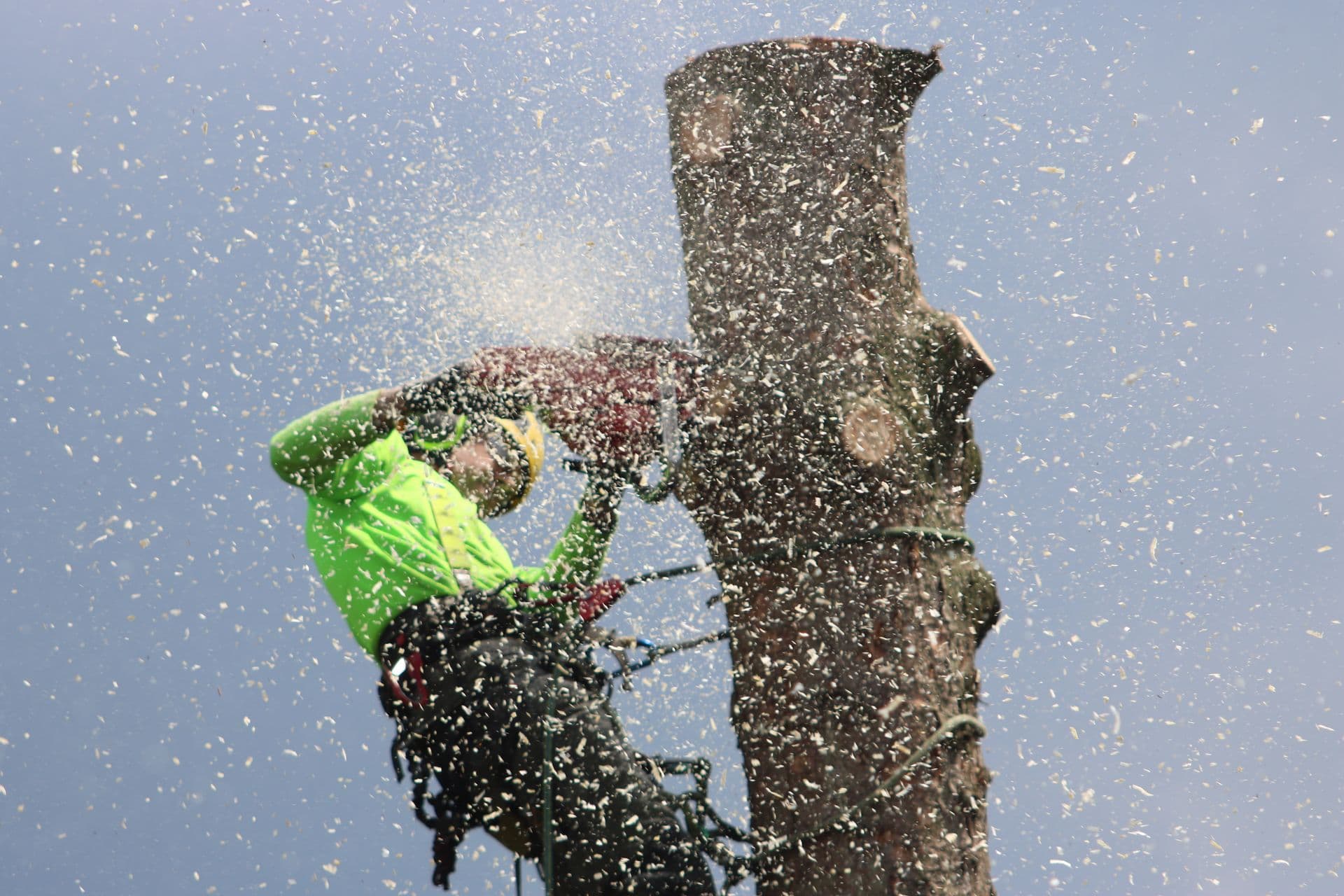
Tree care carries a severity profile that puts it in a category most carriers approach carefully. Aerial work with chainsaws, a wood chipper on every crew, falling limbs, and proximity to power lines are the exposures an underwriter weighs first. A tree-care submission reads best when it maps the operation honestly. That means the climb versus aerial-lift split, removals versus pruning mix, crane use, arborist credentials, and storm-response volume. It also means the certificate language clients require. BLIS helps build that account so it presents the way the crews actually run.

Licensed commercial insurance support across 5 states

Smart intake

Tree Trimming quote

One question to start. We do the reading from there.

Start your quote

Get Started

Request a Contractor & Trade insurance quote

Complete the required contact fields and a few business details. A licensed BLIS representative will review the request.

1 / 2About you

How to reach you about your request.

We use this only to follow up.

Licensed in CA, NV, AZ, TX, and FL.

We only use this information to review your insurance request. BLIS is licensed in California, Nevada, Arizona, Texas, Florida. CA License 0M74955.

Submitting this form does not bind coverage and does not promise a specific quote, price, or coverage outcome. BLIS reviews submitted details and may follow up for information needed to evaluate the account.

What to expect

What to expect after you submit

A BLIS representative reviews the information you submit and follows up if something important is missing.

  1. A real person reads it

    Your details get read against what carriers actually want for your kind of account — not routed through a form stack.

  2. Your account gets matched

    How you operate maps to the coverage lines and markets that fit the risk.

  3. Gaps get filled

    If something important is missing, a few targeted questions — not another long form.

  4. Options get laid out

    Coverage, exclusions, carrier fit, and cost — side by side, not just price.

  5. Bound? We stay on.

    Certificates, endorsements, audits, renewals, policy changes — handled.

Prefer to talk it through? Call (818) 306-8333Monday – Friday, 9:00 AM – 5:00 PM PT

Your operation

How tree trimming operations shape the insurance review

Tree care stacks hazards that other trades carry one at a time. Chainsaws aloft, a chipper turning on the ground, heavy rigging lowering limbs over structures, energized lines within reach — all on one crew, one job. Carriers respond with a WC classification near the top of the trade range and a shorter market list. An application that maps the work mix, equipment, and credentials plainly gives a carrier a reason to engage. When the submission is thin, the answer tends to be no.

Tree-care payroll runs in one of the steepest WC classification buckets in construction. Code 0106 — tree pruning, spraying, repairing, and felling in most states — prices near the top of the entire construction rate table. Aerial work with chainsaws, chipper feed-roller exposure, and heavy rigging drive claim severity in ways that flat-ground trades rarely encounter.

In California, the WCIRB governs these classifications. Other states run their own systems. But the pattern holds: tree work rates high everywhere. An outfit that also runs ground-based landscape maintenance ends up with wages split across two rate buckets with very different costs per payroll dollar. That split draws close audit attention — any wages drifting into the lower bucket will be tested.

A wood chipper with feed rollers and chainsaws running at height — no other trade puts those two on the same crew at once. Feed-roller entanglement and chainsaw injuries are among the most severe losses in the class. That combination is exactly what an underwriter pictures when a tree-care submission arrives.

Carriers ask about equipment per crew, operator training and experience, and the safety practices around both the saw and the chipper. Describing that accurately is central to a tree-care submission in a way it simply is not for a ground-based maintenance account.

The drop zone is where property-damage severity lives. A misjudged cut, a failed rigging point, or a shift in the wood sends a heavy limb through a roof or onto a vehicle. Neighboring property is at risk on every residential lot. Where the margin is small and the surrounding property is high value, the stakes are real. GL covers third-party property damage from the work.

Drop-zone claims run with a frequency and severity that puts limits, deductibles, and site management at the center of tree-care underwriting. Most other trades produce more contained damage patterns.

Energized lines near the work zone bring an exposure that most trades never face. Street-side removals and pruning put crews close to conductors. Contact carries both an electrocution injury risk and a utility-damage and service-interruption exposure. Line-clearance and utility vegetation-management work is a distinct category with its own training, qualification, and clearance-distance requirements.

Even for a residential-focused operation, whether crews work near energized conductors shapes carrier appetite and rating. Minimum approach distance management matters too. Nothing in most construction trades parallels it.

Crane-assisted removals, bucket trucks, aerial lifts, and climbing and rigging systems each add operator and equipment questions. Carriers ask whether crane work is done in-house or subbed out, how aerial equipment is maintained, and whether climbing hardware is regularly inspected. Each adds scrutiny. It is one of the reasons tree care is treated as a specialty class rather than a general contractor account.

Storm response changes the operation. After a windstorm or ice event, demand spikes. Crews work long hours at unfamiliar sites, take on out-of-area jobs, add temporary workers, and handle hazardous, partially failed trees under pressure. That surge reshapes the risk picture: fatigue, compromised trees, and payroll running above the WC estimate. Carriers ask whether emergency work is regular or occasional.

It matters both at underwriting and at the year-end audit. An operation doing scheduled pruning on a known client list is underwritten differently from one that mobilizes storm-to-storm. Describe the emergency work volume accurately at application.

Pruning, removals, line clearance, and municipal contract work each carry a different risk. Carriers read sharply between routine trimming, full tree removals where felling and heavy rigging drive severity, stump grinding, plant-health-care spraying, utility vegetation management, and public right-of-way contracts. That blend determines which markets will look at the account and where the rate lands.

How crews reach the canopy, the tallest trees they work, and the removal-to-maintenance ratio all feed that read. Letting the mix shift mid-term without telling the carrier creates exactly the kind of gap that surfaces at claim time.

In a high-hazard class, documented credentials change how a submission reads. ISA Certified Arborist designations on staff, TCIA accreditation, and ANSI Z133 adherence are positive signals. Documented training on chipper and chainsaw operations and clear drop-zone and traffic-control procedures matter too.

Fewer carriers write tree care comfortably — a submission that shows professional risk management can affect which markets will look. BLIS helps organize that documentation before the account goes out.

Chippers, stump grinders, bucket trucks, aerial lifts, chainsaws, climbing and rigging systems, and log trailers — nearly all of it leaves the yard every day. Standard commercial property coverage is anchored to the address on the declarations page. That anchor stops at the gate. Saw theft from a truck and chipper damage in the field are losses the trade sees regularly.

An inland marine equipment floater travels with the machines. High-value units are scheduled individually with stated values. Smaller saws and rigging run on a blanket limit.

Coverage

Coverages commonly considered for tree trimming operations

These are common lines to evaluate, not a preset package. Your operations, current contracts, state requirements, and the carrier's policy forms determine the final program.

  • Workers Comp

    Among all construction classes, tree-care payroll draws one of the steepest WC rates on the books. Code 0106 sits at the top of the range because the height, chainsaw, and chipper exposures drive claim severity. When a worker is hurt, the policy pays medical expenses and lost wages as state law requires. Running tree-work labor under a lower-rated landscape or maintenance code creates audit exposure the carrier finds at year-end. Storm-response surges can also push actual payroll well above the estimate set at inception. BLIS reviews crew duties and how payroll splits across classifications before the policy is issued — not after the audit letter arrives.

  • General Liability

    Commercial, municipal, and utility clients require GL before a crew mobilizes. In tree care, property-damage exposure is shaped by the drop zone: a limb through a roof, a felled trunk onto a vehicle or fence, damage to adjacent property. Completed-operations claims can also surface when finished work is later tied to a failed tree or an unaddressed hazard. Tree-care GL often carries class-specific conditions, exclusions, or height and work-type restrictions. Crane-assisted removals and line-clearance can further narrow which carriers engage. Check limits, deductibles, required endorsements, and any tree-care carve-outs against the actual contract — the certificate can show the right names while the endorsement delivers less.

  • Inland Marine

    Equipment Floater — Nearly every piece of equipment a tree-care operation runs leaves the yard every day. A floater covers chippers, stump grinders, chainsaws, climbing and rigging systems, and aerial lifts wherever they are staged — on trailers, at jobsites, or in transit between properties. Standard commercial property coverage guards one address. The floater follows the machines. High-value units — the chipper, the grinder, the aerial section of a bucket truck — are scheduled individually with stated values. Smaller saws and rigging ride under a blanket limit. Saw theft from a truck and chipper damage in the field are among the more common losses in this trade.

  • Commercial Auto

    Chip trucks, log trucks, dump trucks, bucket trucks, and pickups hauling chippers or equipment trailers belong on a commercial policy. Personal auto forms exclude business use. The liability section covers accidents involving company vehicles. Comprehensive and collision cover the vehicles themselves. Tree-care trucks run heavy — logs, chips, and debris, or a chipper-and-trailer combination in tow. The trailer schedule needs to reflect what is actually being pulled. Bucket trucks and specialized vehicles may carry higher values and use-specific considerations that the policy should address.

  • Umbrella / Excess Liability

    A struck-by injury, a crane mishap, a felled trunk crushing a structure, or a power-line contact can push a demand past standard GL limits. Excess liability layers above the GL and commercial auto and responds after those run out. Commercial, municipal, and utility agreements often specify minimum umbrella limits — which makes this both a severity backstop and a contract requirement. The availability and cost of umbrella coverage reflects the underlying hazard. Building the account carefully and documenting how crews manage the risk matters at umbrella underwriting too.

  • Pollution and Herbicide Application Coverage (where applicable)

    Spraying for pests or disease, applying herbicides, or chemically treating trees puts an operation in territory that standard GL handles imperfectly. Pollution exclusions in GL policies can reach spray drift and chemical misapplication. A business that damages adjacent plantings through drift may find standard GL does not respond. State applicator licensing is typically required and is part of how carriers evaluate this exposure. Not every tree-care account needs this coverage. Any operation doing regular spraying should confirm how its GL treats the exposure and whether an endorsement is appropriate — before a claim forces the question.

Quote factors

Common quote factors

These are the details that can shape eligibility, terms, and pricing. You don't need all of them to start — send what you have, and we'll follow up on anything important that's missing.

  • Type of tree work performedCarriers distinguish sharply between routine pruning and trimming, full removals, stump grinding, plant-health care and spraying, line-clearance utility work, and municipal contract work. Each carries a different hazard profile. Some require different markets.
  • Maximum tree height worked and species handledCarriers ask how high your crews work and what species and hazardous-tree conditions they handle. Height and hazard directly affect appetite and rating and can move an account toward specialty placement.
  • Climb / aerial-lift vs. ground work split (%)Whether workers get aloft by climbing or from a bucket matters to underwriters. How much of the work happens at height versus on the ground signals the aerial exposure. These factors shape which insurers may consider the account.
  • Removal vs. pruning vs. line-clearance mix (%)Removals and rigging drive severity. Line-clearance work is a distinct utility category. The mix drives GL treatment, WC classification, and carrier appetite.
  • Work near or on power lines / line-clearance operations (yes/no)Proximity to energized conductors carries electrocution and utility-damage exposure. Many carriers restrict or route this work to specialty markets. Carriers ask directly. They expect a description of your qualifications and clearance practices.
  • Crane, bucket truck, and aerial-lift use (owned, rented, or subbed)Crane-assisted removals and aerial equipment add operator-qualification and equipment questions. Carriers want to know whether this work is done in-house or subbed to a specialty operator. They also ask how the equipment is maintained.
  • Chipper, stump grinder, and equipment valuesThe total value of chippers, grinders, aerial units, saws, and rigging determines the appropriate inland marine limit. Understating value creates a coverage gap when a theft or damage loss occurs.
  • Annual payroll (total and by classification)Payroll is the primary basis for WC premium. The breakdown between tree work and any ground-based or maintenance classifications materially affects rate and audit outcome.
  • Storm / emergency-response work (yes/no, and how regular)Emergency work involves off-normal operations, out-of-area jobs, temporary crew, and payroll surges above the estimate. Carriers weigh this in both exposure evaluation and audit.
  • Subcontractor usage (yes/no, value paid, and whether labor-only)Carriers want to know whether tree work or crane operation is subbed out. They also want to know whether those subs carry their own GL and WC. Uninsured subs create your liability and affect the comp and GL base.
  • Arborist credentials and safety practiceISA Certified Arborists on staff, TCIA accreditation, and ANSI Z133 adherence are positive underwriting signals. Documented chipper, chainsaw, drop-zone, and traffic-control procedures matter in a high-hazard class.
  • Prior loss history and current policy (last 3–5 years, upload optional)Carriers review tree-care losses closely for frequency and severity, especially struck-by, chipper, and property-damage claims. Reviewing existing declarations helps identify tree-care exclusions, limit adequacy, and endorsement gaps. A clean, documented history is a positive signal.
Illustrative scenarios

Example claim scenarios

A few situations that show how coverage can respond when something goes wrong. These are examples only — not actual claims, and not a guarantee of any outcome.

  • Example scenario

    Dropped limb damages a home during a removal

    A crew is removing a large tree crowded against a two-story house on a tight residential lot. During the controlled lowering of a heavy limb, a rigging point shifts and the limb swings into the roof and gutter, causing structural and interior damage. The homeowner pursues a property damage claim.

    This is the drop-zone exposure that defines the trade — on a confined lot the margin for error is small and the surrounding property is high value. GL can respond to third-party property damage from the work, subject to applicable policy terms, conditions, and exclusions.

  • Example scenario

    Chipper-related injury to a crew member

    A ground worker is feeding brush into a wood chipper at the end of a long pruning job. A branch catches and the worker is injured before the crew can activate the safety controls. Workers comp responds to work-related injuries, covering medical treatment and lost wages as state law requires.

    Chipper and chainsaw injuries are among the most severe in the trade — exactly what carriers picture when they underwrite a tree-care account. That is why the classification rate sits at the top of the construction range and why operator training is weighed so closely. How the injured worker payroll was classified affects the account at audit, subject to applicable policy terms and state law.

  • Example scenario

    Felled tree strikes a neighboring property during storm work

    After a windstorm, a crew is called to a hazardous, partially failed tree leaning over a property line. During the emergency removal, a section of the compromised trunk fails unexpectedly and falls onto a fence and parked vehicle instead of into the planned drop zone. The neighbor pursues a claim.

    Storm and emergency-response work involves damaged, unpredictable trees worked under pressure at unfamiliar sites — an off-normal operation carriers ask about specifically. GL can respond to third-party property damage where the loss is covered, subject to applicable policy terms, conditions, and exclusions.

  • Example scenario

    Certificate and additional-insured dispute on a municipal contract

    A tree-care business gives a municipality a certificate naming the city as an additional insured before starting a right-of-way trimming contract. A property-damage claim arises mid-contract. The city risk office expects the GL to respond as primary and non-contributory. The carrier disputes the request because the endorsement on the policy does not match what the certificate represented.

    Municipal and utility contracts are often the strictest on these requirements. The certificate provided promised more than the policy behind it delivered. A certificate summarizes coverage — it does not itself grant it. Whether the primary and non-contributory language in a public contract is actually in force comes down to the endorsement on the policy.

    That is why BLIS checks contract requirements against the actual endorsements before a crew mobilizes.

The claim scenarios above are illustrative examples only. They do not represent actual clients, actual claims, or guaranteed coverage outcomes. Coverage for any specific situation depends on the policy terms, conditions, exclusions, and the facts of the claim.

After you bind

Common certificate and service needs

After a carrier binds coverage, contracts and operational changes can create new documentation needs. A certificate summarizes policy information; the policy and its endorsements control coverage.

Contract and certificate requests

  • Certificate of insurance (COI) requeststree-care businesses working for commercial property managers, HOA communities, municipalities, utilities, or as GC subcontractors typically need a certificate before a crew mobilizes. Public and institutional clients often run periodic compliance checks mid-contract. Send any specific wording or endorsement language and BLIS will confirm whether the policy behind it can deliver.
  • Additional insured endorsementscommercial clients, municipalities, utilities, and GCs routinely require the tree-care GL policy to name them as additional insureds. Blanket or scheduled — the form matters. BLIS reviews what the policy actually provides rather than reading the certificate face and assuming it matches.
  • Waiver of subrogationcommercial, municipal, and utility contracts often require it. Waivers must be in the policy to apply at claim time, not just printed on the certificate. Blanket or scheduled — confirm it is in the endorsement.
  • Primary and non-contributory language where required by contractmunicipal, utility, and larger commercial clients often require tree-care coverage to respond first, before any policy the client carries. The language must be in the policy.
  • Higher limits and umbrella confirmation for municipal, utility, and commercial workline-clearance and public right-of-way contracts frequently specify minimum GL and umbrella limits. Those limits need to appear on the certificate and be supported by the actual policy.
  • Certificates confirming workers comp coverage at the correct classificationgeneral contractors often need to verify that a subcontracted tree crew carries its own WC before allowing it on site.

Ongoing service

  • Policy changes and mid-term adjustmentsa new chipper, bucket truck, or chip truck requires a policy update. A shift toward more removals, a move into crane-assisted work, or a contract requiring higher limits are all mid-term triggers. BLIS handles the adjustment and issues revised documentation when needed.
  • Audit supportWC and some GL policies audit at expiration, comparing actual payroll and subcontractor payments to the estimate set at inception. The tree-care code is high-rated, and storm-season payroll can surge. BLIS helps clients prepare by walking through what documentation carriers typically examine before the audit arrives.
  • Payroll and class-code review at policy year-endto reduce audit surprises before they surface. That includes reviewing how payroll divides between tree-care work and any ground-based or maintenance classifications.
  • Subcontractor and crane-operator certificate hygieneretain GL and WC certificates from every sub and specialty crane operator before they start work. Uninsured or underinsured subs create exposure and affect your comp and GL base at audit. BLIS can help you understand what your policy requires and what documentation to keep.
  • Renewal strategytree-care renewals are not automatic, and market conditions can shift without notice. Carriers re-evaluate accounts based on updated payroll, loss history, work mix, and credentials. BLIS reviews the upcoming renewal to organize the submission and give a realistic read on what the market is likely to require.
  • Claims questions and carrier coordination after an incidentBLIS answers process questions and helps you understand documentation requirements. The carrier adjudicates the claim.

FAQ

Frequently asked questions

Coverage availability, pricing, terms, conditions, and eligibility depend on underwriting, carrier guidelines, state, operations, loss history, policy terms, and other risk-specific factors. Nothing on this site guarantees coverage, pricing, placement, or savings.

Examples are hypothetical and illustrative. They show how a coverage can respond, not a promise that any specific claim will be covered. Actual coverage depends on your policy's terms, conditions, and exclusions.

Blue Lagoon Insurance Services, LLC is an independent insurance agency licensed in California (0M74955), Nevada (3983946), Arizona (3003332484), Texas (2966873), and Florida (L120266). BLIS does not underwrite insurance; coverage and underwriting decisions are made by the insurance carrier.