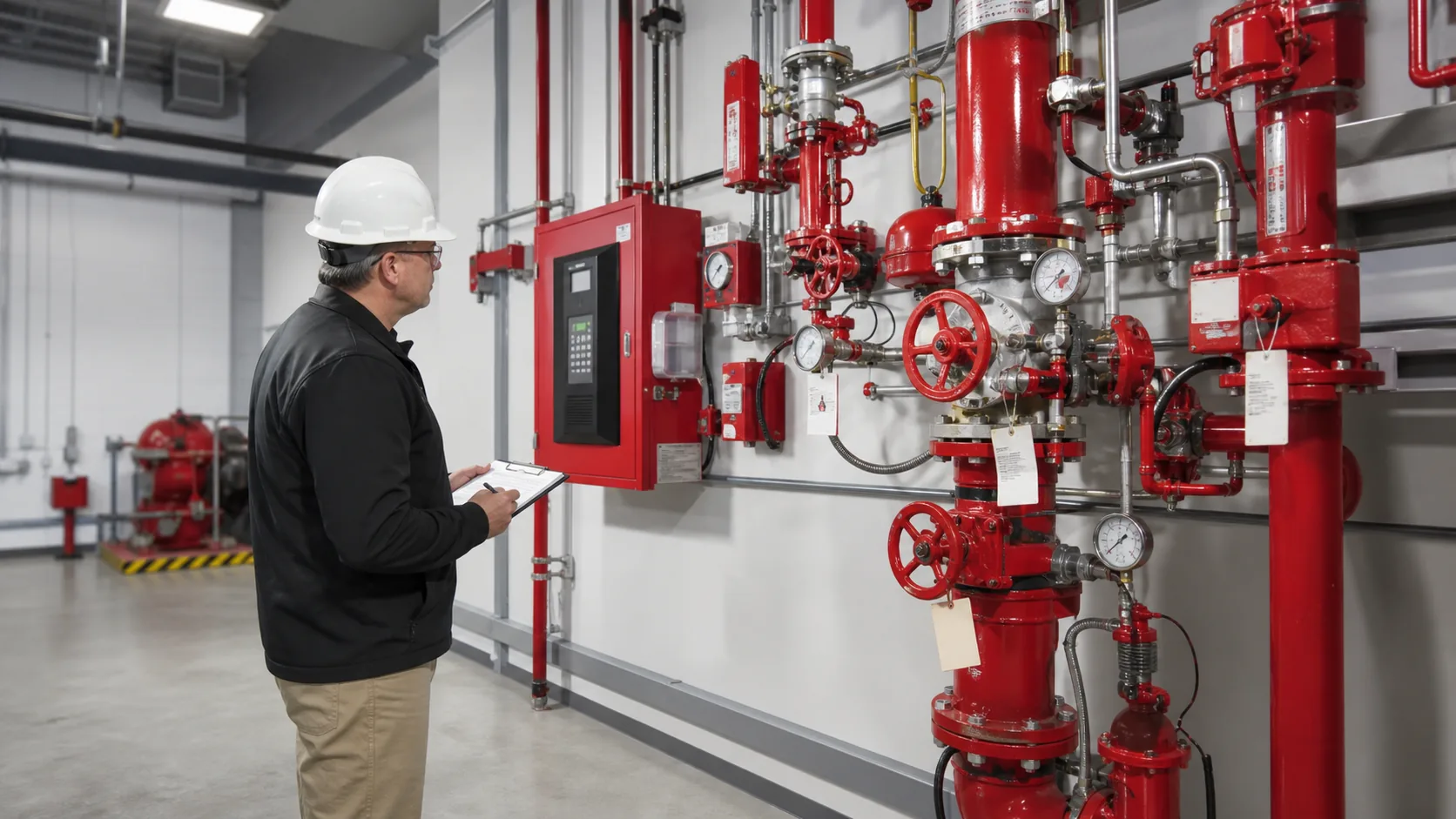
Quick answer
What is a protective safeguards endorsement?
A protective safeguards endorsement can require a listed sprinkler, fire alarm, security service, or other protection system to be maintained and operating as a condition of commercial property coverage. The schedule and endorsement wording identify the required safeguard, notice duties, and potential effect of an impairment.
Start with the endorsement schedule
A Protective Safeguards endorsement changes the property policy. Its schedule identifies the premises or building and the safeguard that applies. Common examples include an automatic sprinkler system, an automatic fire alarm connected to a monitoring or fire station, a security service, a private fire-protection service contract, a commercial cooking suppression system, or another specifically described protection.
Do not assume a safeguard applies because the building happens to have it. Confirm that the endorsement is attached, identify each scheduled location, and match every symbol or description with the actual system. One policy may schedule the sprinkler only, while another may also list a monitored alarm or a custom protection requirement.
The declarations, schedule, endorsement edition, and state amendments work together. Ask BLIS to help locate the controlling documents, but rely on the issued policy—not a quote summary or inspection email—for the insurance requirement.
Know what the endorsement requires during an impairment
Common forms can require the insured to maintain a listed safeguard, keep certain automatic systems actively engaged, and notify the insurer after learning of a suspension or impairment. Some forms include a limited exception when specified protection is restored within a stated period. The exact duty and deadline come from the policy in force.
An impairment can be planned or unexpected. Examples include a closed sprinkler valve, disabled fire pump, empty suppression cylinder, disconnected central-station alarm, failed alarm panel, frozen pipe, damaged detector, or system taken offline during construction. Partial service can still matter if the scheduled protection is no longer fully available.
Create a notice process before a shutdown occurs. It should identify who contacts the fire-protection contractor, building owner, alarm company, insurer or agency, fire department or code official, and occupants when required. One notification does not automatically satisfy every party.
Why a sprinkler or alarm shutoff can affect a fire claim
Some Protective Safeguards forms add an exclusion for fire loss when the insured knew of a listed safeguard impairment and failed to give required notice, or failed to maintain a safeguard under its control in working order. Other forms may use different conditions, exceptions, wording, or consequences.
That does not mean every shutoff produces the same claim result. The scheduled safeguard, endorsement edition, reason for the impairment, the insured's knowledge and control, notice given, restoration timing, cause of loss, state law, and complete policy can all matter. Treat a potential coverage issue as a fact-specific review, not an automatic conclusion.
Example scenario: A contractor closes a sprinkler control valve for planned work, but the business does not follow the policy's impairment-notice process. A fire occurs before the system is restored. The endorsement may affect the fire-loss claim, but the result depends on the actual policy language and facts. Promptly preserve records and seek qualified insurance and legal guidance.
Keep insurance duties separate from fire-code and workplace duties
Policy notice is only one part of an impairment response. A fire code, permit, local authority, lease, lender, alarm-monitoring agreement, or workplace rule may require separate notice, a fire watch, evacuation, licensed repair work, or other temporary protection. Satisfying the policy does not establish compliance with those obligations, and code compliance does not automatically satisfy the policy.
OSHA's sprinkler and fire-detection standards apply within their stated scope, including systems installed to meet particular OSHA requirements. Those standards address maintenance, operability, testing, and restoration. Local requirements can be different or more specific. Confirm which rules apply with the authority having jurisdiction and qualified fire-protection professionals.
The City of Syracuse, for example, directs building owners to notify specified fire and monitoring contacts during an impairment and notes that a fire watch may be required. That process is useful as an example, not a nationwide rule. Follow the procedure for the property's actual jurisdiction.
Build an impairment plan before maintenance starts
Assign an impairment coordinator or responsible manager for each location. Keep current contacts for the landlord, tenant, fire-protection vendor, alarm company, insurer or agency, fire department, code official, and after-hours management. Identify who has authority to shut down and restore each system.
For planned work, confirm the affected area, reason, start time, expected duration, temporary safeguards, notice recipients, and restoration test before the system goes offline. For an emergency, protect people first, follow the local emergency procedure, contact qualified repair help, and send required notices as soon as practicable.
Do not rely on an informal statement that the system is “mostly working.” Ask the qualified contractor to document which components are unavailable and when full protection is restored. If work, storage height, occupancy, cooking equipment, or commodities have changed, confirm that the existing system remains suitable with the appropriate design and fire-safety professionals.
Keep records that connect maintenance to the policy
Maintain the policy schedule, inspection reports, test results, deficiency notices, repair invoices, service contracts, alarm-monitoring records, impairment notices, insurer acknowledgments, fire-watch logs when required, and restoration confirmation. Note dates, times, affected systems, and the person responsible.
Documentation does not cure a missed policy condition or legal duty, but it can show what was known, what action was taken, and when protection returned. Keep records where an authorized manager can reach them after hours or after damage prevents access to the building.
Review unresolved deficiencies rather than filing the inspection report and forgetting it. Set a responsible person and completion date, then retain proof that the correction was tested and closed.
Coordinate landlords, tenants, and lenders
In a leased building, one party may own and service the sprinkler while another party holds the property policy containing the endorsement. The lease may divide maintenance, notice, repair, access, and insurance responsibilities. Do not assume the landlord's contractor will notify the tenant's insurer or that the tenant's notice reaches the property owner.
Share the relevant policy condition and lease responsibility with the people who manage the system. Establish one contact chain for planned work and emergencies. If the landlord controls the safeguard, ask how the tenant will receive prompt notice of an impairment and restoration.
Lenders and loss payees may also require functioning protection or notice of material changes. Insurance questions belong with the agency or insurer; lease and financing obligations belong with qualified legal advisers.
Use renewal to verify the protection you actually have
At renewal, compare the endorsement schedule with every location and system. Confirm monitoring connections, service providers, open deficiencies, renovations, vacancy, occupancy changes, storage height, cooking systems, and any protection taken out of service during the year.
Example scenario: A business replaces its alarm vendor and assumes monitoring transferred automatically. A renewal review discovers the new account was never connected to the central station described in the policy. Confirming the correction and notifying the appropriate parties before a loss is more useful than relying on the old certificate.
For a broader property review, see Commercial Property Insurance and Equipment Breakdown Insurance. Business and property owners can also request a property portfolio review.
Connect each scheduled safeguard to an impairment response
Use one row per insured location and scheduled safeguard. The fictional example shows the fields to capture; check the actual endorsement and coordinate fire-safety steps with qualified professionals and the local authority.
| Location or system | Fictional record to replace | Questions before work or renewal |
|---|---|---|
| Location and endorsement | A fictional leased warehouse has a property policy with a scheduled safeguard | Which legal entity and address are insured? Which endorsement edition and schedule apply to this location? |
| System type | The fictional schedule describes a monitored fire alarm | Does the wording refer to the alarm, monitoring service, sprinkler, cooking suppression, security service, or another system? Match the description to the installed equipment. |
| Notice contacts | The fictional operations manager keeps an after-hours contact list | Who must receive policy notice, landlord notice, vendor notice, and any local fire or code notice? What method and timing does each source require? |
| Impairment log | A fictional service ticket records a planned panel repair and restoration test | Record who authorized the work, affected area, start and expected end, system status, notices sent, temporary measures directed by qualified professionals, and test evidence at restoration. |
| Duty and control | The fictional tenant operates at the location while the landlord owns the sprinkler | Who controls, maintains, monitors, and can restore each safeguard? What do the policy, lease, service contract, and local procedure each assign? |
| Open deficiencies | A fictional inspection report lists an unresolved device fault | Who owns the correction, what is the target date, and what proof confirms the repair and system test are complete? |
The table is an operations aid, not a statement that a given impairment changes coverage. Duties and potential policy effects depend on the issued wording and facts. Local fire-safety, lease, lender, and workplace requirements may be separate; confirm them with the appropriate professionals and authorities.
- OSHA: Automatic Sprinkler Systems — 29 CFR 1910.159
- NIST: Impairment of Fire Protection and Life Safety Systems Program
- City of Syracuse: Fire Protection System Out-of-Service Procedure
Sources
- Protective Safeguards Endorsement (IL 04 15) in a Public Insurance Record — Indiana Department of Environmental Management public record
- State Risk Winter 2021 Newsletter — Protective Safeguards Endorsement — Kentucky Division of State Risk and Insurance Services
- Automatic Sprinkler Systems — 29 CFR 1910.159 — Occupational Safety and Health Administration
- Fire Detection Systems — 29 CFR 1910.164 — Occupational Safety and Health Administration
- Fire Protection System Out-of-Service Procedure — City of Syracuse Fire Department
- Impairment of Fire Protection and Life Safety Systems Program — National Institute of Standards and Technology
- Commercial Insurance Guide — California Department of Insurance