Construction · Concrete Contractors

Concrete Contractor Insurance When Claims Surface Years Later

Heavy payroll class codes. Pump trucks with a coverage gap built in. Structural liability that follows the slab for years. BLIS reads the whole account — crew mix, equipment values, work type, and every certificate requirement your GC subcontracts carry. Coverage structured around what you actually pour.

Licensed commercial insurance support across 5 states

Smart intake

Concrete quote

One question to start. We do the reading from there.

Start your quote

Get Started

Request a Contractor & Trade insurance quote

Complete the required contact fields and a few business details. A licensed BLIS representative will review the request.

1 / 2About you

How to reach you about your request.

We use this only to follow up.

Licensed in CA, NV, AZ, TX, and FL.

We only use this information to review your insurance request. BLIS is licensed in California, Nevada, Arizona, Texas, Florida. CA License 0M74955.

Submitting this form does not bind coverage and does not promise a specific quote, price, or coverage outcome. BLIS reviews submitted details and may follow up for information needed to evaluate the account.

What to expect

What to expect after you submit

A BLIS representative reviews the information you submit and follows up if something important is missing.

  1. A real person reads it

    Your details get read against what carriers actually want for your kind of account — not routed through a form stack.

  2. Your account gets matched

    How you operate maps to the coverage lines and markets that fit the risk.

  3. Gaps get filled

    If something important is missing, a few targeted questions — not another long form.

  4. Options get laid out

    Coverage, exclusions, carrier fit, and cost — side by side, not just price.

  5. Bound? We stay on.

    Certificates, endorsements, audits, renewals, policy changes — handled.

Prefer to talk it through? Call (818) 306-8333Monday – Friday, 9:00 AM – 5:00 PM PT

Your operation

How concrete operations shape the insurance review

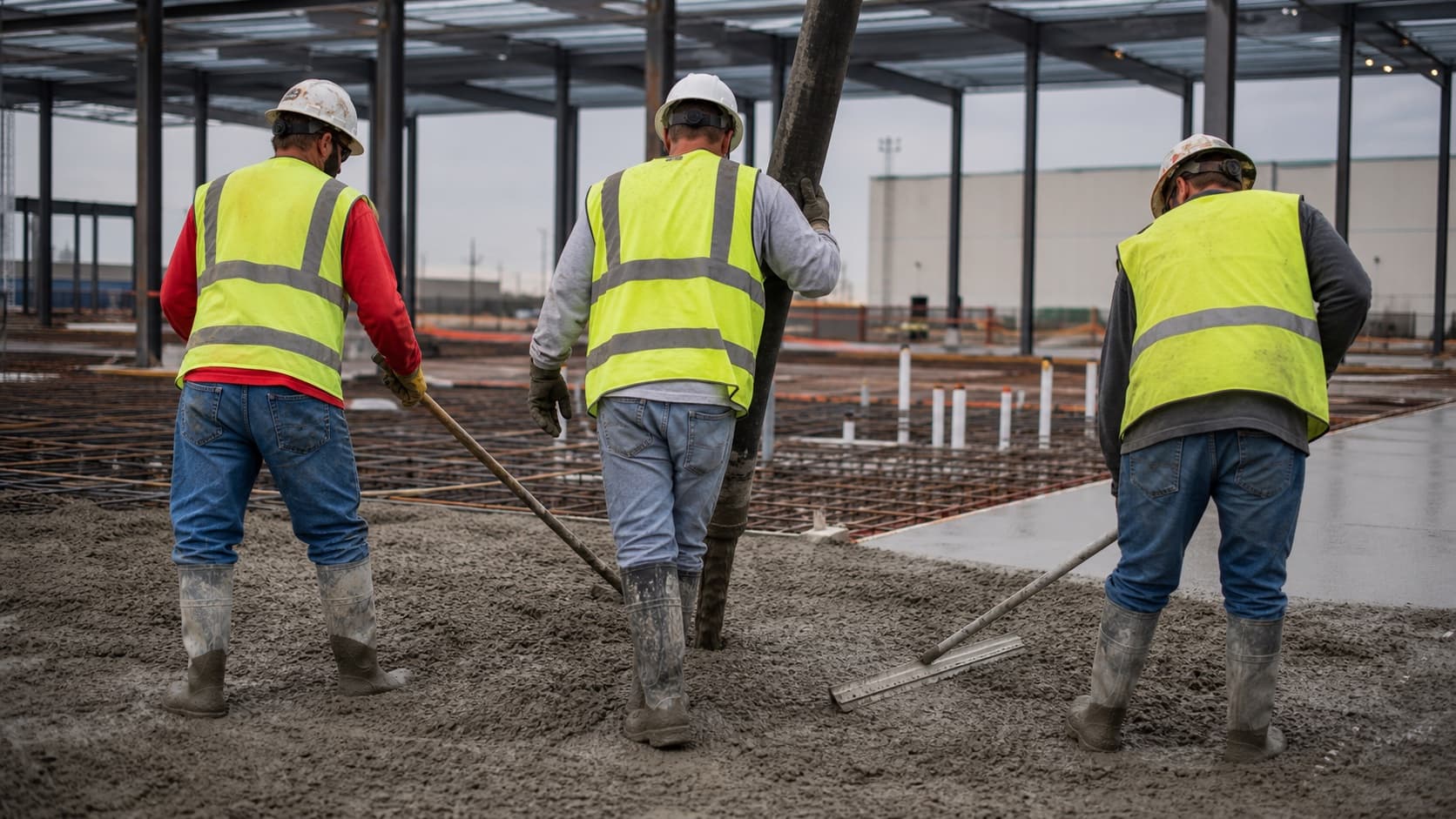
Pump trucks, power trowels, high-hazard payroll, and a completed-operations tail that can stretch years past the pour. That is the risk picture for a concrete contractor. The work gets buried under buildings and driven over for decades. When something surfaces later — slab settlement, reinforcement failure, improper PSI — the claim traces straight back. Meanwhile, every GC project comes with a stack of certificate requirements before the first truck rolls. BLIS reads the full account: payroll mix, equipment values, work type, and contract demands. Coverage built around how concrete work actually runs.

Workers' Compensation class codes and payroll mix. Concrete work runs under specific WC class codes — concrete construction in structures, flatwork and paving, foundation work. Each carries its own rate. A laborer placing forms sits in a different code than a finisher on a power trowel. A pump truck operator is different again.

For contractors running multiple types of pours, the payroll breakdown at inception shapes the final WC cost. The year-end audit reflects actuals, not estimates. When classification is wrong at the start, the audit bill shows it. BLIS reviews payroll and work type before the policy is written — not after.

Pump trucks and the coverage gap that comes with them. A concrete pump truck is a significant capital asset. Its boom and pump system is expensive to repair and hard to source quickly after a loss. Here is the gap most contractors do not see coming: commercial auto can cover the truck chassis. It stops at the boom and pump assembly.

Those components are equipment, not vehicle — and most commercial auto policies either exclude or sharply limit them. An inland marine or equipment floater covers the pump and boom. Both lines need to be in place. Power trowels, vibrators, screed rails, and forming panels fall to the same floater. Standard property coverage at a fixed address does not follow any of them to a pour site.

Completed operations and the long liability tail. Concrete failures are not always immediate. A slab with inadequate thickness can surface months after project acceptance. A foundation with improper reinforcement may show stress years later. A flatwork pour with the wrong PSI mix takes its own time to fail. When these surface, the claim names the concrete contractor.

GL completed operations coverage responds to property damage and bodily injury that arise after the work is finished. For load-bearing concrete — foundations, structural slabs, tilt-up panels — the completed operations aggregate and any carrier-imposed restrictions deserve close attention at inception. Limits and exclusions vary by carrier and endorsement. Read them before a project starts.

Certificate demands before the pour starts. Concrete contractors typically work under a GC. Every project relationship generates certificate requests, often with specific endorsement requirements: additional insured status for the GC, waiver of subrogation, primary and non-contributory language. These arrive before the first truck rolls.

On many commercial sites, the GC's compliance team holds mobilization until a certificate with the correct endorsements is confirmed. A certificate showing the right names does not substitute for endorsements actually in the policy. Managing these requests across multiple active GC relationships is a recurring operational task. One that does not stop.

Residential versus commercial work mix. A contractor doing residential driveways and one pouring structural foundations for multi-story buildings are underwritten differently — even if annual revenue is similar. GL class codes differ by work type. Carrier appetite varies by project scale and hazard grade.

Tilt-up construction, parking structures, warehouse slabs, and public infrastructure projects carry different severity profiles than residential flatwork. Representing the split accurately at application is important. Updating it when the business shifts is equally important. Both affect class code assignment and audit accuracy.

Subcontractor usage and the liability it carries. Labor-only crews, uninsured pump operators, specialty finishers hired per project — each extends potential liability into your account. Most GL policies ask about subcontractor usage at application. Some carriers require subs to carry their own coverage and for the contractor to collect sub certificates before work begins.

Subcontracted labor value may factor into GL rating. For contractors who regularly use crews paid outside of payroll, maintaining a certificate file for each sub is sound practice. Carriers review that file at audit.

Washwater and the pollution exclusion. Concrete washwater — the slurry from cleaning trucks and equipment between pours — is regulated as a pollutant under most state environmental programs. Standard GL policies carry a pollution exclusion. Depending on policy wording and jurisdiction, that exclusion can apply to a washwater release.

Two questions worth reviewing before a washout event: does the existing GL policy provide any response to pollution-related property damage or cleanup costs, or does it exclude them entirely? Is a separate Contractors Pollution Liability endorsement appropriate given the project types you work? Read the policy language. Not the certificate face.

Structural versus decorative and repair work. Stamped and stained concrete, overlay systems, driveway replacement, sidewalk repair, ADA ramp installation — these carry a different profile than new-construction structural pours. Completed-operations severity is lower. The multi-year liability tail from load-bearing work is shorter. Carrier appetite, class code assignment, and endorsement availability may all differ.

Contractors whose work spans structural and decorative categories need to describe both at application. Carriers distinguish between them. The distinction matters for both coverage scope and rate.

Coverage

Coverages commonly considered for concrete operations

These are common lines to evaluate, not a preset package. Your operations, current contracts, state requirements, and the carrier's policy forms determine the final program.

  • Workers' Compensation

    Forms, rebar, vibrating equipment, caustic material, pours in extreme weather. Concrete work earns its hazard classification. WC covers medical expenses and lost wages as required by state law. For concrete contractors, the payroll structure runs across multiple class codes: flatwork, structural concrete, foundation work, pump operators. Correct classification at inception reduces audit exposure. BLIS reviews the payroll breakdown and work type before the policy is written so the codes reflect the actual operation.

  • General Liability

    GL covers third-party bodily injury, property damage, and completed operations claims arising from concrete work. During a pour, that means overspray onto adjacent finishes, forming equipment contacting existing site improvements, and pump hose failures. After the project closes, it means structural failures, slab settlement, and load-bearing defects that surface months or years later. The completed operations component is the one concrete contractors doing structural or commercial work cannot treat as a footnote. GC subcontracts routinely require the GL to support additional insured endorsements, waiver of subrogation, and primary and non-contributory language.

  • Commercial Auto

    Pump trucks, transit mixers, dump trucks, and haul rigs all need commercial auto coverage. Personal auto policies may restrict or exclude regular business use. The liability and physical damage values on concrete equipment are significant. Note the line where commercial auto stops: the vehicle chassis is covered. The pump and boom assembly is equipment — it falls to an inland marine or equipment floater, not the auto policy. Both pieces need to be addressed. One without the other leaves a gap that shows up when the boom fails.

  • Inland Marine

    Equipment Floater — Concrete equipment moves between pour sites constantly. A property policy at a fixed address does not follow it. Power trowels, vibrators, screed rails, laser screeds, stamping tools, and forming panels are all in this category. An equipment floater covers them wherever the work takes them — scheduled (specific items and values) or blanket (a stated limit). Theft from an active pour site is a real exposure. So is breakdown of finishing equipment mid-project. The floater addresses both.

  • Umbrella / Excess Liability

    An umbrella sits above the GL and commercial auto limits and responds once those are exhausted. For contractors doing commercial structural work, a completed operations claim tied to a foundation or slab failure can involve significant property values and substantial legal defense costs. An umbrella provides an additional layer for those scenarios. Some GC contracts specify minimum umbrella or combined single limits — making this a certificate requirement, not just an underwriting decision.

  • Builder's Risk (where applicable)

    Builder's Risk covers a structure under construction against fire, weather, vandalism, and other covered perils. Who carries it on a given project — owner, GC, or subcontractor — is a contract question, not an assumption. Concrete placed but not yet integrated into the permanent structure represents a real material value exposure. That exposure is not automatically addressed by an existing project Builder's Risk policy. Contractors responsible for materials on site before installation should confirm the coverage position before the pour starts.

Quote factors

Common quote factors

These are the details that can shape eligibility, terms, and pricing. You don't need all of them to start — send what you have, and we'll follow up on anything important that's missing.

  • Type of concrete work performedResidential flatwork, commercial structural concrete, foundation work, tilt-up construction, decorative systems, and utility pours each carry a different hazard grade and completed operations profile. Carriers distinguish between them. Some restrict appetite by work type. The submission needs to describe what you actually do.
  • Residential vs. commercial work mix (%)The split drives GL class code assignment, carrier appetite, and completed operations severity expectations. A residential driveway contractor and a commercial structural concrete sub are read differently by underwriters even when annual revenue is close.
  • Annual payroll (total and by classification)Payroll is the primary rating basis for Workers' Comp. The breakdown across crew roles — laborers, finishers, pump operators, foremen — determines which class codes apply and what the audit will confirm at year-end.
  • Number and type of vehicles, including pump trucksVehicle count, gross weight, and the presence of pump trucks or transit mixers all affect commercial auto pricing. Pump trucks require separate values: chassis for auto, boom and pump assembly for inland marine.
  • Equipment values (power trowels, forms, laser screeds, vibrators)Total portable and mobile equipment value sets the inland marine limit. Understating it at application creates a gap that appears at the time of a loss, not before.
  • Subcontractor usage (yes/no, type, and dollar value)Uninsured or underinsured labor crews expose your policy to their work product. Subcontractor cost may factor into GL rating. Carriers ask, and the answer matters for how the policy is structured.
  • Prior loss history (last 3–5 years)Concrete work generates WC claims at higher frequency than many finishing trades. Carriers evaluate loss frequency, severity, and claim type — WC, GL, auto — to understand how the account has been managed.
  • Project types and size rangeA residential driveway contractor and a contractor pouring commercial foundations or tilt-up panels carry different severity profiles. Scale affects completed operations risk. Carriers want to understand both the typical project and the largest.
  • Current policy (upload optional)Reviewing existing declarations pages surfaces coverage gaps, limit adequacy, and classification inconsistencies before the submission is built. It prevents surprises once the quote is in market.
  • Certificate requirements from GC contractsMinimum limits, endorsement forms, and additional insured language vary by GC subcontract. Knowing what your contracts require helps structure the policy correctly before the first certificate is requested.
Illustrative scenarios

Example claim scenarios

A few situations that show how coverage can respond when something goes wrong. These are examples only — not actual claims, and not a guarantee of any outcome.

  • Example scenario

    Completed operations — slab settlement claim

    A concrete contractor pours a commercial slab for a retail building and the project passes inspection. Approximately eighteen months later, differential settlement causes visible cracking and unlevel areas. The building owner attributes it to inadequate subgrade preparation and inconsistent pour thickness. A claim for repair costs is filed against the concrete contractor. This is a completed operations claim.

    It arises after the work was finished and the contractor had moved on. GL completed operations coverage is designed to respond to this type of post-completion property damage claim, subject to the policy's terms and exclusions.

  • Example scenario

    Workers' Compensation — crew injury during pour

    During a large commercial flatwork pour, a crew member slips on the wet concrete surface while operating a screed rail. The crew member sustains a knee injury requiring surgery and physical therapy. Workers' Comp can respond to the injured employee's medical expenses and a portion of lost wages while the employee is unable to work.

    Coverage is subject to the policy's terms and the applicable state's benefit structure. Physical injuries during active concrete pours are a real and recurring exposure.

  • Example scenario

    Pump truck overspray — property damage to adjacent work

    A pump operator is placing concrete on a commercial project and the boom hose develops a connection failure. Concrete slurry sprays across a finished masonry wall and several window frames. Remediation requires cleaning or replacing portions of the affected surfaces. GL can respond to the property damage caused by the contractor's operations, subject to the policy's terms and exclusions.

    This type of active-operations property damage claim is distinct from a completed operations claim — it falls under the GL's per-occurrence coverage for damage caused during the work.

  • Example scenario

    Equipment theft from active pour site

    A concrete finishing contractor stages two power trowels, a concrete vibrator, and hand tools at a commercial renovation site over a weekend. When the crew returns Monday morning, the equipment has been taken. Standard commercial property coverage tied to the contractor's business address does not cover equipment stored at a remote jobsite.

    An inland marine equipment floater is the coverage line designed for this type of portable equipment theft. It covers scheduled or blanket equipment values wherever the work takes them. This is subject to the policy's terms, deductible, and exclusions.

The claim scenarios above are illustrative examples only. They do not represent actual clients, actual claims, or guaranteed coverage outcomes. Coverage for any specific situation depends on the policy terms, conditions, exclusions, and the facts of the claim.

After you bind

Common certificate and service needs

After a carrier binds coverage, contracts and operational changes can create new documentation needs. A certificate summarizes policy information; the policy and its endorsements control coverage.

Contract and certificate requests

  • Certificate of insurance (COI) requests before each project startGCs hold mobilization until a current certificate is confirmed. Send certificate holder details and any required endorsement wording. BLIS reviews whether the existing policy supports what is being requested before the certificate is issued.
  • Additional insured endorsements naming the GC and, in some cases, the project ownerblanket or scheduled. The endorsement in the policy provides the coverage, not the certificate face. BLIS reviews what the policy actually carries.
  • Waiver of subrogation endorsements in favor of the GC and ownerrequired by most commercial subcontracts. The waiver must be in the policy before the certificate is issued.
  • Primary and non-contributory language where requiredlarger commercial and public projects often require the sub's coverage to respond first, ahead of the GC's own policy.
  • Completed operations coverage verification for structural projects and project owners who retain ongoing liability exposure.
  • Certificates naming lenders, bonding companies, or project owners on commercial projects where contract terms require it.

Ongoing service

  • Policy changes and mid-term adjustmentsa new pump truck, a vehicle added to the fleet, a project outside the normal work mix, or a GC requiring higher limits. BLIS handles mid-term changes and issues updated documentation.
  • Workers' Comp audit supportWC policies audit at expiration, comparing actual payroll and classification against the inception estimates. Concrete contractors running multiple class codes across crew roles and project types need organized payroll records and documented subcontractor payments. BLIS reviews what carriers typically request and helps clients prepare before the audit letter arrives.
  • Payroll and class-code review before renewalwhen the work mix shifts toward more commercial, less residential, or adds pump truck operations, the class code structure changes. Renewal estimates should reflect that. Otherwise the audit produces a bill nobody planned for.
  • Renewal strategy and market reviewcarrier appetite for concrete work varies by class, work type, and loss history. Renewal is the time to re-evaluate whether the current markets and structure still fit. BLIS reviews operational changes and available options before building the submission.
  • Coverage comparison across marketsparticularly relevant when inland marine needs review, completed operations limits need to grow, or the umbrella becomes a GC contract requirement.
  • Post-incident supportwhen a WC injury, equipment loss, or property damage claim arises, BLIS identifies what documentation the carrier needs and follows the process from first report through resolution.

FAQ

Frequently asked questions

Coverage availability, pricing, terms, conditions, and eligibility depend on underwriting, carrier guidelines, state, operations, loss history, policy terms, and other risk-specific factors. Nothing on this site guarantees coverage, pricing, placement, or savings.

Examples are hypothetical and illustrative. They show how a coverage can respond, not a promise that any specific claim will be covered. Actual coverage depends on your policy's terms, conditions, and exclusions.

Blue Lagoon Insurance Services, LLC is an independent insurance agency licensed in California (0M74955), Nevada (3983946), Arizona (3003332484), Texas (2966873), and Florida (L120266). BLIS does not underwrite insurance; coverage and underwriting decisions are made by the insurance carrier.